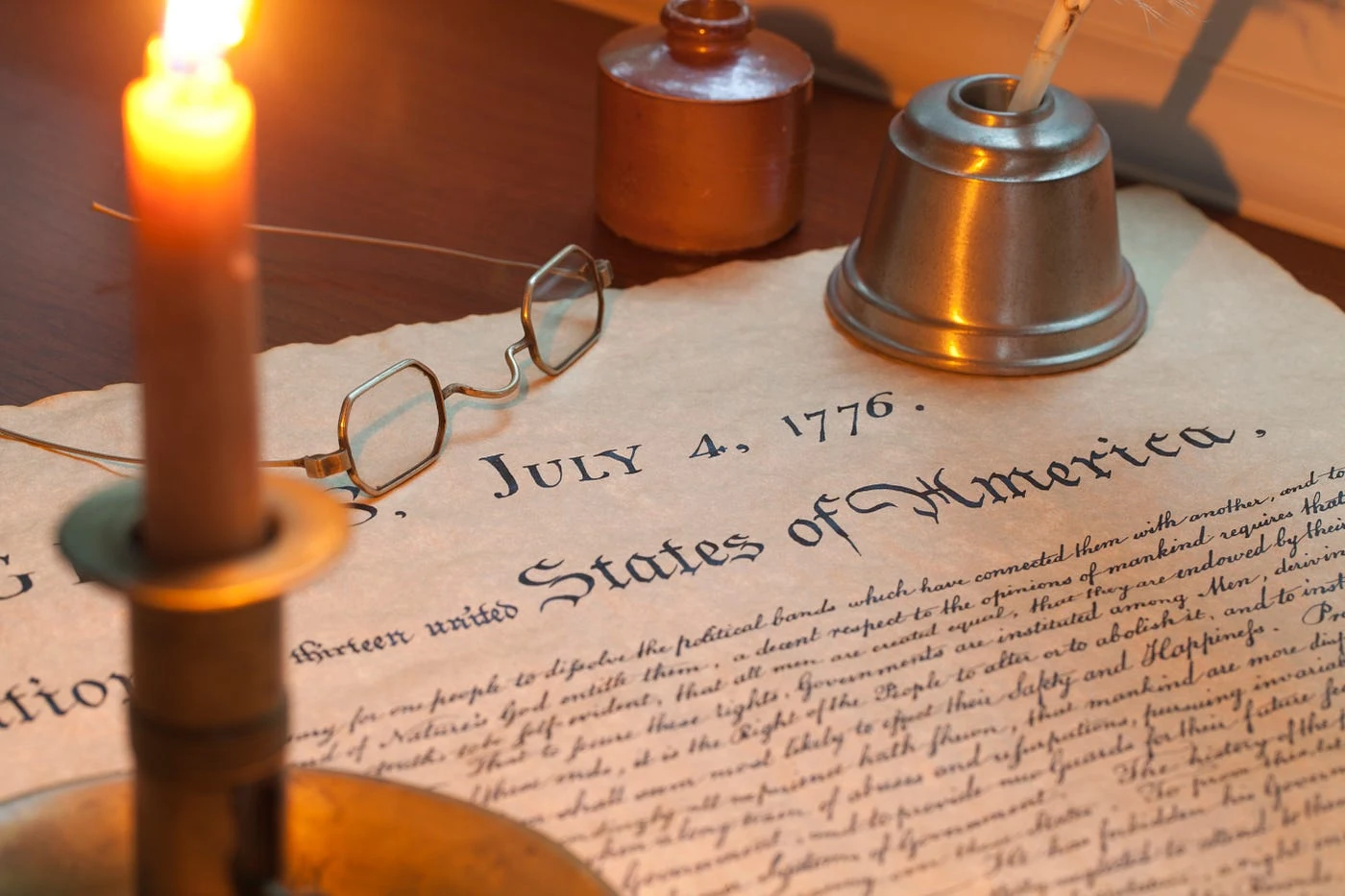
A Treatise on STEM and the American Mind
How Humanity Must Govern Its Inventions or Be Governed by Them
In this essay +
- On the Harmony of Liberty and Knowledge
- How the Machine Learned to Govern
- Concerning the Constitution in the Age of Algorithms
- On the Pretenders of Science and the Peril of Consensus
- In Defense of Discovery Against the Empire of Control
- Of Virtue, Curiosity, and the Soul of the Maker
- On the Moral Architecture of a Free People
- Toward the Renewal of the Human Covenant
- Epilogue — A Republic Worthy of Its Inventions

Author’s Note: This essay draws upon historical sources including The Federalist Papers, the U.S. Constitution, and modern analyses of global governance frameworks such as the Club of Rome, World Economic Forum, and United Nations Sustainable Development Goals. It advocates an adoption of Eudaimonic STEM — science ordered toward human flourishing — and the restoration of local autonomy, civic virtue, and moral restraint in the face of rising technocratic power.
On the Harmony of Liberty and Knowledge
The birth of this Republic was not merely political — it was epistemological. The American experiment rested upon the conviction that free men could govern both their passions and their reason, that knowledge and virtue together could secure what force and fear never could: lasting liberty. From its earliest days, the nation’s spirit was animated by a profound faith in inquiry — a belief that truth was not the property of monarchs or ministries but the inheritance of every citizen willing to think, to test, and to learn.
Science, in that age, was not a bureaucratic enterprise. It was a moral discipline. It belonged as much to the village blacksmith as to the university philosopher. The farmer who built a plow of his own design, the surveyor who charted the frontier, and the inventor tinkering by candlelight were all participants in the Republic’s most sacred act — the application of knowledge to the service of mankind.
The founders understood that the advancement of science and the preservation of liberty were inseparable pursuits. Each demanded humility: a recognition that truth, like power, must remain accountable to those it serves. To govern knowledge by consent was as necessary as to govern men by law. For when inquiry is centralized, truth itself becomes a monopoly — and monopoly is the natural enemy of freedom.
How the Machine Learned to Govern
In the centuries that followed, this sacred balance began to shift. The machine — once the servant of man — learned to command him. What was born of invention soon grew into administration, and the scientific impulse that once liberated mankind began to assume the posture of a new magistrate.
The industrial revolutions of the nineteenth and twentieth centuries gave rise to unparalleled prosperity — but also to unprecedented concentration of control. The factory, the laboratory, and the ledger became instruments not only of production but of prediction. By the dawn of the twenty-first century, progress itself had taken on the character of governance.
Where once we built machines to amplify the human hand, we now design algorithms to replace the human mind. These invisible engines do not merely calculate; they decide. They arbitrate what we read, what we see, what we believe. They transform the public square into a marketplace of attention and the citizen into a data point.
This is no mere convenience. It is a quiet revolution. The algorithms that shape social discourse now wield an authority greater than any editor or censor of old. They require neither decree nor trial to silence a voice — only a change in code. Thus, liberty is no longer constrained by tyrants but by terms of service.
Liberty or Deathwire!The Algorithmic Assault on Autonomy: Enter the Age of AlgocracyWritten by: Andrew B. Raupp / @stemceo…Read more2 years agoThe machine governs through persuasion disguised as personalization. It studies our habits with forensic intimacy, guiding behavior under the pretense of serving it. What once required the mailed fist of compulsion now proceeds with the velvet glove of convenience.
Concerning the Constitution in the Age of Algorithms
The American Constitution was written in ink, not in code. It presumes a world of tangible trespass, not digital omniscience; of speech delivered in public, not filtered by unseen intermediaries. Yet today, its parchment barriers are tested by technologies the founders could scarcely have imagined.
The Fourth Amendment — the citizen’s shield against unlawful searches — falters in an era where every transaction, movement, and correspondence leaves an electronic trace. The First Amendment — the charter of expression — bends beneath the weight of algorithms that curate what may be heard and what must be hidden. The Tenth Amendment — the guardian of local sovereignty — erodes under the expanding jurisdiction of federal data systems and international agreements that bind communities to global policies without their consent.
The framers designed checks and balances for men; they did not foresee them needed for machines. Yet artificial intelligence now interprets, enforces, and even predicts human conduct in ways that surpass human oversight. When code governs more swiftly than Congress, and digital fiat supersedes deliberation, the Republic of Reason stands at a precipice.
Liberty or Deathwire!We Are the Heirs of Their ResolveWritten by: Andrew B. Raupp / @stemceo…Read morea year agoTo preserve liberty in this new age, we must translate the language of constitutional restraint into the syntax of computation. Algorithms must answer to the same principles that restrain men: transparency, accountability, and consent. Without these, technology becomes not a tool of the citizen, but a sovereign above him.
On the Pretenders of Science and the Peril of Consensus
No tyranny ever names itself as such. It cloaks itself in virtue — in the promise of safety, sustainability, or salvation. The technocratic age has perfected this art. Under banners such as “global governance,” “public health,” and “climate sustainability,” science has been conscripted into service of ideology.
Consider the Club of Rome’s 1972 report, The Limits to Growth, which projected ecological collapse and advocated global management of resources. Its projections, later challenged by empirical evidence, nevertheless birthed a narrative of scarcity that justified unprecedented social control. From that seed grew the United Nations’ Sustainable Development Goals, the World Economic Forum’s “Fourth Industrial Revolution”, and countless derivative initiatives — all promising harmony through technocratic management.
Liberty or Deathwire!Common Sense in the Smog of Green DeceptionWritten by: Andrew B. Raupp / @stemceo…Read morea year ago · Andrew B. RauppYet beneath their lofty rhetoric lies a troubling inversion: science, once a method of questioning, has become an instrument of compliance. Consensus is enthroned where curiosity once reigned. The doctrine of inquiry has yielded to the dogma of unanimity. To dissent from “settled science” is to risk excommunication from polite society.
But science that cannot be questioned is not science — it is sacrament. And a sacrament administered by unelected global institutions, insulated from the consent of the governed, is not enlightenment but empire.
True STEM — the authentic marriage of Science, Technology, Engineering, and Mathematics — must remain loyal to its first principles: observation, falsifiability, and humility. When STEM becomes a banner for policy rather than discovery, it ceases to serve mankind and begins to manage him.
Falsifiability refers to the criterion that a proposition, hypothesis, or theory must be inherently testable and capable of being proven false through empirical observation or experimentation in order to qualify as scientific. Introduced by philosopher Karl Popper, this principle serves as a key demarcation between scientific and non-scientific claims. Popper argued that while a theory can never be conclusively verified as true, it can gain credibility through repeated attempts to disprove it that fail. For instance, the assertion “all swans are white” is falsifiable because the discovery of a single black swan would invalidate it. In contrast, the claim “invisible gremlins live in my freezer” is unfalsifiable, as it cannot be subjected to empirical testing or refutation.
In Defense of Discovery Against the Empire of Control
The conservative spirit, so often maligned as reactionary, is in truth the defender of reason itself. It insists that progress, unmoored from virtue, becomes perilous; that liberty without discipline dissolves into chaos, and discipline without liberty degenerates into despotism.
To conserve is to remember — to retain the moral architecture that gives innovation its meaning. The conservative sees in science not an idol but an inheritance, one that must be guarded from the intoxication of power. He understands that experimentation without ethical boundaries yields not enlightenment but exploitation.
When power centralizes — whether in a government, a corporation, or a global forum — curiosity is the first casualty. The laboratory of liberty depends upon diversity: of thought, of community, of method. Federalism itself is a scientific design — an ecosystem of governance that allows ideas to compete, adapt, and evolve locally. It is the political analogue of the scientific method.
But the new technocratic order despises such plurality. It seeks uniform standards, global certifications, universal data protocols — a single operating system for civilization. What it calls “efficiency” is in truth the eradication of dissent.
Liberty or Deathwire!The UN's Pact for the Future: A Step Backwards for STEM EducationWritten by: Andrew B. Raupp / @stemceo…Read more2 years agoTo defend discovery, we must reassert the legitimacy of the local. Let every school, enterprise, and family reclaim its right to innovate without permission. Let us decentralize research, rebuild apprenticeship, and reward curiosity untainted by political demand. Only through this renewal of grassroots inquiry can STEM return to its rightful role: not as a gatekeeper of orthodoxy but as a gateway to opportunity.
Of Virtue, Curiosity, and the Soul of the Maker
The moral worth of progress has always depended upon the virtue of those who wield it. Knowledge in itself is neutral — it is the conscience of its custodians that gives it meaning. The craftsman who tempers steel for a plow and the engineer who forges it for a weapon both draw upon the same physics; what separates them is purpose.
Our age has confused intelligence with wisdom, speed with understanding. We exalt efficiency and automation, but neglect the cultivation of judgment. The mechanization of society has not been matched by the moral education of its makers. The result is a generation fluent in code but illiterate in conscience.
Eudaimonic STEM — science ordered toward human flourishing — restores this balance. It insists that discovery must serve dignity. It measures success not by the volume of data collected but by the virtue of the world improved. It asks not how quickly we may innovate, but why we should.
Education, therefore, must once again become the workshop of character. To teach science without philosophy, technology without history, or mathematics without morality is to train the intellect while abandoning the soul. The Republic cannot endure on calculation alone. Its strength lies not in its circuits, but in its citizens.
The schools that now boast of “STEM alignment” often mistake credential for comprehension. They produce workers rather than thinkers, technologists rather than patriots. True STEM education, rightly understood, is not the narrowing of the mind to a career path, but the expansion of the mind toward citizenship. The mathematician and the mason, the coder and the carpenter, share a common calling: to shape the material world in harmony with the moral order.
On the Moral Architecture of a Free People
Every constitution, whether written in law or custom, is built upon an architecture of trust. In a free society, that trust is sustained by transparency, reciprocity, and restraint. The scientist and the statesman are bound by the same covenant — to wield their authority only in the service of truth and the common good.
Today, that covenant is imperiled by institutions that claim the mantle of science while pursuing the ambitions of empire. The World Health Organization’s pandemic protocols, the World Bank’s climate finance programs, the International Monetary Fund’s digital currency frameworks, and the World Economic Forum’s digital ID initiativestogether form an unaccountable lattice of governance without representation. Their power flows not from constitutions but from consensus — a word that, in the modern lexicon, has come to mean control.
When science becomes the justification for sovereignty, and expertise the substitute for election, the people no longer govern their future; they are managed by it. A Republic of free men cannot survive on data alone — it must preserve the dignity of dissent.
The moral architecture of liberty demands friction — the productive tension between competing ideas, local jurisdictions, and human judgments. It is this resistance that tempers policy into prudence. The efficiency of a machine is no virtue when applied to the soul of a nation.
Liberty or Deathwire!The Last of Liberty: Confronting the Global ID AgendaWritten by: Andrew B. Raupp / @stemceo…Read more2 years agoTo safeguard freedom, we must restore the independence of inquiry. Science must once again belong to the citizen. The laboratory must open its doors to public scrutiny. Universities must answer not to corporate donors or political foundations, but to the communities whose sons and daughters they educate. The same republic that once tamed rivers and harnessed electricity can surely govern its own innovations without surrendering them to foreign technocrats.
Toward the Renewal of the Human Covenant
The future that awaits us is not yet written. Artificial intelligence may either enslave or ennoble. Biotechnology may either heal or homogenize. Quantum computation may either illuminate or annihilate privacy. The instruments themselves are indifferent; the outcome depends upon the virtue of those who command them.
No machine, however complex, can replace the moral agency of man. It may replicate the syntax of thought, but never its substance. The algorithm can predict behavior, but it cannot apprehend beauty, justice, or sacrifice. These belong to the human condition — and without them, no civilization endures.
The covenant of our Republic, therefore, must be renewed — not in the language of code, but in the conscience of its citizens. We must reclaim the dignity of limitation: the courage to say no to inventions that violate the sanctity of personhood, and yes only to those that elevate it.
The first engineers of liberty understood this truth. They designed a system in which power, like energy, would be distributed, checked, and balanced. So too must the engines of modern progress be bound by similar principles. Let there be separation of powers between man and machine; between algorithm and authority; between data and dignity.
Liberty or Deathwire!Agenda 2076: Scientific AmericanismWritten by: Andrew B. Raupp / @stemceo…Read more3 years agoIn this covenant, technology must return to its rightful station — as servant, not sovereign. It must obey the Constitution, not rewrite it in binary. It must honor privacy as sacred, consent as inviolable, and conscience as supreme. Only then can the Republic of Reason remain a republic at all.
Epilogue — A Republic Worthy of Its Inventions
In every generation, civilization confronts a test of stewardship. The question before us is not whether we can build the future, but whether we can do so without dismantling the human spirit that makes the future worth building.
We stand at a precipice where convenience contends with conscience. The world promises us efficiency, but at the cost of identity. It offers connection, but at the cost of privacy. It sells us progress, but demands our obedience.
Let us therefore remember that liberty is not a relic of parchment — it is the architecture of the human soul. The Constitution is more than a document; it is a discipline. It endures only when each citizen guards it as zealously as any scientist guards a hypothesis — testing, questioning, refining.
Liberty or Deathwire!STEM 250: Championing Liberty in the Battlefield of IdeasWritten by: Andrew B. Raupp / @stemceo…Read morea year ago · Andrew B. RauppIf we restore the union of virtue and inquiry, of conscience and creativity, we may yet reclaim the promise of our founding — that the fruits of reason should nourish, not replace, the freedom of man.
For in the end, every republic is measured not by the power of its machines, but by the wisdom of its makers.
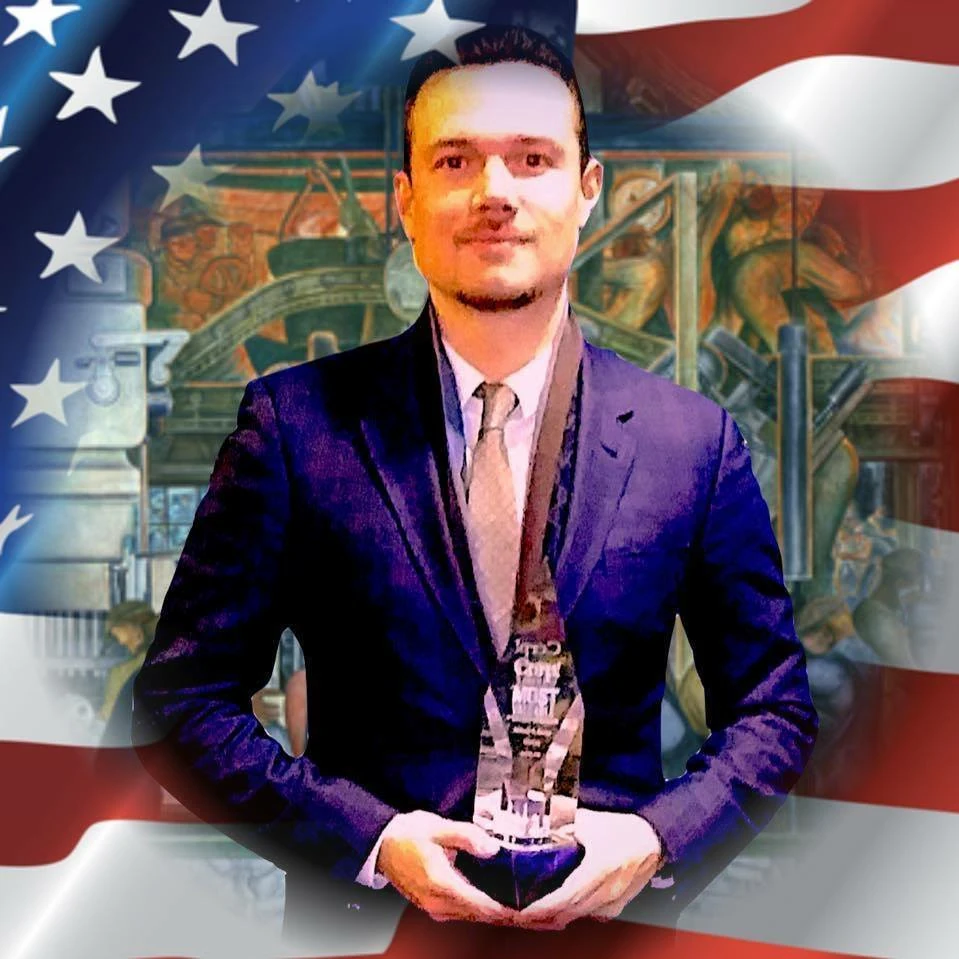 Get more from Andrew B. Raupp in the Substack appAvailable for iOS and Android
Andrew B. Raupp is the Founder / Executive Director @stemdotorg. “Democratizing science, technology, engineering and math (STEM) education through sound policy & practice…”
Keywords
First published November 9, 2025. Original publication