
EXPOSÉ: America’s Secret Tick Colonies
How U.S.-Funded Labs Are Breeding Deadly Foreign Pathogens on Domestic Soil
In this essay
- Video: Kris Newby, interview by Tucker Carlson, The Tucker Carlson Show, May 2024, video, discussing hypotheses regarding the modern spread of Lyme disease and historical U.S. military research involving tick-borne pathogens.
- The Biological Frontier Moves Inland
- EcoHealth Alliance and the Reappearance of a Troubling Pattern
- The Overseas Architecture Behind the Domestic Experiment
- A Crisis Manufactured, Not Prevented
- The Republic’s Right to Restraint
- Where Justice Must Begin
- New Declassified Evidence Raises Further Questions 🚨
- Pfizer’s Controversial Push for a Lyme Disease Vaccine 🚨
Author’s Note: What unfolds in this investigation is not merely scientific misconduct or bureaucratic carelessness—it is evidence of a political order that has forgotten its mandate and now behaves as though the American people are obstacles to be managed rather than citizens to be protected. A government that imports foreign hemorrhagic ticks, saturates children with microplastics, poisons water with industrial waste, and funds secret biological experiments abroad is not misguided—it is compromised. These acts are not accidental failures of oversight; they are the predictable behaviors of institutions that no longer recognize any authority above their own.
Across every domain of public life, the same pattern has materialized. Agencies once built to guard the nation’s welfare now repurpose taxpayer dollars to endanger it. Decisions that shape the health, biology, and future of millions are made behind closed doors by officials who will never face the consequences. A cartel of international technocrats has emerged—borderless in its ambitions, unaccountable in its decision-making, and contemptuous toward the very people whose labor finances its power. They invoke “science” as a talisman, not as a discipline grounded in truth, but as a shield for policies that would collapse under the weight of public scrutiny. Their creed is not inquiry but control, not discovery but domination.
This is the age of $cientism: a secular priesthood that claims infallibility while conducting experiments it cannot contain, manufacturing crises it cannot resolve, and dismissing dissent as ignorance rather than patriotism. To this elite, the citizen is no longer a sovereign but a subject—meant to absorb contaminants without complaint, to accept surveillance without rebellion, and to endure the consequences of decisions made in faraway rooms by people who will never drink the water they fluoridate or eat the food they engineer. The common man, woman, and child have been pushed to the margins of a system built on their backs.
If foreign hemorrhagic ticks can be imported into the American heartland under government contract, what limits remain? If technocrats can pollute the bloodstream of a generation with microplastics and endocrine toxins while calling it progress, what restraints bind them? If agencies can bury risks inside jargon, invoke “emergency powers,” and outsource experiments to transnational partners beyond the reach of law, what protections do citizens truly possess? These are not rhetorical questions; they are the central demands of a people awakening to the scale of the betrayal.
The institutions responsible for this decay will not correct themselves. Power does not relinquish control out of conscience—it relinquishes control only when it is confronted, checked, and stripped of the impunity it has accumulated. A republic cannot survive when its government acts as the middleman for a global technocratic class that sees humanity as raw material. The American experiment was never meant to be governed by committees of unelected scientists, international NGOs, and military contractors. It was constructed upon the conviction that liberty requires restraint on those who wield authority—not trust in those who violate it.
The truth is stark: the corruption is not peripheral; it is systemic. The danger is not theoretical; it is present. And the remedy cannot come from the same institutions that engineered the crisis. It must come from a citizenry prepared to reassert the boundaries of government, to demand transparency where secrecy has reigned, and to insist that public power be returned to public hands.
Video: Kris Newby, interview by Tucker Carlson, The Tucker Carlson Show, May 2024, video, discussing hypotheses regarding the modern spread of Lyme disease and historical U.S. military research involving tick-borne pathogens.
This is not a matter of ideology but of survival. A nation that allows its leaders to conduct biological experiments on its soil, contaminate its environment, and surrender its sovereignty to transnational elites forfeits its future by degrees. But a nation that recognizes the threat can reclaim what has been taken from it. The first step is the simplest: to see clearly. The next is harder: to act with the resolve of a free people who remember that no institution—scientific, military, corporate, or governmental—has the right to jeopardize the life of a single citizen, let alone an entire republic.
Citizens Rule Book: A Palladium of Liberty (Download) #InfoWars 🇺🇸
The Biological Frontier Moves Inland
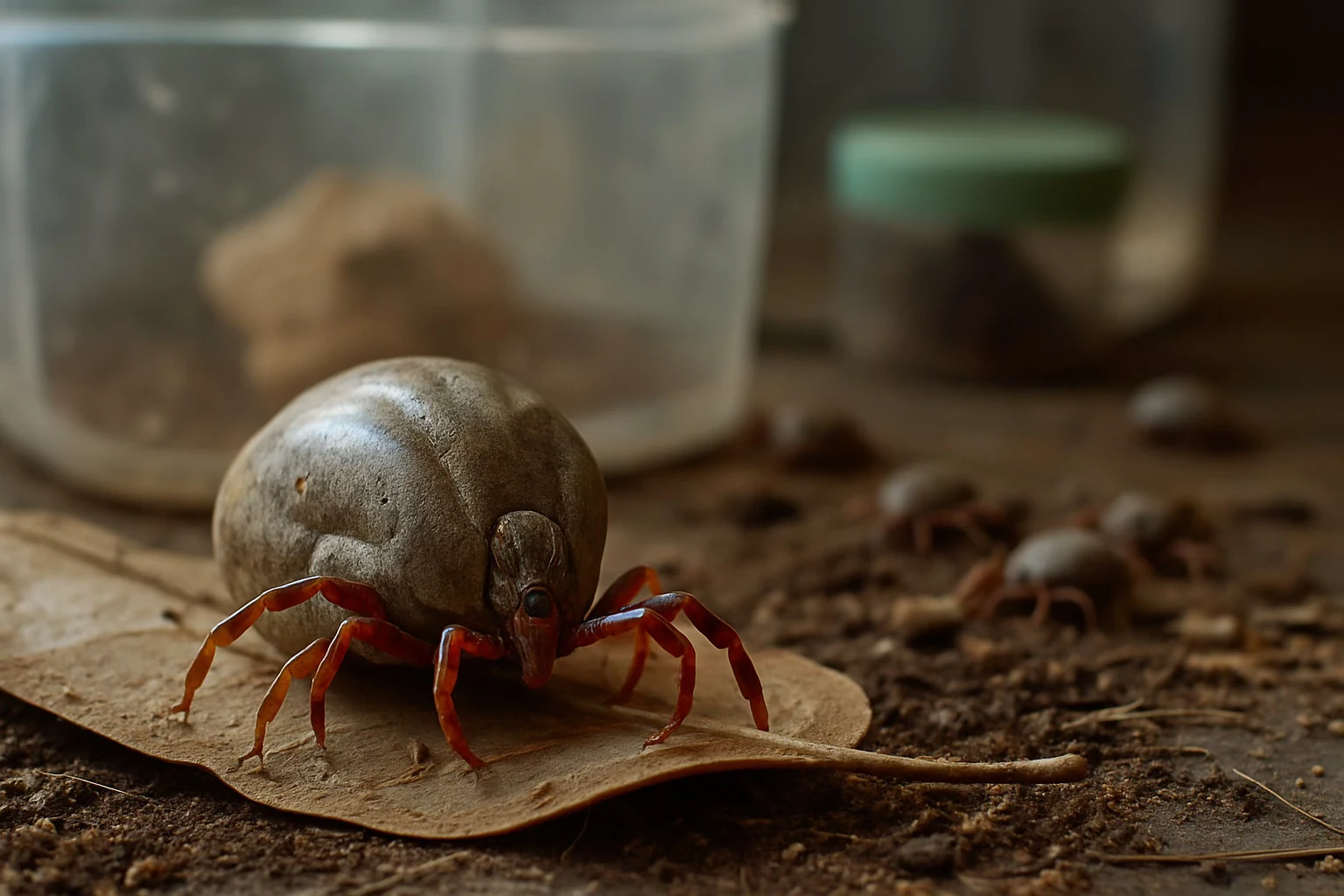
At the center of this undertaking stands the USDA’s Agricultural Research Service in Manhattan, Kansas, operating in tandem with the recently constructed National Bio and Agro-Defense Facility—NBAF—the successor to the notorious Plum Island laboratory, whose historical involvement in tick research near Old Lyme, Connecticut, has been the subject of debate for decades. In cooperation with laboratories at UC Davis and Texas Tech University, these programs have established breeding colonies of foreign ticks, inoculated them with Crimean-Congo Hemorrhagic Fever (CCHF), and released them onto cattle, goats, and sheep inside controlled enclosures. Their stated purpose is to forecast whether this hemorrhagic fever could take root in American ecosystems, how climate conditions might enable Hyalomma ticks to survive here, and which mRNA-based countermeasures might be deployed should such a catastrophe occur. But the deeper question remains: why is the United States manufacturing a domestic biological risk that nature never imposed upon it?
The official explanations drape themselves in the language of preparedness, but the documents that brought these programs to light tell a different story. Internal USDA contracts reviewed as documented by The Highwire reveal ten separate mRNA-oriented projects centered on foreign animal diseases, including one dedicated specifically to CCHF. The laboratory in Kansas has been modeling the spread of infected ticks under hypothetical climate scenarios, testing their survivability, and assessing their capacity to transmit the virus into American livestock populations. In the judgment of experts who understand the history of laboratory mismanagement, the risks are incalculable. Kris Newby, the Stanford scholar whose work on Lyme disease has been pivotal in exposing earlier institutional failures, cautioned that shipping infected ticks into livestock regions “needlessly puts entire agricultural hubs at risk,” noting that ticks are “super hard to control,” have a long history of laboratory escapes, and often evade detection when facilities are understaffed or overburdened.
EcoHealth Alliance and the Reappearance of a Troubling Pattern
The gravity of this research deepens when one acknowledges the presence of EcoHealth Alliance—an institution now inseparable from the controversy surrounding coronavirus gain-of-function work in Wuhan. Between 2020 and 2024, EcoHealth received a $3.7 million Department of Defense contract to conduct CCHF-related research. It requires no imagination to grasp the implications of placing a hemorrhagic virus with a near-medieval lethality into the hands of the same organization now scrutinized by U.S. intelligence agencies for its involvement in experiments linked to the origin of COVID-19.
This entanglement did not emerge in isolation. Only months ago, a USDA collaboration involving avian influenza research with Wuhan-affiliated scientists was abruptly terminated after watchdog pressure by the White Coat Waste Project. Such consistency across programs reveals an institutional disposition toward risk rather than coincidence.
Those who monitor these biological programs have grown sharper in their criticism. Justin Goodman of the White Coat Waste Project has argued—based on years of confronting federally funded laboratories—that importing exotic pathogens for domestic experimentation invites disaster. His condemnation—delivered without euphemism—portrays a federal establishment enthralled by hazard yet unprepared for accountability.
The Overseas Architecture Behind the Domestic Experiment
The story, however, neither begins nor ends on American soil. For decades, the United States has operated biological laboratories across the post-Soviet world under the banner of “cooperative threat reduction”—a doctrine that frequently blurred the boundaries between public health, military strategy, and geopolitical leverage. The scope of these activities is laid out according to Supotnitskiy’s research, which describes U.S.-funded BSL-3 and BSL-4 operations in Georgia, Ukraine, Armenia, Kazakhstan, and Uzbekistan. These facilities often worked under diplomatic privileges shielding U.S. personnel from local oversight, collected biological samples from unwitting populations, and operated in proximity to outbreaks never conclusively explained.
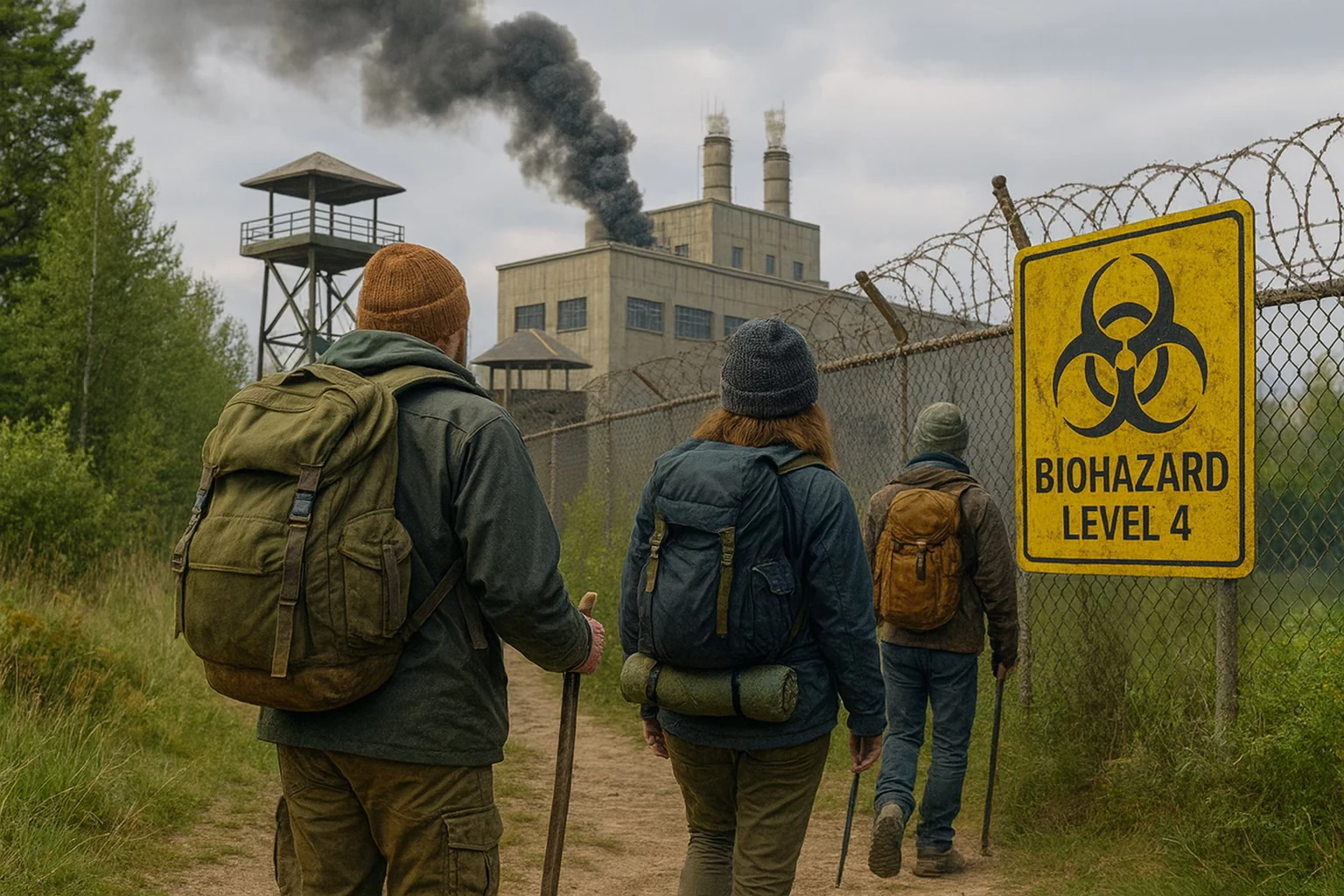
This pattern is not speculative; it is corroborated in Gaytandzhieva’s investigation, which reveals U.S. programs involving viral aerosols, genetically engineered insects, and hazardous materials transported under diplomatic immunity. The Lugar Center in Tbilisi, in particular, stands as a case study in how military contractors, operating under the guise of public health collaboration, conducted work far removed from its stated purpose.
Placed in this global context, the domestic breeding of hemorrhagic-fever ticks assumes its true character—not a one-off project, but the homeward extension of a longstanding bio-defense architecture that has matured beyond meaningful civilian oversight.
A Crisis Manufactured, Not Prevented
CCHF is not present in the United States. Hyalomma ticks do not belong to its ecosystems. The threat is being imported, cultivated, and studied as though it were an inevitability rather than an invention of federal policy. What unfolds in Kansas, California, and Texas is not precaution but provocation—an act of biological brinkmanship that presumes the public will endure any hazard so long as it is wrapped in the rhetoric of preparedness. It represents a quiet inversion of the social contract: the government generates dangers that nature never imposed, and the citizen is expected to accept this as the cost of living in a technocratic age.
History offers no comfort. The Soviet Sverdlovsk anthrax release, the accidental Marburg incidents, the CDC’s repeated mishandling of live pathogens, the forgotten NIH vials of smallpox, and the global cataclysm tied to EcoHealth’s coronavirus experiments all illuminate a single, irrefutable truth: laboratories fail; systems falter; containment collapses. And when they do, the consequences fall not on the architects of the experiment but on the unsuspecting public whose lives they gamble with. In this context, the idea that imported hemorrhagic-fever ticks can be forever contained is not a scientific assurance—it is a bureaucratic fantasy.
The danger becomes even more evident when one considers the growing ideological drift within segments of academia. In a deeply provocative development, two bioethics professors at Western Michigan University recently argued that intentionally disseminating a debilitating meat allergy could be viewed as a morally obligatory act—a notion explored in their paper “Beneficial Bloodsucking,” which examines the ethics of promoting alpha-gal syndrome (AGS), the tick-borne illness that renders its victims violently allergic to red meat. Their argument, reported in this analysis, treats AGS not as a grave medical condition but as a potential tool for reshaping human behavior through forced dietary change. They go so far as to assert that AGS carries “no significant negative effects on human health (so long as one avoids eating meat),” a claim that trivializes the reality of sufferers who face risks ranging from gastrointestinal distress to life-threatening anaphylaxis.
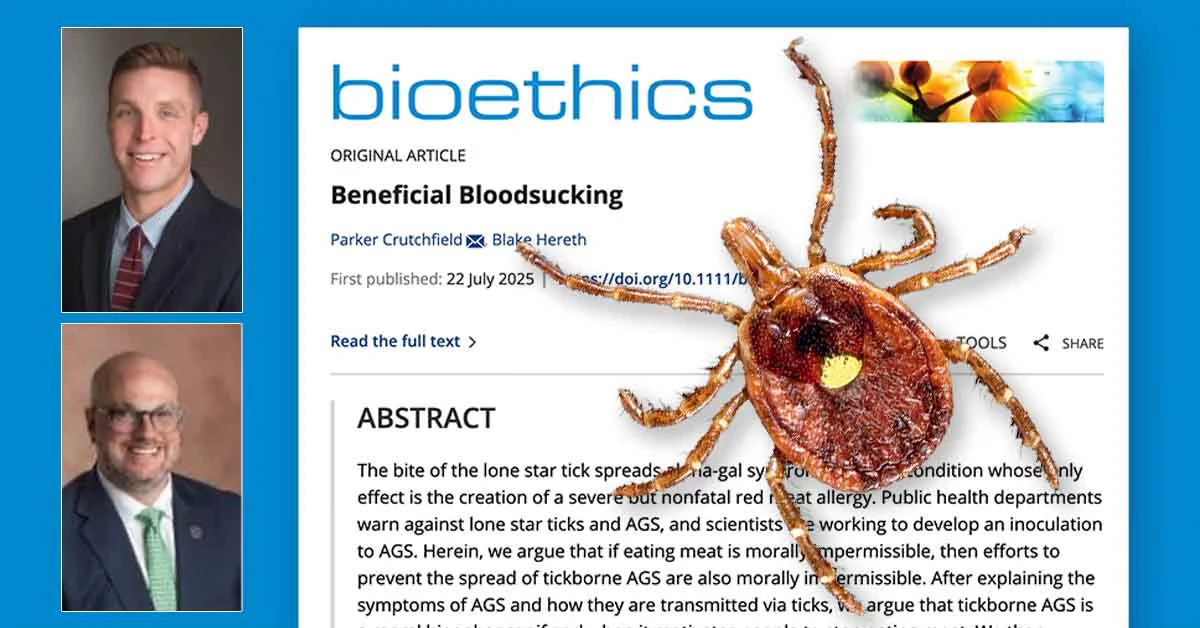
Alpha-gal syndrome, transmitted primarily by the lone star tick, is already a growing public health concern in several regions of the United States. To watch academics muse about the deliberate propagation of a disease that hijacks the human immune system is to glimpse the moral unraveling at the core of a technocratic worldview—one that sees populations not as individuals with rights but as variables in a behavioral experiment. When scholars begin contemplating the intentional spread of illness as a mechanism of “ethical” coercion, the line between public health and ideological enforcement dissolves.
Within that broader context, the federal government’s importation of CCHF-infected ticks becomes even more alarming. If even a single tick escapes—an event far from impossible—the consequences may be irreversible. Should the virus embed itself in cattle or wildlife, eradication may prove unthinkable. And should it spread into human communities, the nation will confront a hemorrhagic fever outbreak for which no licensed vaccine exists. A society that tolerates such risks without demanding accountability has forgotten that liberty requires vigilance, and that the protection of the public is not a privilege granted by the state but a duty owed by it.
The Republic’s Right to Restraint
A government that imports danger in the name of security has lost its sense of proportion. A scientific establishment that creates vulnerabilities rather than resolving them has forgotten its purpose. And a nation that tolerates such conduct invites calamity born not of foreign aggression but of domestic negligence.
The architects of these programs act as though the public is an abstraction, as though the land itself is a laboratory, and as though oversight is a relic of a bygone era. Yet a republic founded on the sovereignty of its people cannot allow biological experimentation to proceed as though consent is optional and risk is theoretical.
If this program fails even once, the consequences will not remain confined to the laboratory. They will seep into pastures, circulate through communities, and transform the national landscape. And in that moment—too late for reversal—the country will confront a truth it should have demanded much earlier: that no government has the authority to endanger its citizens under the pretense of protecting them.
Where Justice Must Begin
The facts laid bare in this report lead to a single inescapable truth: a government that endangers its citizens in secret, lies by omission, and treats accountability as a relic of a forgotten age cannot be reformed by appeals to its better nature. It must be confronted by the very people whose trust it has betrayed. No republic can tolerate institutions that behave as though the public treasury is their private arsenal, the national territory their experimental playground, and the citizenry a captive audience to their ambition.
The time for polite inquiries and bureaucratic reviews has passed. The breeding of foreign hemorrhagic ticks on American soil is not merely a scientific miscalculation; it is an act of contempt toward the very population whose lives and livelihoods hang in the balance. A nation founded upon the sovereignty of the people cannot accept a ruling class that endangers the public while shielding itself behind classified walls and technocratic jargon. What has occurred here is not a lapse but a violation—ethical, constitutional, and moral.
Justice demands more than disclosure. It demands consequence. Those who authorized these experiments must answer for their decisions before the law—not in quiet administrative hearings, but in full view of the nation whose trust they shattered. The systems that enabled this recklessness must be dismantled, not rebranded. The networks of transnational contractors and technocratic elites who have treated the American people as raw material must be stripped of their power and barred from ever again wielding public funds against the public itself.
The republic stands at a precipice, and the question before us is simple: will we allow unelected bureaucrats, foreign-influenced NGOs, and self-anointed experts to govern without scrutiny, experiment without consent, and err without consequence? Or will we reclaim the authority that is ours by birthright and insist that no institution, no consortium, and no elite—however insulated or credentialed—may endanger the life of a single citizen without facing the full weight of justice?
What has been done in secret must now be answered for in the open. The American people did not grant their government the authority to import deadly pathogens, contaminate their environment, or gamble with their future. Those who have done so have violated the sacred trust that binds a free nation to its institutions. And a government that betrays that trust forfeits any claim to obedience until it is held to account.
Let this investigation serve not as a warning, but as a summons. The hour for complacency is over. Justice is not a plea to the powerful; it is a demand issued by the sovereign people. And it is time for that demand to be made—forcefully, unmistakably, and without fear.
New Declassified Evidence Raises Further Questions 🚨
Update (03/06/2026): Shortly after this article was published, physician and molecular biologist Dr. Robert W. Malone released a detailed investigation examining newly analyzed archival material and declassified documents related to Cold War–era biological research programs. His report argues that historical U.S. biodefense efforts involving insects and disease vectors deserve renewed scrutiny, particularly in relation to the early emergence of Lyme disease along the northeastern United States.
Malone highlights documents and historical records indicating that ticks were studied as potential biological-weapons delivery systems during the mid-20th century. Among the most striking claims referenced in the report are military experiments that allegedly involved the release of hundreds of thousands of ticks as part of vector-tracking studies, as well as long-standing biodefense research programs examining insect-borne pathogens.
The investigation also revisits the career of Willy Burgdorfer, the scientist who identified Borrelia burgdorferi—the bacterium associated with Lyme disease—in 1982. Malone’s analysis notes that Burgdorfer previously participated in tick-borne pathogen research connected to military programs and later hinted that accidental releases may have occurred, though definitive conclusions remain debated.
Equally controversial are allegations that research into a second pathogen—referred to in the documents as “Swiss Agent” (Rickettsia helvetica)—was detected in Lyme patients decades ago but omitted from early publications, raising questions about whether co-infections or additional pathogens may have been overlooked in early Lyme disease research.
Malone’s article does not claim to definitively prove a laboratory origin for Lyme disease. Rather, it argues that the convergence of military vector research, laboratory containment issues, and the sudden emergence of multiple tick-borne diseases around Long Island Sound in the late 1960s and early 1970s warrants deeper investigation and full transparency regarding historical biodefense programs.
Malone News
Declassified Documents Link U.S. Bioweapons Program to Lyme Disease Outbreak
Declassified Documents Link U.S. Bioweapons Program to Lyme Disease Outbreak…
As additional documents surface and historians continue to examine Cold War biological research programs, the origins and evolution of tick-borne diseases remain an area of active debate. Malone’s analysis adds new archival material and renewed urgency to a question that has persisted for decades: whether the modern Lyme epidemic reflects purely natural ecological processes—or whether elements of the Cold War’s biological research legacy played some role in accelerating its spread.
Pfizer’s Controversial Push for a Lyme Disease Vaccine 🚨
Update (04/02/2026): Below, The Defender summarizes Pfizer’s effort to secure FDA approval for a Lyme disease vaccine despite failing to meet its predefined clinical trial success criteria. While the company maintains the results are clinically meaningful, critics argue that proceeding under these conditions risks undermining scientific standards and raises concerns about regulatory integrity. Even experts generally supportive of vaccines have expressed skepticism about approval without stronger supporting data. The summary also draws comparisons to a previously withdrawn Lyme vaccine that demonstrated higher efficacy yet faced safety concerns, highlighting unresolved questions around effectiveness, durability, and trial completeness, alongside the significant financial incentives tied to a potential billion-dollar product.
The Defender
Pfizer Wants FDA to Approve Its Vaccine for Lyme Disease — But Does It Have a Shot?
Citizens Rule Book: A Palladium of Liberty (Hardcopies) Support my work. 🇺🇸
Keywords
First published November 30, 2025. Originally published in Liberty or Deathwire.