
The UFC's Fight to Restore Authenticity in Sports and Entertainment
Identifying Sincere Gallantry in a Landscape of Bread and Circuses
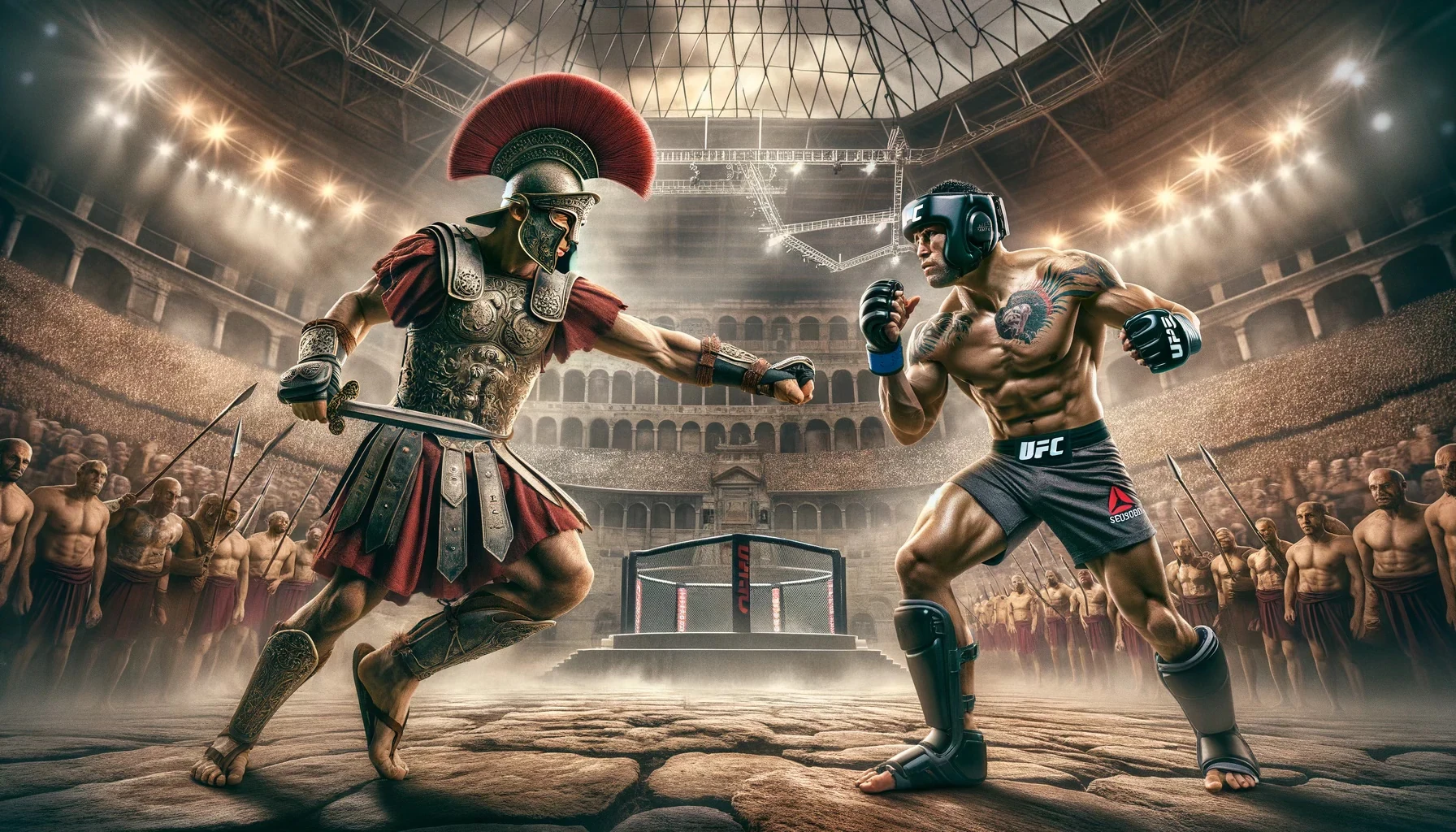
In these revolutionary days, when the very fabric of society is pulled taut, stretched to its limits by the powerful and the privileged, a formidable spectacle unfolds before the eyes of the common man. It is an artful ruse, a grand diversion, and it bears the name of bread and circuses. The ancient Romans recognized the allure of such distractions, keeping their masses placated with food and entertainment, thus ensuring silence and complicity in the face of the Empire's broader machinations.
One would presume that with the passage of time, humanity would have grown wiser, shedding the chains of easy diversion. But alas, history’s echo is clear and resonant. Our modern age, with all its technological marvels and advancements, is no stranger to this tactic.
Consider, dear reader, the gargantuan temples of sport, those vast arenas funded by the hard-earned coin of the taxpayer. These modern-day Colosseums, rather than serving as public spaces for the citizenry, are turned over to private entities. These profiteers, ensconced in luxury, rake in every morsel of profit, leaving the common man bereft, his pockets lightened, and his attention diverted.
The Liberation Ledger
Of Science and Sovereignty: The Call to Guard Humanity's Noble Spirit
Yet, amidst this charade, there emerges an exception, a gladiatorial combat of a different sort. The realm of Mixed Martial Arts, particularly the UFC, offers a glimmer of resistance. Yes, it is a spectacle, and yes, it too may be wielded as a distraction. But within its octagonal confines, it fosters an ethos quite distinct from other modern entertainments.
Where other sports censor their athletes, silence their voices, and hide behind the facade of neutrality, the UFC has stood apart. Each combatant is not just a fighter; they are an ambassador of their homeland. The flag of their nation unfurls beside their name, a symbol of pride, of identity, of roots that run deep. This martial showcase brings to the fore the tales of distant lands, cultures previously obscured by the fog of ignorance, now illuminated in the spotlight of global viewership.
However, there lies a stark truth beneath the glint of the lights and the roaring of the crowds: the very athletes, who with every punch and takedown, sacrifice their bodies upon the altar of sport, often receive but modest wages for their valor. This modesty in recompense, juxtaposed against their immense sacrifice, imparts to them a humility seldom seen amongst the elite.
And when the world found itself ensnared by the relentless grasp of a pandemic, it was this arena that dared to defy. While other institutions bowed to the whims of a shadowy elite, an elite that seemed all too eager to capitalize on global misfortune, the UFC rallied. It reconvened its masses, a symbol of resistance, a statement against the wealth transfer that saw the coffers of the one percent swell, even as the common man's purse withered.
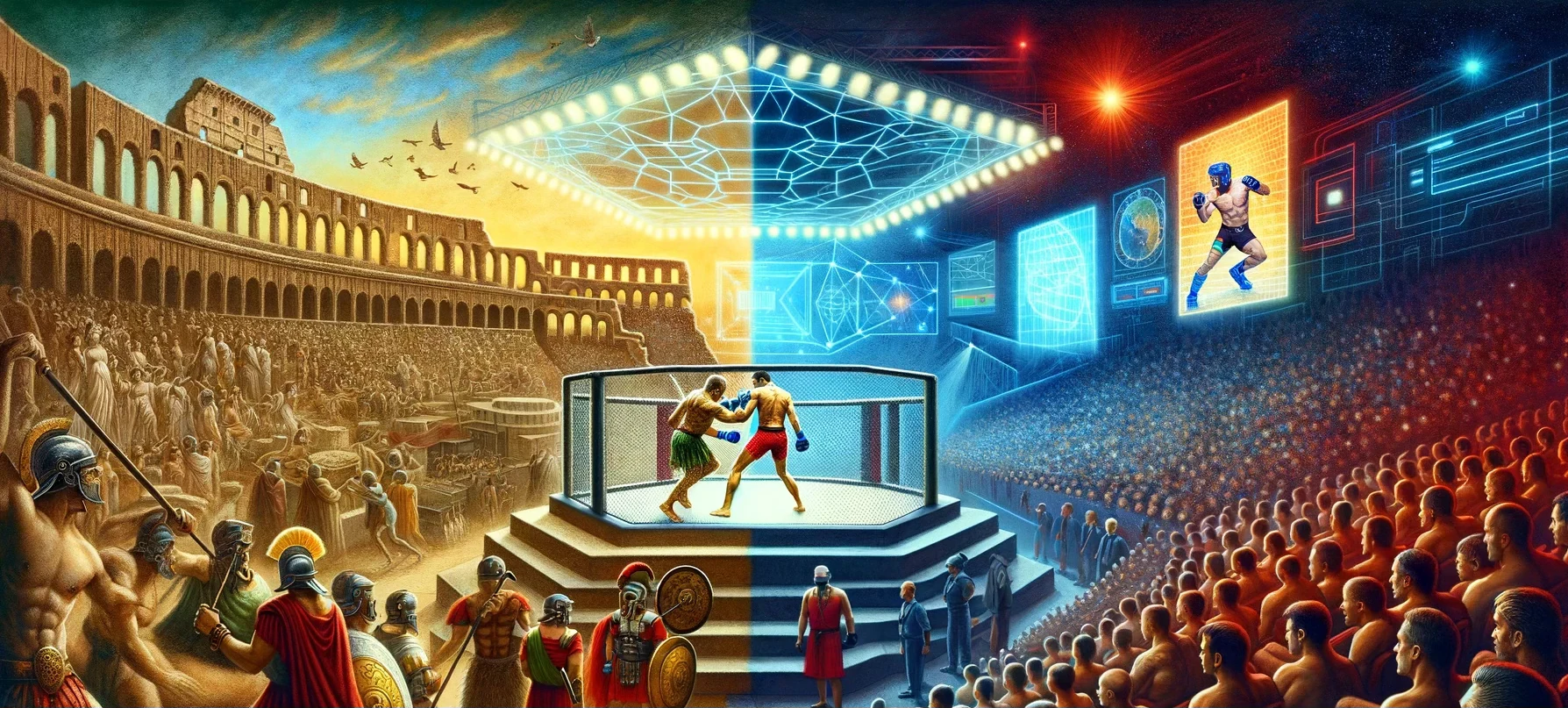
It is paramount, in these tempestuous times, that the citizenry remain vigilant. The allure of bread and circuses, of diversionary tactics, is strong. But let us not be lulled into passivity. For in the words of a wise man from a bygone era, when we sacrifice liberty for temporary security, we stand to lose both. And deservedly so.
Merit or Marginalization: The Muhammad Mokaev Case and the Question of Fighter Discrimination 🚨
Update (02/13/2026): Allegations of discriminatory treatment toward Dagestani, Russian Muslim, and Arab fighters have gained renewed attention following several high-profile roster decisions, most notably the release of Muhammad Mokaev. Mokaev, an undefeated flyweight contender at the time of his departure, was widely regarded as one of the most technically dominant prospects in his division. Yet despite his record and ranking trajectory, he was cut from the roster after a victory—an outcome that critics argue is difficult to reconcile strictly with competitive merit.
UFC President Dana White publicly cited factors such as backstage conduct and perceived stylistic issues rather than performance inside the cage. Supporters of the decision point to promotional discretion and locker-room dynamics, emphasizing that roster management extends beyond rankings. However, critics argue that Mokaev’s case reflects a broader pattern in which fighters from Muslim-majority regions—particularly those with grappling-heavy styles and limited promotional theatrics—are evaluated through a different lens.
The controversy centers on consistency. When undefeated fighters in other divisions receive extended promotional investment, narrative protection, and patience during stylistic adjustments, but similarly situated athletes from specific ethnic or religious backgrounds are released, questions inevitably arise. In Mokaev’s case, observers note that his disciplined persona, outspoken religious identity, and Dagestani training lineage may have made him commercially less aligned with Western pay-per-view storytelling models—yet those same traits are part of the sport’s global fabric.
There is no publicly available evidence proving that his release was motivated by religion or ethnicity. But perception matters. When a young, undefeated Muslim contender is removed from the roster while positioned near title contention, and similar patterns appear with other fighters from comparable backgrounds, it fuels the belief that merit alone is not determinative.
The issue is not about a single cut. It is about whether advancement and security within the promotion correlate consistently with competitive achievement across all demographics. Muhammad Mokaev’s departure has become a focal point in that debate—not as proof of discrimination, but as a case study that demands clearer standards and transparent criteria in a sport that prides itself on earning one’s place.
Citizens Rule Book: A Palladium of Liberty (Hardcopies) 🇺🇸
Keywords
First published September 11, 2023. Originally published in Liberty or Deathwire.