
Silencing Najadi: A Tale of Global Power Play and Assassination
The Mysterious Death of the First Chairman from Developing Countries at the World Economic Forum and a Son's Relentless Pursuit of Justice

To the Enlightened Citizens of the Digital Era,
Pascal Najadi emerges not merely as a bereaved son but as a figure of steadfast principle. In the aftermath of his father's brutal assassination, he stands on the precipice of a complex and hazardous network of financial and political intrigue. His plight, however, resonates on a more profound level than a son seeking closure. It is a testament to an enduring commitment to his father's legacy, one that championed ethical integrity in a landscape rife with clandestine dealings and unscrupulous greed.
The younger Najadi's journey is a labyrinthine struggle, navigating not only the legal quagmires within Malaysia but also the opaque international alliances that safeguard the sanctity of global elitism. He confronts an enigmatic battle, where enemies operate from the shadows, and justice is obscured by diplomatic niceties and international jurisprudence.
Pascal's vocal criticisms and public overtures for a transparent investigation into his father's murder are acts of defiance in a system predisposed to silence dissent. His expulsion from social media platforms, a stark reminder of the digital erasure facing those challenging transnational entities, marks yet another chapter in this ongoing battle against erasure.
Yet, it is within this context of confrontation that Pascal Najadi's resolve becomes most potent. His initiatives, extending to global audiences through alternative communications and persistent legal endeavors, reflect his comprehensive understanding of the stakes at hand. He is not simply calling for retribution but demanding a systemic overhaul of a global financial complex complicit in, if not directly responsible for, the silencing of ethical dissent.
Pascal's strategy, often reminiscent of his father's fearless disposition, underscores a nuanced approach to his campaign against corruption. By highlighting the interconnected nature of local political malfeasance and global financial misconduct, he continues in his father's footsteps, recognizing that Hussein Ahmad Najadi's death was not an isolated tragedy but a symptom of a pervasive global malady.
In his unyielding quest, Pascal Najadi personifies more than the pursuit of justice for a fallen father. He embodies the larger, often perilous fight against the impunity of international finance and political corruption. His voice, resolute amidst attempts at suppression, carries a message that transcends geographical and personal boundaries, echoing his father's belief in financial ethics and transparent governance.
As this narrative unfolds, it serves as a stark reminder to institutions and individuals alike: the fight for justice, often a lonely and treacherous path, is a necessary pilgrimage to reclaim the integrity that must underpin our global society. In remembering Hussein Ahmad Najadi through his son's unwavering commitment, we are all called to a higher standard of vigilance and courage in the face of overwhelming power.
In this solemn commitment, Pascal Najadi doesn't just seek retribution. He honors his father's life work, contributes to the global dialogue on financial integrity, and bravely charts a course through unmasked territories of influence and intimidation. His journey reaffirms our collective responsibility to demand ethical governance and to challenge, with unwavering resolve, the forces that threaten these foundational principles.
In the spirit of Liberty and Vigilance,
-ABR
Citizens Rule Book: A Palladium of Liberty (Free Download) #InfoWars 🇺🇸
In the labyrinth of global high finance and politics, the murder of Hussein Ahmad Najadi, founder of the Arab-Malaysian Development Bank (AmBank), remains an unsolved puzzle, casting shadows over the sanctity of national sovereignty and the opaque machinations of transnational entities. Najadi, a one-time affiliate of the World Economic Forum and an associate of Klaus Schwab until their acrimonious parting, was a vocal critic of financial improprieties, a stance that may have cost him his life in a parking lot in Kuala Lumpur in 2013.
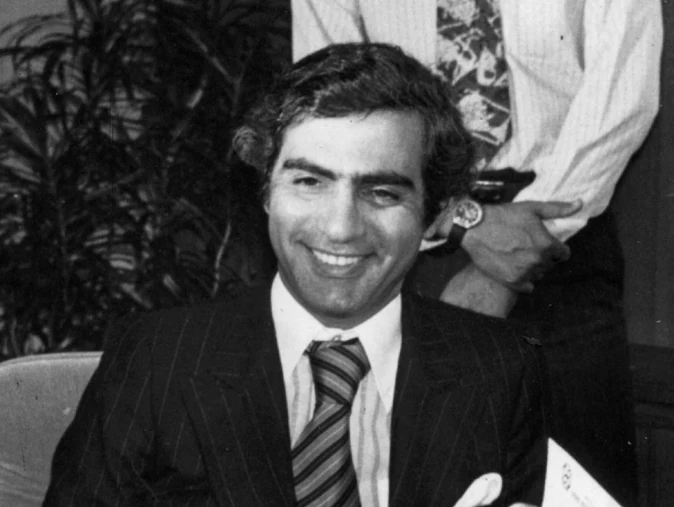
Najadi's assassination is not just another statistic. It is a nexus of silence, where questions about the involvement of transnational interests in silencing dissenting voices become deafening. The 75-year-old financier was known for his principled stand against corruption, particularly in the banking sector. After leaving the World Economic Forum post-split with Schwab, Najadi became increasingly outspoken about what he viewed as the encroaching danger of unregulated globalism and its nexus with local corruption.
The judicial proceedings following Najadi's murder, including the recent Malaysian appellate court's decision to uphold the death sentence of Koong Swee Kwan, a low-level gambler and truck driver, did little to illuminate the shadowy figures orchestrating the hit from behind the scenes. The persistent question, drowned out amidst legal formalities, was simple yet chilling: Who financed the bullet that killed Najadi?
This murder resonates beyond Malaysia’s borders, rippling through the murky waters of the 1MDB scandal, a financial black hole to the tune of US$4.8 billion, which highlighted the seamless stitching between local political elites and global financial entities. Najadi's son, Pascal, a retired Swiss investment banker, insists his father's elimination was a strategic move to silence opposition to the then Prime Minister Najib Razak and his wife, Rosmah Mansor's, illicit financial extravaganza. Allegations that Rosmah paid RM30 million to gangster Lim Yuen Soo to orchestrate the assassination add a sinister layer to this international saga of corruption.
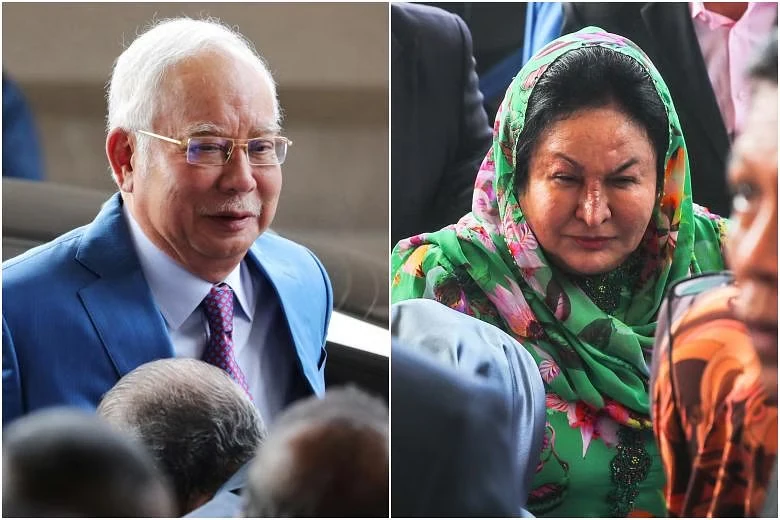
Lim's subsequent evasion of justice—he fled to China, then Australia, and was astonishingly released after his 2015 arrest at Kuala Lumpur International Airport—suggests a protective hand extended from high political echelons. His connections with former Malacca Police Chief Mohd Khasni Mohd Nor, through their joint ownership of Active Force Security Services Sdn Bhd., further blur the lines between criminals, law enforcement, and perhaps, influential transnational players.
Asia Sentinel
Alleged Mastermind in Malaysian Banker’s Murder Arrested then Freed
Kuala Lumpur police arrested Lim Yuen Soo, the alleged mastermind behind the 2013 assassination of Malaysia’s AmBank founder Hussain Najadi, but turned him loose eight days later for lack of evidence. The arrest and release were confirmed by Kuala Lumpur Criminal Investigation Chief Zainuddin Ahmad to local media…
Najadi's posthumous narrative is tangled with the enigmatic 1MDB, particularly the US$681 million that mysteriously appeared and disappeared in Najib Razak's personal account, a sleight of hand that the US Justice Department links to 1MDB funds. Najadi, even in retirement, was a relentless critic of these irregularities, a thorn in the side of UNMO's financial dealings, and, by extension, a potential threat to greater transnational interests benefiting from Southeast Asia's financial opacity.
The events leading to Najadi’s assassination, according to accounts by his son Pascal, suggest a man aware of the dangerous ground he trod. His refusal to facilitate a dodgy multi-billion ringgit property deal connected to the Kuala Lumpur City Center and his candid observations about Najib's unbridled greed outline a motive for those standing to lose from his outspokenness.
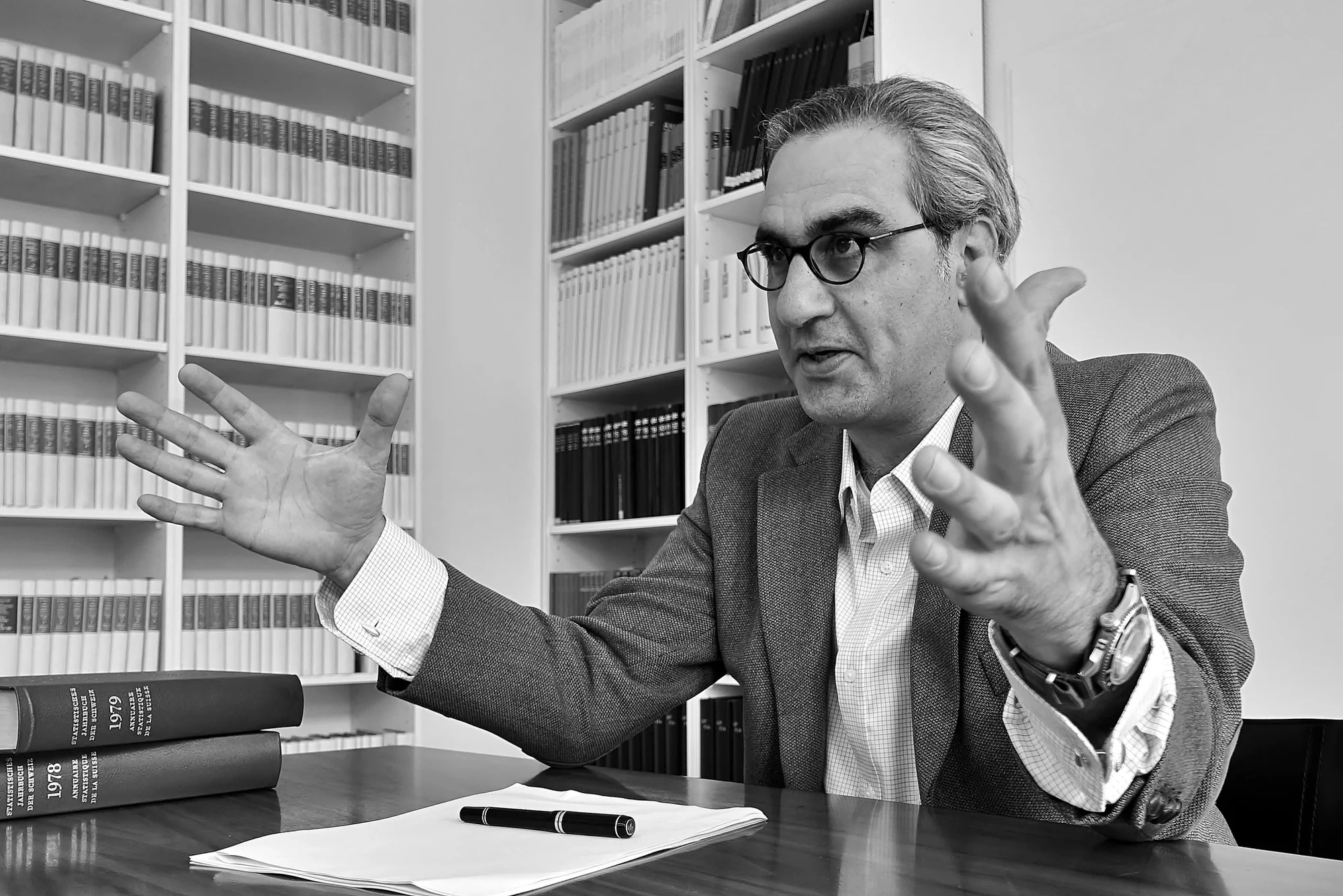
Pascal Najadi's subsequent deplatforming from the social media platform X, formerly known as Twitter, after releasing a video entitled ”Cutting Off the Head of the Snake” which highlights the bad actors housed in Switzerland including the World Economic Forum, raises the specter of a coordinated effort to suppress information. It is a modern-day digital assassination designed to silence voices that dare to speak against the sanctified halls of global economic power.
The Liberation Ledger
In the Shadow of the Matterhorn: Switzerland's Dark Side
The Najadi murder case, riddled with evasion and uninvestigated leads, mirrors the killing of Kevin Morais, a deputy public prosecutor with the Malaysian Anti-Corruption Commission. Morais, similarly, was silenced in 2015 under gruesome circumstances, highlighting a pattern of stifled justice that protects an interconnected web of local and potentially international players.
Hussein Ahmad Najadi's life and untimely death raise an urgent question: Was he, as a critic of unfettered globalism and financial corruption, inconvenient to transnational interests vested in the status quo? The cloak of silence from entities like the World Economic Forum, the mysterious inaction of Malaysian authorities, and the suppression of voices like Pascal Najadi's suggest a disconcerting answer.
In a world where economic powerhouses often dictate the trajectories of national politics, the story of Najadi's murder is a stark reminder. It underlines the imperative for vigilant, transparent governance and the courage to question the untouchable sanctity of global financial institutions. Until these questions are pursued with the rigor they deserve, justice will remain an elusive shadow, slipping away from the grasp of those who dare to demand it.
Citizens Rule Book: A Palladium of Liberty (Hardcopies) 🇺🇸
Keywords
First published October 30, 2023. Originally published in Liberty or Deathwire.