
The Day Canada Banned Walking
A global crackdown on mobility meets a rising wave of citizen resistance.
In this essay
Foreword
When the natural liberty of man is threatened, it is seldom taken in one swift stroke. More often, it is chipped away under the guise of virtue—masked in the fair-sounding language of safety, necessity, and the common good. Thus, the chains are not forged in the open marketplace of truth, but in the hidden workshops of deceit, where cunning hands reframe oppression as protection, and tyranny as care.
To limit a man’s freedom of movement is to place a halter upon his very soul. Yet our adversaries have learned that the raw language of command will rouse even the dullest spirit to resistance. So they cloak their ambition in the garments of “public safety,” persuading the timid that submission is prudence, and the weary that compliance is wisdom. The people, robbed of their vigilance, are made to guard the very doors through which their liberties are carried away.
This is not governance; it is the art of conquest. It shifts the gaze from the inviolable rights endowed by nature to the petty permissions granted by rulers. It replaces the question “Is this just?” with “Is this safe?”—as though the measure of a free people’s life were the absence of risk rather than the presence of dignity.
We are told to stand still for our own good. We are told that to walk where we please, to gather where we wish, to go about our business unmolested, is a hazard too great to endure. And so, one by one, the paths are closed—not by force of arms alone, but by the quiet surrender of the public mind to a lie.
If such reasoning is allowed to reign, then there is no liberty that cannot be curtailed in the name of safety, no right that cannot be extinguished in the name of care. Let it be known: a people who trade their birthright for the false comfort of managed security will soon have neither freedom nor safety, but only the perpetual guardianship of their keepers.
The question before us is plain. Will we be men who govern ourselves, or subjects who must beg leave to take a step? The answer will be written not in speeches or laws, but in our refusal to let the language of safety become the vocabulary of our servitude.
Therefore, let this be the hour that patriots in every nation stand shoulder to shoulder, not as isolated voices but as a global chorus for liberty. Refuse to yield your steps, your roads, your seas, your skies to those who would ration them out like charity. Assemble in your streets, drive your convoys, block the gates of the mighty, and make the world remember that free men do not ask for permission to move. Let our stand be so unshakable that every tyrant, from Ottawa to Brussels, trembles to see the roads once more in the hands of those who built them. -ABR
The War on Your Right to Move
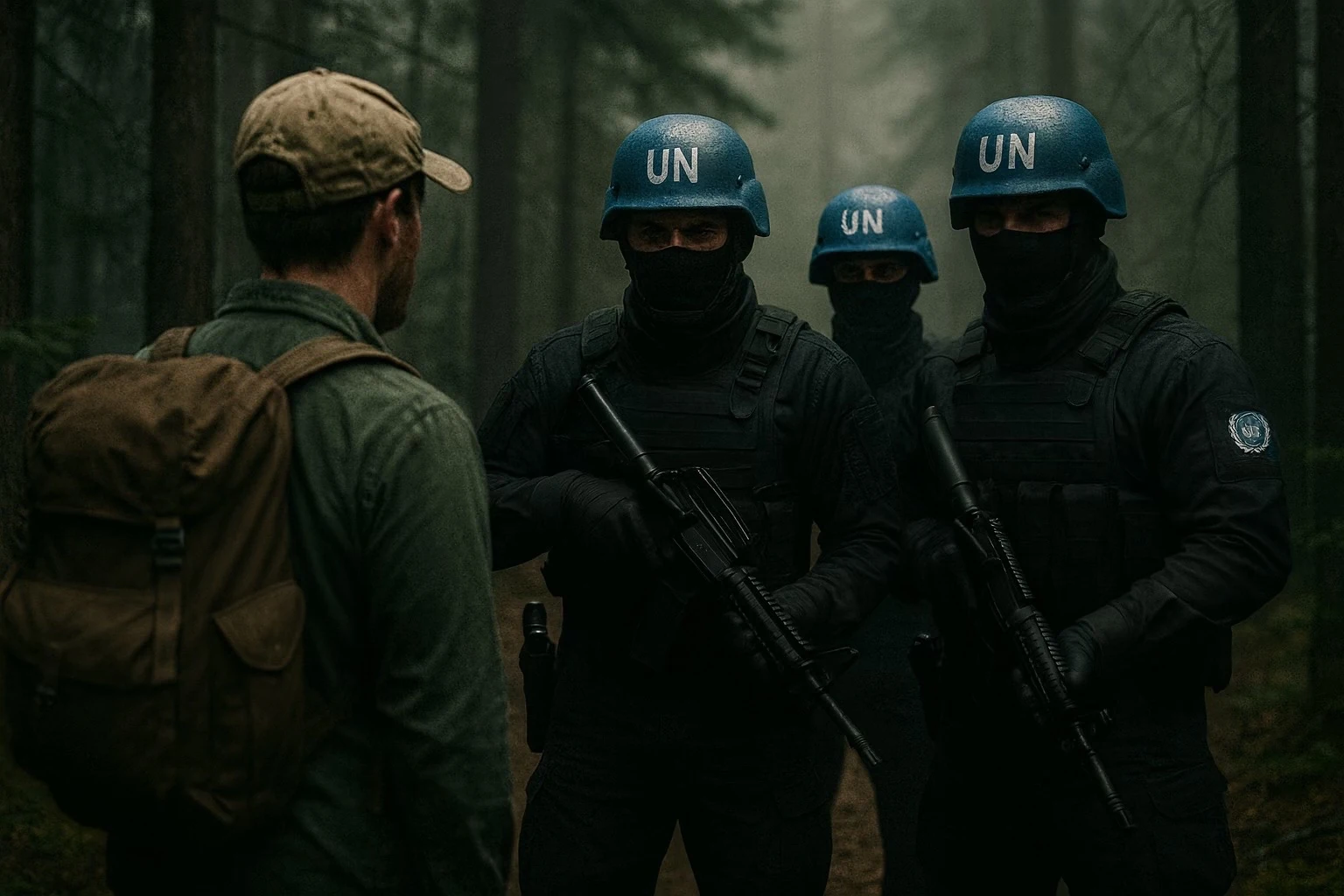
"Effective 4 p.m. today, we are telling Nova Scotians: stay out of the woods."
The provincial order fell with all the grace of an axe through bone. Yet here’s the problem: all of Nova Scotia is woods. Telling its citizens to “stay out of the woods” is the civic equivalent of telling New Yorkers to stay out of the city—or telling fish to stay out of the ocean.
The official rationale? “Safety.” The result? A grotesque parody of public governance—one that would be laughable were it not enforced by the iron hammer of a $25,000+ CAD fine. This is not a farce; it is official policy. It might as well have been drafted by the Ministry of Satire.
When a government tells its citizens they cannot so much as hike a trail, the only appropriate historical parallel is dystopia. It is The Hunger Games, but with less subtlety.
And yet, one can’t help but notice: such bans never apply to the ruling class, their entourages, or their security details. The woods, like so many other freedoms, are declared off-limits only to the people whose taxes pay for them.
Coordinated Pattern of Control
If Nova Scotia’s edict were an isolated lunacy, it could be dismissed as a local embarrassment. But the truth is more sinister: restrictions on freedom of movement are multiplying across the Western world with uncanny synchronization.
In the United States, under the benevolent-sounding Freedom to Move Act—championed by Rep. Ayanna Pressley and Sen. Edward Markey—government seeks to redefine mobility itself, wrapping the concept in the velvet glove of “fare-free public transit.” While it promises equity and environmental virtue, the fine print reveals something darker: the consolidation of transportation under centralized control, the elimination of fare evasion penalties (and thus private accountability), and the requirement that agencies follow federal directives to receive funding.
Liberty or Deathwire!
Defending the Right to Own and Travel: A Modern Call for Freedom
It is, in effect, a migration from voluntary use to dependency—tying your freedom to move to a state-administered ration card. Whether in Boston or Halifax, the principle is the same: you will go where you are told, when you are told, if you are told.
The nations marching in lockstep—Canada, the EU, New Zealand, Australia, the United States—are not stumbling toward these policies by coincidence. They are taking direction from the same masters: Swiss-based NGOs, lobbyists, unaccountable private equity boards, and the international banking cartels whose reach extends into every legislative chamber and press room. These entities do not govern with consent; they issue directives with expectation of compliance.
The Moral Crisis of Movement
Freedom of movement is not a “nice to have” convenience. It is the arterial flow of liberty itself. Deny a man the right to move, and you have shackled his capacity to work, worship, trade, and assemble. You have turned him from a citizen into a penned animal.
Consider the grotesque juxtaposition in Canada: the state promotes Medical Assistance in Dying with evangelical zeal, yet prohibits a healthy citizen from walking a trail. Would they, perhaps, make an exception if the hiker pledged to leap from a cliff? It is governance inverted—life constrained, death encouraged.
How We Fight Back
History teaches us that overreach thrives on passivity. When people submit quietly, governments do not self-correct; they escalate. Canada’s trucker convoy proved the opposite—that concentrated, immovable resistance terrifies authoritarian leaders. Prime Minister Trudeau’s panic was palpable: freezing bank accounts, jailing protest leaders, deploying a propaganda blitz to smear dissenters as extremists. That fear is a weapon—our weapon—if we are willing to wield it.
The remedy is simple but not easy: mass, coordinated non-compliance. This means:
Protest in Numbers – Not dozens, not hundreds, but tens of thousands. Show that the ban is unenforceable by sheer scale.
Park to Block – Vehicles positioned in front of government buildings, major commercial arteries, and choke points of commerce. A government cannot legislate against its own paralysis.
Synchronize Action – It must be everywhere, all at once, rendering the state incapable of responding in isolation.
Refuse to Disperse – The act of staying put—refusing to move—becomes the method by which we reclaim the right to move.
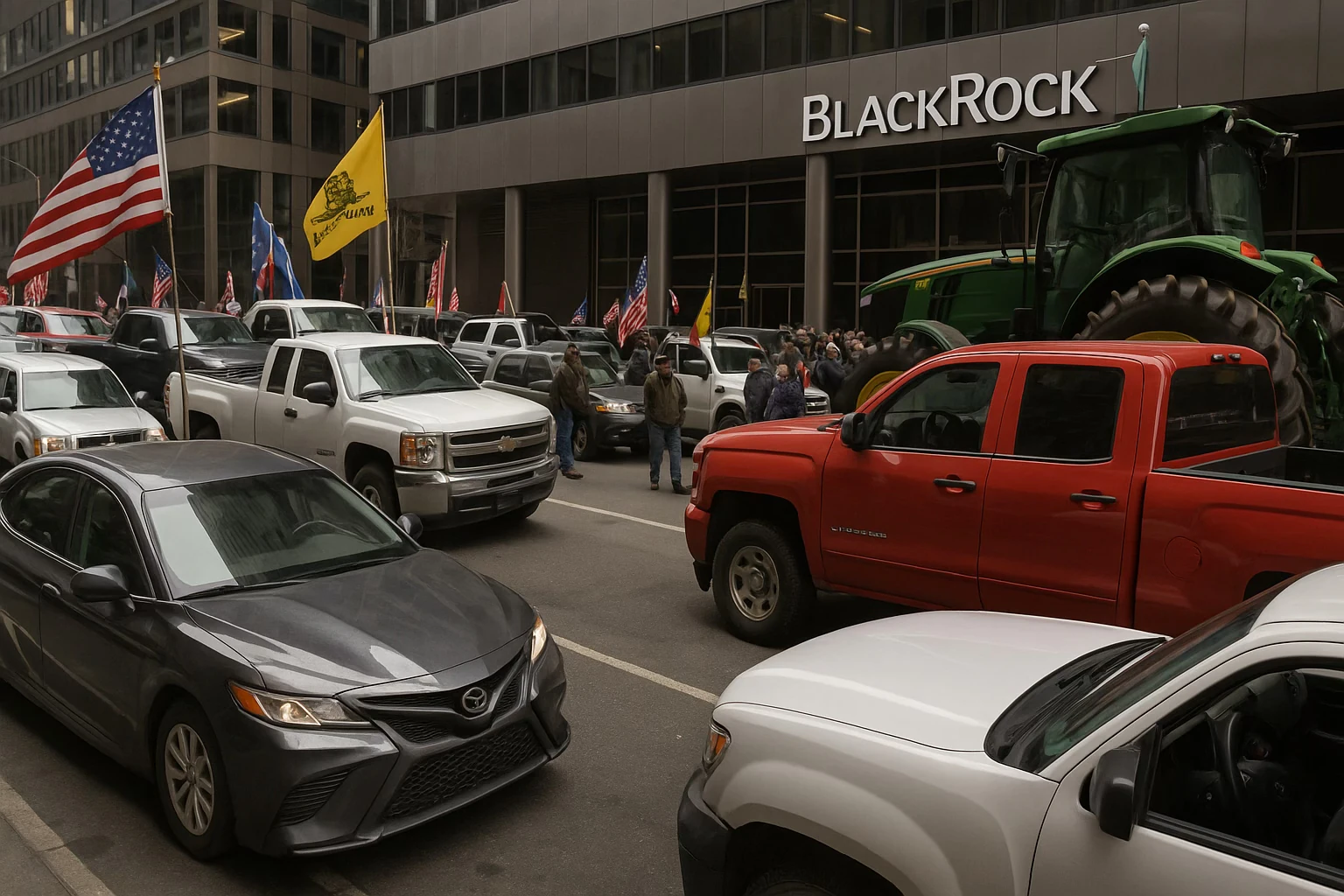
The strategy is paradoxical but potent: by halting movement in protest, we compel the restoration of our mobility. -ABR
The Choice Before Us
We face a question no free society should have to answer: will we accept that our governments can, at any moment, decide where we may walk, ride, or stand? Or will we rise in unyielding defiance, rejecting the false benevolence of those who would control us?
The lesson of the Canadian truckers, of every great act of civil resistance, is this: the state’s power is not infinite. It survives on the obedience of the governed. Withdraw that obedience, and the giant collapses.
If they would cage us in the name of “safety,” we must remind them that a free man does not beg for permission to breathe the air or tread the soil of his own country. The time to send that message is not “someday.” It is now. And the place to send it is everywhere their authority presumes to reach.
They have declared war on our freedom of movement. It is time we answer with a movement of our own—one they cannot stop, because it will not move until liberty itself is restored.
Where Stand Our Auto Chieftains in the Face of Klaus Schwab’s Global Decree?
Nova Scotia Premier Tim Houston’s Update on Wildfires – 08/13/2025
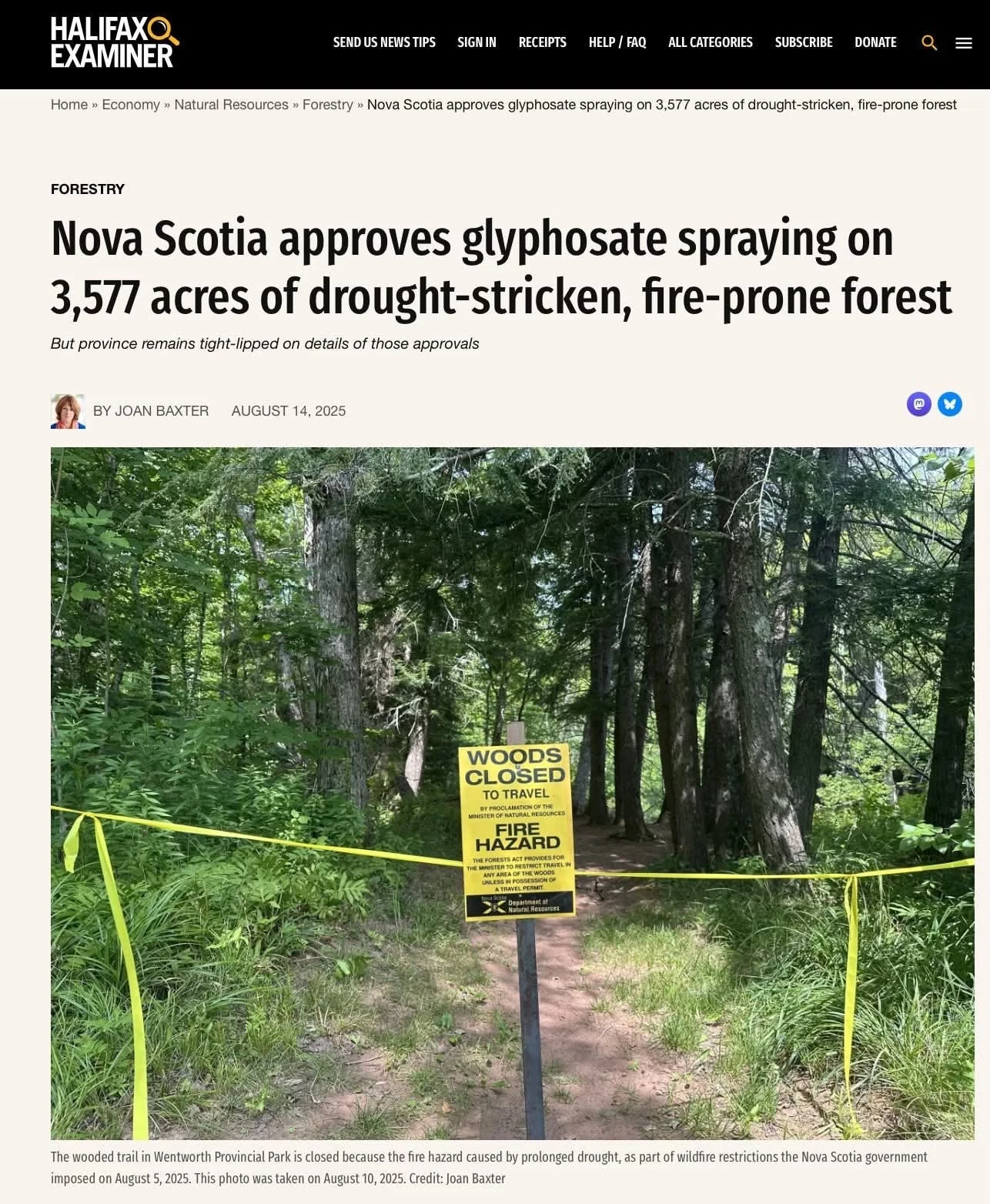
UPDATE: Just one day before Nova Scotia’s hiking ban, the Premier stated he was unaware whether the province’s drought-stricken forests were being treated with glyphosate — a chemical desiccant known to kill surrounding vegetation, creating additional flammable material and posing documented health risks, including carcinogenicity. In a recorded exchange at 13:50, he expressed uncertainty; however, records show the spraying was approved on August 11, with the Q&A taking place on August 13.
Glyphosate spraying has long been a point of contention in Nova Scotia, with citizen groups organizing annual protests in an effort to halt the practice. This year, government-published maps of spray sites have not been released, and protestors are currently prohibited from entering areas near active spray zones.
Quebec Bans the Practice of Glyphosate Spraying in Forests
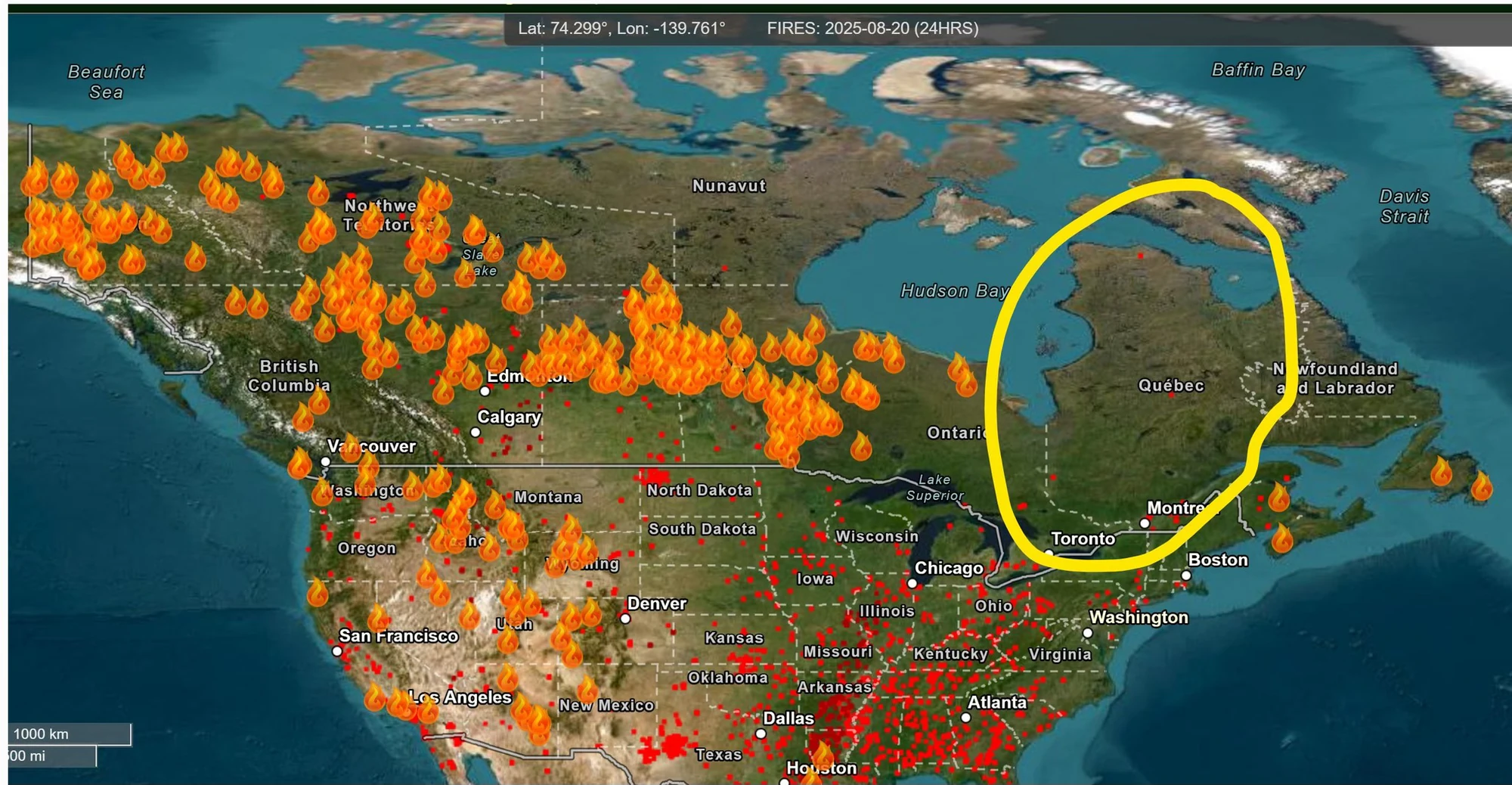
While most Canadian provinces continue to use glyphosate as a chemical drying agent in forest management, Quebec set itself apart more than two decades ago by prohibiting the practice. Since 2001, the province has maintained its commitment to protecting forests, ecosystems, and public health by refusing to spray glyphosate—making it the only province in the nation to do so. This decision has sparked ongoing debate about forestry practices, environmental safety, and the role of chemical herbicides across Canada.
Citizens Rule Book: A Palladium of Liberty (Hardcopies) 🇺🇸
Keywords
First published August 13, 2025. Originally published in Liberty or Deathwire.