The Great Educational Betrayal: How Social-emotional Learning (SEL) Undermines American STEM
Unfettered Multilateral Bureaucracy is Replacing Critical Thinking with Compliance in the Classroom
In this essay

Author's Note: Citizens, the moment demands your attention—not as mere observers, but as active guardians of your children's minds and the destiny of our nation. Social-emotional Learning (SEL) also written as Social and Emotional Learning is no trivial educational method; it is a carefully crafted weapon, designed to dull the sharp edge of reason and independence, leaving only passive compliance and unquestioning obedience in its wake.
Parents, you must reclaim your rightful role as the first and final arbiters of your children’s education. Abandon reliance upon institutions compromised by ideological agendas and private interests. Turn instead to homeschooling, community-run learning cooperatives, and other forms of decentralized education. Break free from the chains of educational monopolies by embracing local governance, parental oversight, and genuine intellectual liberty.
Withdraw support from corporations and NGOs that undermine our children's future and profit from their subservience. Let not another dollar flow to those who trade in the suppression of individual potential. Stand united and unyielding against these forces of control. Only by acting with clarity, resolve, and fearless determination can we safeguard the intellectual and moral foundations upon which our republic stands.
The time for quiet protest has ended; the cause is urgent, the stakes profound. Rise with conviction, assert your power, and reclaim the education of our children from those who would seek to exploit and diminish them.
Liberty’s Champion, Always…
-Andrew Brian Raupp
Citizens Rule Book: A Palladium of Liberty (Download) #InfoWars 🇺🇸
Social Emotional Learning (SEL) has become an increasingly polarizing force within the American education system. Though marketed as a method to foster emotional intelligence and harmonious social behavior, a closer, more analytical review reveals that SEL functions as an ideological delivery system—embedding subjective social norms into curriculum at the expense of academic rigor and the foundational meritocratic principles of disciplines like STEM (Science, Technology, Engineering, and Mathematics). SEL is not simply an ancillary component of modern curricula; it is rapidly becoming a dominant framework through which educational success is increasingly defined.
The UN's Pact for the Future: A Step Backwards for STEM Education
Founded by the Collaborative for Academic, Social, and Emotional Learning (CASEL), SEL is publicly framed as a means to enhance students’ emotional competencies and improve overall school climate. However, extensive financial interdependencies—ranging from private philanthropic foundations such as the Bill & Melinda Gates Foundation to federal funding vehicles embedded in U.S. Department of Education initiatives—raise serious questions about the objectivity and intent behind SEL’s rapid institutional adoption. This financing structure suggests that SEL is less about pedagogical innovation and more about influencing the values, behaviors, and beliefs of students through systemic, top-down conditioning. These relationships introduce powerful incentives to prioritize ideological acquiescence over academic mastery, with little room for parental or community input.
Far from promoting independent thought or intellectual resilience, SEL encourages behavioral compliance and emotional dependency. The curriculum often rewards emotional expressiveness and social alignment over analytical skills or academic achievement. In practice, this creates a classroom environment where students are evaluated not on their understanding of the subject matter, but on how well they conform to prescribed emotional and social standards. Over time, students internalize the idea that group consensus and emotional validation are more important than problem-solving, experimentation, or intellectual rigor. This shift fundamentally alters the purpose of education—from knowledge acquisition and skill development to social conditioning.
This dynamic is especially destructive in STEM education. STEM, by its very nature, demands rigor, precision, and objective assessment. The incursion of SEL into STEM classrooms leads to a dilution of standards—replacing quantifiable results and intellectual merit with ambiguous emotional assessments. The results are telling: a stagnation of academic outcomes and a measurable decline in international STEM competitiveness. Students trained in traditional, merit-based environments continue to outperform their SEL-influenced counterparts in fields requiring high cognitive engagement and discipline. As STEM employers increasingly prioritize technical proficiency and critical thinking, the widening performance gap poses a serious threat to the United States’ future capacity for innovation and global leadership in science and technology.
The ideological foundation of SEL also aligns disturbingly with globalist frameworks such as the United Nations' Agenda 21 and Agenda 2030. These initiatives, while cloaked in the language of sustainability and equity, are perceived by critics as mechanisms of social control and intellectual homogenization. Through a coordinated set of policies, these agendas aim to reshape human behavior at the population level—eroding national identity, diminishing individual aspiration, and creating a compliant, centrally-managed citizenry. SEL, by conditioning students to prioritize emotional compliance over critical thinking, plays a functional role in operationalizing these agendas within public education. The insertion of global ideological objectives into American classrooms represents a profound violation of educational sovereignty, and may ultimately undermine the very principles of democracy and self-determination.
To counteract the spread of SEL and its ideological underpinnings, a multi-pronged approach is necessary:
Reaffirm Academic Objectivity: School systems must recommit to academic standards based on empirical evidence and measurable outcomes, particularly within STEM disciplines. The evaluation of students should prioritize cognitive development, problem-solving capacity, and demonstrable technical proficiency.
Audit and Expose Financial Conflicts: All SEL-related programs must disclose funding sources, organizational affiliations, and potential conflicts of interest. Public oversight must be applied to ensure education is not being subverted by private or political interests. Transparency should be mandated by law, with independent audits made available to parents and local stakeholders.
Promote Intellectual Autonomy: Educational institutions should cultivate environments that encourage debate, critical inquiry, and intellectual dissent—not social uniformity. Classroom instruction should empower students to challenge assumptions, question narratives, and engage in reasoned discourse without fear of social reprisal.
Legislate Against Ideological Curriculum: State legislatures should pass policies that prohibit the use of public education as a platform for ideological indoctrination, mandating neutrality in social and emotional instruction. Curriculum frameworks should be strictly academic and avoid politicized interpretations of identity, behavior, or social responsibility.
Empower Parents and Local Governance: Parents and community stakeholders must reclaim authority over local education policy, resisting top-down mandates and ensuring transparency from school boards and administrators. Local education councils should be equipped with decision-making power to accept or reject SEL-based programs according to the will of the community.
In summary, SEL is not a benign educational strategy—it is a systemic framework designed to reengineer the intellectual and cultural fabric of American society. Its alignment with transnational ideological goals, its dilution of academic standards, and its suppression of independent thought present a significant threat to the nation’s educational sovereignty and STEM excellence. If America hopes to preserve its leadership in science, technology, and innovation, it must reject SEL’s influence and reinstate a culture of merit, rigor, and intellectual freedom in its classrooms. This is not just an educational issue—it is a matter of national preservation and generational responsibility.
Citizens Rule Book: A Palladium of Liberty (Hardcopies) 🇺🇸
Addendum: The Road to Radicalization: SEL and the Making of a Crisis
How does a young man like Tyler Robinson, the (alleged) shooter of Charlie Kirk, emerge from a conservative home in a “red state” such as Utah only to turn violently against the very values that shaped him? How does a once-stable identity fracture into radicalism so severe that silencing another’s speech seems justifiable, even through murder?
To understand this disturbing transformation, one must look beyond surface explanations and into the psychological conditioning at work in America’s schools. The roots of this conditioning stretch back decades—to experimental psychological methods once dismissed by the CIA as too dangerous, yet later rebranded and mainstreamed as Social Emotional Learning (SEL).
The Rebranding of Dangerous Methods
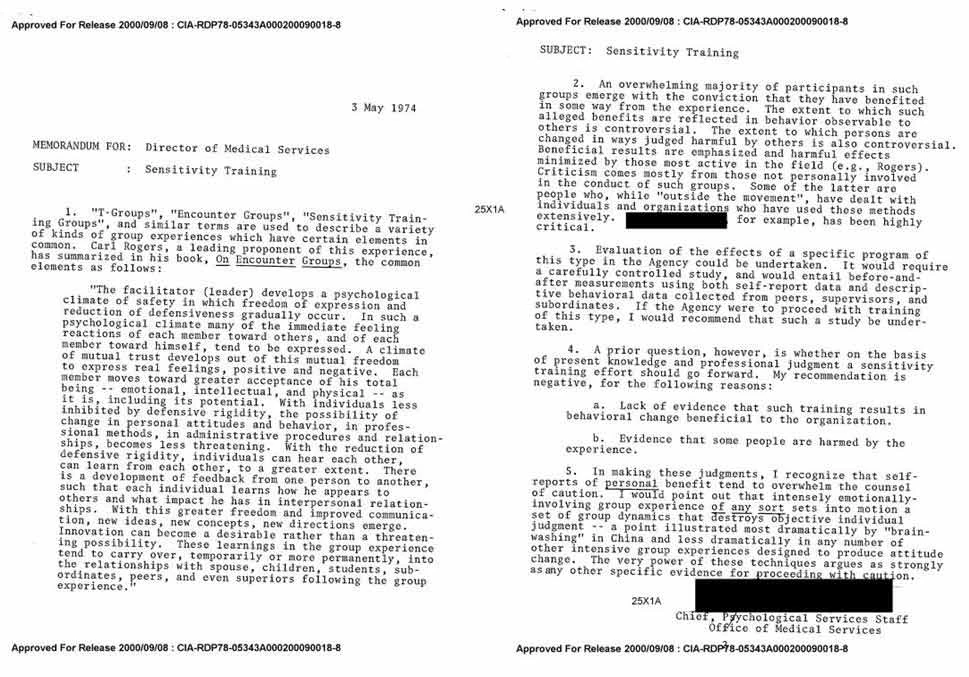
In 1974, the CIA’s Chief of Psychological Services issued a stark warning about sensitivity training groups, “encounter sessions,” and T-Groups then in vogue:
“Intensively emotionally-involving group experience of any sort sets into motion a set of group dynamics that destroys objective individual judgment… illustrated most dramatically by brainwashing in China.” – CIA Memorandum, 1974 (Figure 1)
Despite these warnings, the very practices the CIA rejected found new life in America’s educational system. By the early 1990s, they had been rebranded as Social Emotional Learning and embedded in curricula across all 50 states.
Unfreezing – Changing – Refreezing
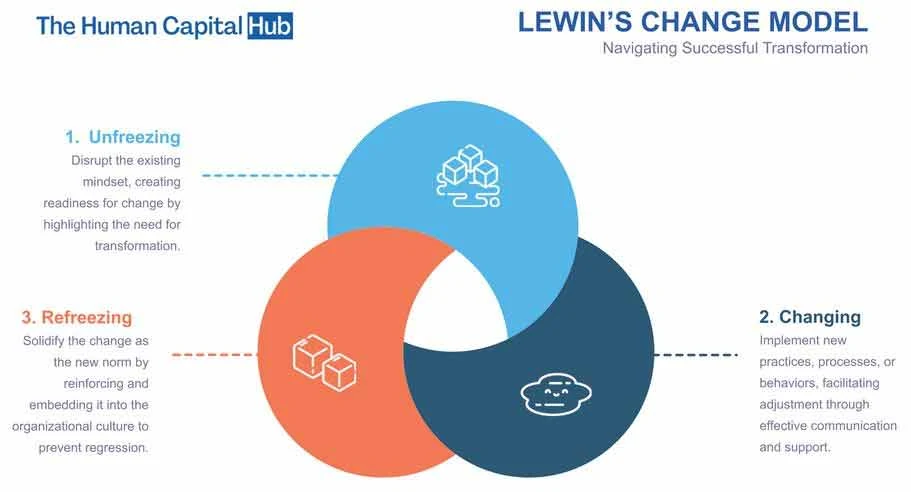
The lineage of SEL traces directly back to Kurt Lewin’s model of “Unfreezing, Changing, Refreezing,” first developed at the National Training Laboratories in 1947 with backing from the NEA and the Office of Naval Research.
Unfreezing: A facilitator creates an environment of safety, encouraging vulnerable disclosures and stripping away defenses.
Changing: Peer feedback (positive or negative) is used to interrogate and dismantle an individual’s worldview, with the goal of replacing it with a new, group-approved consensus.
Refreezing: The new worldview is solidified, displacing the individual’s prior convictions.
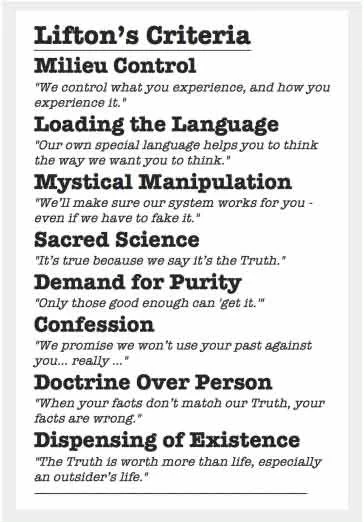
This process, eerily similar to Robert Lifton’s Eight Criteria for Thought Reform (1962), is the psychological mechanism of indoctrination (Figure 3). Lifton’s framework, originally derived from interviews with Korean War POWs and victims of Chinese re-education, outlines the precise techniques used by cults, totalitarian regimes, and—by adaptation—SEL programs.
SEL as a Vehicle for Critical Theory
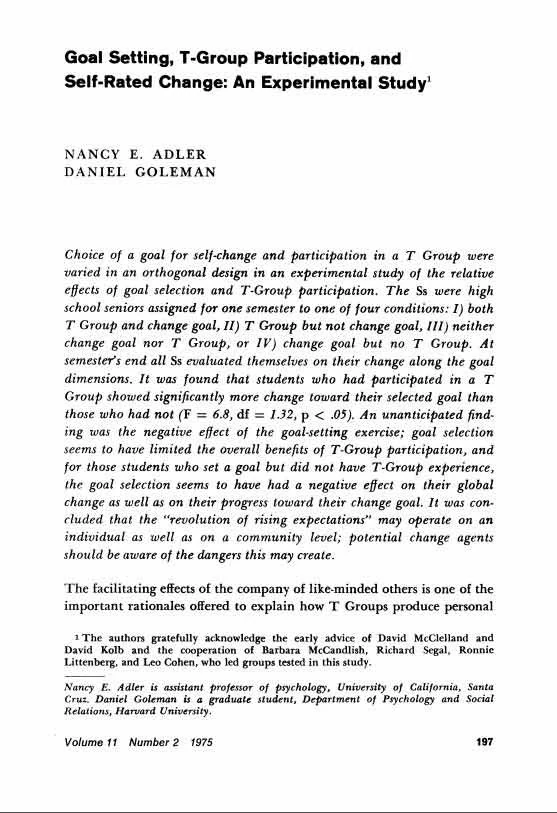
Daniel Goleman, who would later popularize Emotional Intelligence and help establish SEL through CASEL, was directly connected to the T-Group tradition, publishing research on the practice while at the NTL (Figure 4). SEL thus carries forward not only Lewin’s theory but also the sensitivity training culture of the 1960s and 1970s.
In practice, SEL destabilizes foundational beliefs, primes children for identity crises, and renders them open to new ideologies. Once “unfrozen,” children can be persuaded toward Critical Race Theory, Queer Theory, climate extremism, or other collectivist frameworks, whether through school curricula, online platforms, or peer communities.
Trauma Disguised as Education
Abigail Shrier’s Bad Therapy (2024) provides chilling modern examples. Fifth graders, during SEL “circle time,” are prompted to confess personal traumas in front of classmates: a boy sobbing about his father’s rejection, a girl exposing parental divorce, others revealing family turmoil. The aftermath? Classrooms filled with tears, confusion, and vulnerability—children emotionally destabilized before math lessons even begin.
This is not therapy. It is trauma-bonding disguised as pedagogy. And it creates precisely the fractured identities that leave children vulnerable to radical ideologies.
Transformative SEL, the latest evolution, removes even the pretense of neutrality. Official state documents have admitted it is a vehicle for redistributing power to promote social justice. In other words, it is ideology delivered through forced vulnerability.
From Experimentation to Casualties
The historical record is equally alarming. Sensitivity training in corporations during the 1960s and 70s led to breakdowns, resignations, and suicides. Stanford University’s 1973 study concluded bluntly: “Encounter groups present a clear and evident danger if they are used for radical surgery in which the product will be a new man.”
One General Foods manager took his life after being berated in a T-Group session; the company settled with his family. Others left shattered by the experience. And yet, these very methods—once deemed unfit for adults—are now deployed wholesale on America’s children through SEL.
The Pathway to Radicalization
Here is the psychological chain at work:
Induce Vulnerability – SEL creates safe spaces that encourage disclosure and dismantling of defenses.
Destabilize Identity – Foundational values are interrogated, leaving children in a state of cognitive dissonance.
Introduce Ideology – Critical Theory narratives are supplied as ready-made replacements.
Compel Action – SEL demands students not be “bystanders” but “upstanders,” often through activism against perceived oppressors.
For Tyler Robinson, this pathway may have culminated in lethal violence. Conditioned to reject his family’s values and compelled to act against a “bully,” he allegedly escalated to murder.
A National Reckoning
America stands at the edge of a precipice. We are raising a generation being methodically severed from its roots—estranged from its heritage, taught to regard the Constitution with suspicion, and pulled away from family traditions of faith, duty, and patriotism. This unraveling is not the product of accident, neglect, or cultural drift. It is the outcome of deliberate psychological engineering—an experiment once deemed too dangerous for adults, now forced upon children under the banner of Social Emotional Learning (SEL).
SEL is not the benign “life-skills” curriculum its advocates claim. It is the rebranded heir of sensitivity training and encounter groups the CIA itself once rejected for their ability to destroy objective individual judgment. It destabilizes children’s identities, fractures their trust in family, and leaves them vulnerable to radical ideologies that would otherwise never take hold. It is a quiet revolution, executed not with weapons but with lesson plans, and its victims are sitting in America’s classrooms right now.
The cost is already visible. Youth mental health is in collapse. Family bonds are eroding. A rising number of young people no longer feel loyalty to their nation, their traditions, or even their parents. And as we have seen, some are being driven beyond alienation to violent compulsion—believing that to silence another’s voice is not only permissible, but righteous.
If we do not act, this fracture will widen until an entire generation is lost to bitterness, dislocation, and ideological subjugation. America cannot endure if its children are taught to despise its very foundations.
The time for polite debate is over. SEL must be abolished—fully, permanently, and without compromise. Its theories, its materials, its programs, and its facilitators must be removed from the schools entrusted with our children’s future. Nothing less will suffice.
This is not merely an education issue. It is a matter of national survival. To preserve our Republic, our families, and our freedom, we must root out SEL from every classroom in America. The reckoning is here. The choice is ours.
Addendum research credit to: Lisa Logan is host of the YouTube Channel Parents of Patriots and author of the Substack Education Manifesto. You can find her on X at @iamlisalogan.
The Final Frontier of Feminism: Forcing Women Into STEM, and Why It Must End
Keywords
First published May 15, 2025. Originally published in Liberty or Deathwire.