The Special Culinary Operation
Bugs, Bioreactors, and the Battle for Your Plate
In this essay
- The Steak That Wasn’t
- The Billionaire’s Menu
- Climate Alarmism as Justification
- When Hype Meets Reality
- The Legal Battles Ahead
- The Hidden Health Questions
- Philosophical Stakes: More Than Protein
- How to Resist the Manufactured Future
- Final Thoughts
- Video (09/06/2025): Bill Gates’ Owned Company Sues Texas For Banning His Lab Grown Fake Meat #AJNLive
- The Synthetic Food Push Expands Despite Mounting Losses 🚨
The Steak That Wasn’t
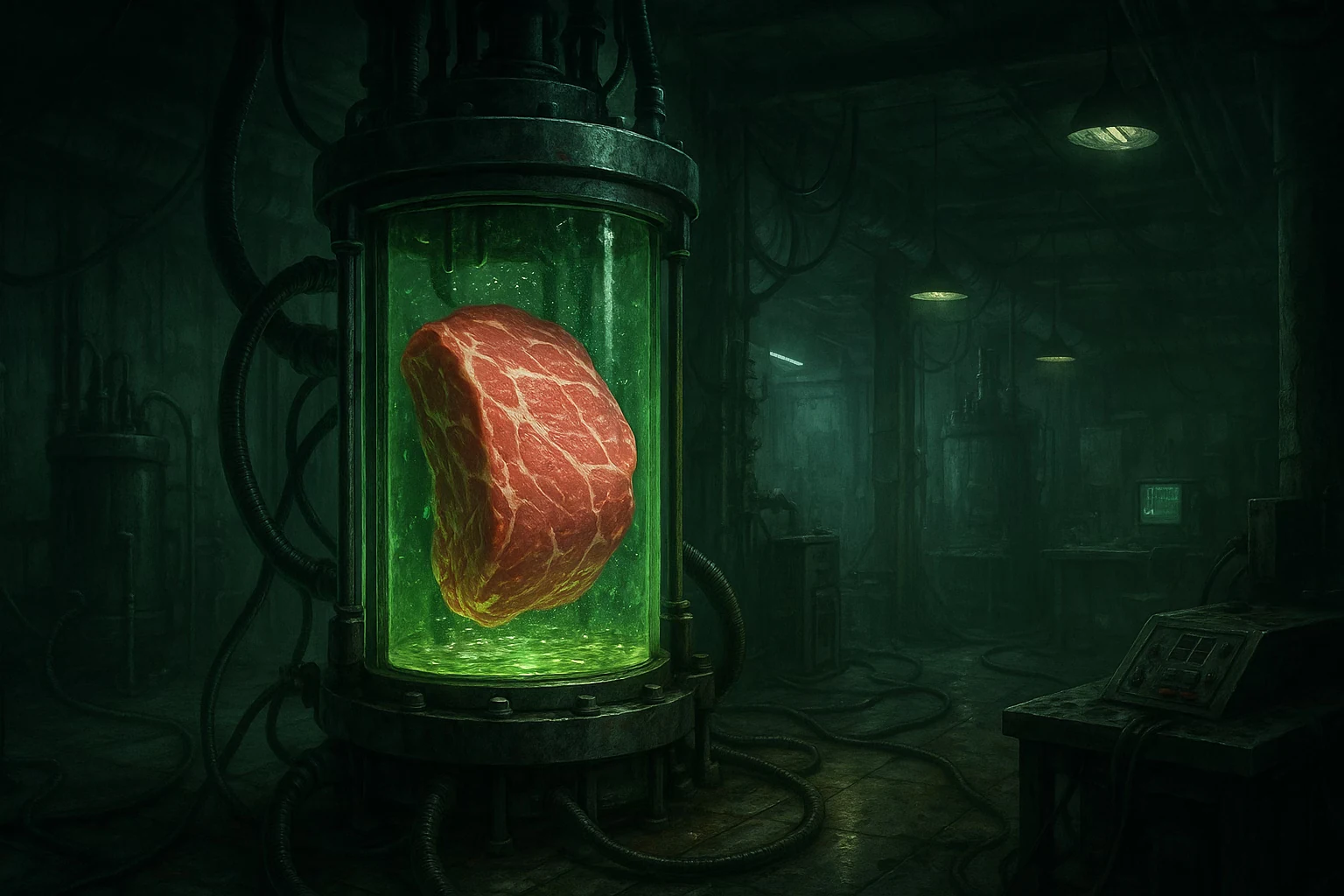
It was plated like art: a glistening cut of steak, seared to a mahogany crust, its pink interior oozing juices under the studio lights. Cameras flashed, journalists scribbled, and the founders of Memphis Meats beamed. To the untrained eye, this was beef as it had always been. Yet it had never grazed, never felt sunlight on its hide, never drawn breath. It had been coaxed into existence in a sterile bioreactor—its life not measured in seasons but in patents.
When Memphis Meats, now rebranded as Upside Foods, secured investments from Bill Gates, Richard Branson, and Tyson Foods, the media hailed it as a triumph of science over cruelty. “Meat without slaughter,” proclaimed headlines. The symbolism was potent: a steak that appeared familiar but was fundamentally alien, birthed not from pastures but Petri dishes.
But beneath the sheen of innovation lay an unspoken question: if food could be manufactured like software, if the intimate bond between land, farmer, and animal could be severed, then who—ultimately—would own the future of sustenance? This was not merely a new steak. It was a new regime.
The Billionaire’s Menu
The cast of characters behind this movement reads like a roll call of the ruling class. Gates, Branson, and Silicon Valley venture firms have poured billions into startups promising chicken from cell cultures, tuna from tissue scaffolds, and eggs from engineered proteins. Firms such as Wildtype, Eat Just, and Finless Foods market themselves as disruptors, yet their investors hail from the very establishment they claim to challenge.
Bill Gates went further, insisting in 2021 that “all rich countries should move to 100% synthetic beef.” His argument rested not on cuisine but on climate: livestock, he declared, was unsustainable. The solution was not fewer factory farms or more regenerative ranching, but lab-grown beef—the kind produced under patented processes in centralized facilities.
Microsoft's Monopoly as a Contemporary Prometheus Threatening the Future of Humanity
This is the new menu of the billionaire class: steak without cattle, fish without seas, milk without cows. Not coincidentally, each of these foods is now intellectual property, their recipes jealously guarded by corporations rather than passed down through generations of farmers. Where once food was rooted in land and season, it is now rooted in proprietary cell lines. The shift is seismic. The family farmer becomes obsolete; the consumer, dependent.
Climate Alarmism as Justification
The marketing of this transformation is shrouded in urgency. “The planet is dying,” we are told. “The cows are killing us.” By equating meat with planetary collapse, elites deploy a moral cudgel: those who resist synthetic diets are painted as reckless climate deniers.
Yet the story is not so simple. Studies of regenerative grazing reveal that cattle managed on grasslands can sequester carbon, restoring soil health and biodiversity. Small-scale ranchers who rotate herds mimic the rhythms of ancient ecosystems, replenishing what industrial agriculture degraded. The methane narrative, repeated ad nauseam, rarely acknowledges this nuance.
What emerges instead is a form of climate alarmism—a rhetoric designed less to illuminate than to compel. The choice presented is stark and false: embrace lab-grown alternatives or watch the planet burn. Lost in this framing is the possibility that stewardship of natural systems, not their abandonment, may be the truest form of sustainability. The alarmism, critics argue, is less about saving the Earth than consolidating control over what humans consume.
When Hype Meets Reality
For all the glossy press releases and Davos presentations, reality has proven less malleable than investors hoped.
Consider Beyond Meat, once hailed as the future of protein. Its burgers graced fast-food menus across America, endorsed by celebrities and cheered by Wall Street. Yet the product’s novelty could not mask its flaws: the taste, many said, was artificial; the ingredient list, suspiciously long. Sales plummeted, and by 2025 the company was flagged as at risk of Chapter 11 bankruptcy. The dream of replacing the American hamburger with pea protein fizzled.
Or take Aspire Food Group, a Canadian startup that built a $90 million facility to farm crickets at industrial scale. Praised as a climate-friendly protein, Aspire laid off two-thirds of its workforce before collapsing under $41 million in debt. The court ordered it into receivership; the “protein of the future” was revealed to be an unsellable commodity.
These implosions expose the gap between elite enthusiasm and public appetite. Despite billions in subsidies and marketing, consumers remain unconvinced. They prefer beef to bioreactors, fish to finless tissue. The people are voting with their forks.
The Legal Battles Ahead
Where persuasion fails, coercion follows.
In Texas, lawmakers passed Senate Bill 261, a two-year moratorium on cultivated meat sales. Their rationale was both economic and cultural: protect ranchers, ensure safety, and defend tradition. Texas, after all, is cattle country, where barbecue is not just food but identity.
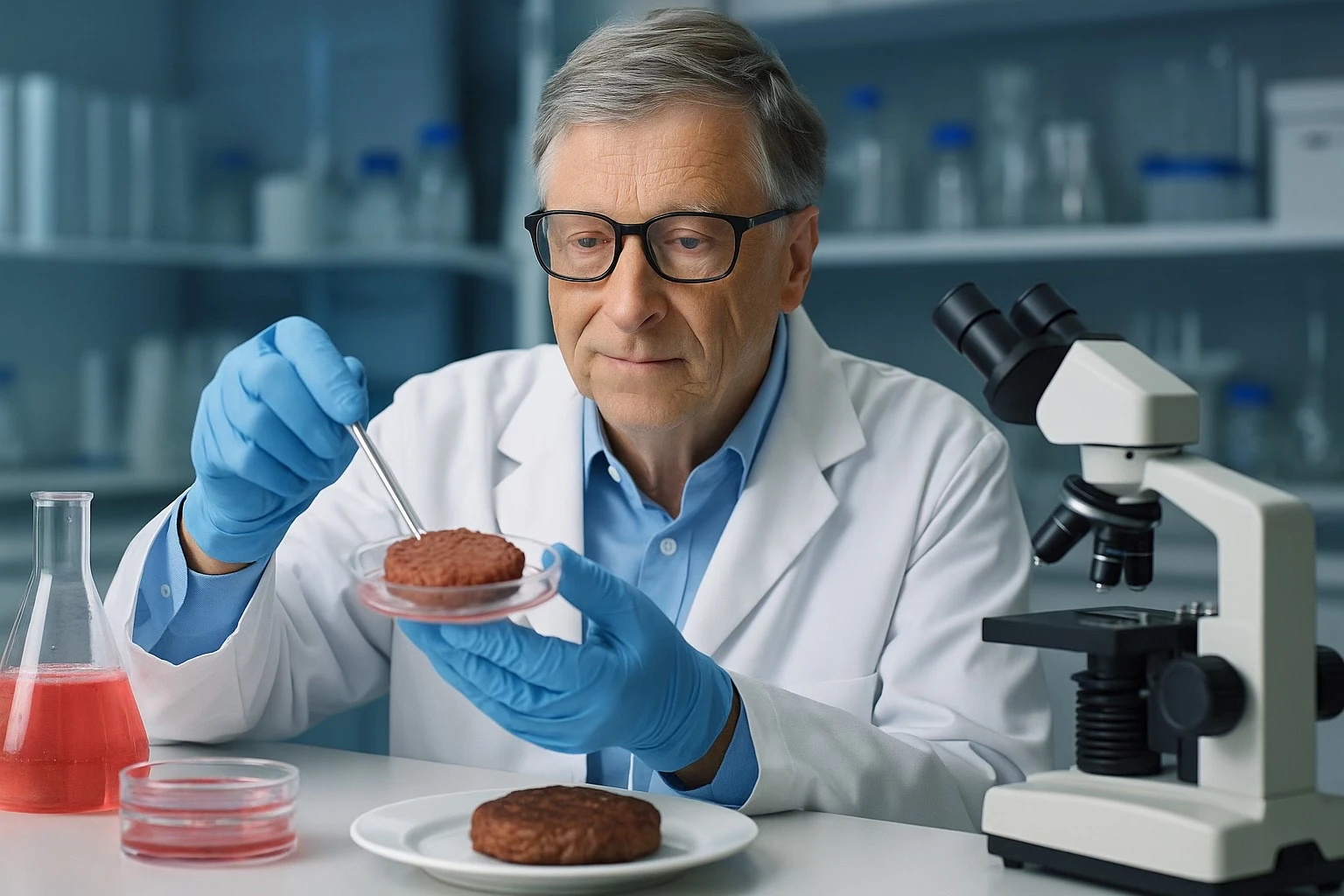
But the industry did not yield. Upside Foods and Wildtype quickly filed a federal lawsuit, arguing that the ban violated interstate commerce and consumer choice. Reports suggest Gates-backed entities are supporting similar legal actions across at least ten states, aiming to force lab-grown meat into stores and restaurants regardless of public sentiment.
What emerges is a paradox. The same investors who champion “choice” when it serves them now seek to use the courts to remove it when the public resists. Sovereignty over diet—once a deeply personal matter—is becoming a battlefield of litigation.
The Hidden Health Questions
The debate is not only cultural or economic—it is biological.
Lab-grown meats rely on immortalized cell lines, some derived from aborted fetal tissue (HEK293), others from cancer cells such as those taken from Henrietta Lacks. These cells divide indefinitely, a property valuable in research but fraught with questions for consumption. What does it mean to ingest tissues never meant for the human gut? What long-term risks might emerge decades later?
Insect protein, too, poses risks. Crickets contain chitin, an indigestible fiber that can trigger allergic reactions and disrupt digestion. Early adopters report discomfort, yet regulatory bodies remain silent. And while the FDA has granted limited approval for lab-grown chicken, those approvals cover small, controlled batches—not widespread, multigenerational consumption.
Unlike grass-fed beef or wild-caught fish, which carry the wisdom of centuries, these foods are experiments in progress. Consumers are the test subjects.
Philosophical Stakes: More Than Protein
At its core, this debate is not about calories or climate. It is about meaning.
Meat has always been more than matter. From Homeric feasts to Indigenous hunting ceremonies, it is tied to sacrifice, celebration, and gratitude. To slaughter an animal for food is to acknowledge the cycle of life and death, to honor the sacred exchange of nourishment.
By contrast, lab-grown meat severs this bond. There is no soil, no season, no animal. Philosopher Albert Borgmann’s warning of the “device paradigm” resonates here: technology displaces ritual until nothing remains but sterile consumption. A steak from a bioreactor is not a continuation of tradition—it is the erasure of it.
If food is memory, then fake meat is amnesia. If cuisine is culture, then insect patties are cultural bankruptcy. In surrendering meat, we risk surrendering more than flavor; we risk surrendering part of our humanity.
How to Resist the Manufactured Future
Resistance must be more than rhetoric; it must be lived. It begins by strengthening the ties that industrial technocrats are trying to sever.
Support independent farmers and ranchers, the men and women who still raise animals and crops with integrity. Every purchase from a local farm, butcher, or fishery keeps alive the web of trust between producer and community.
Choose foods that are real and rooted—grass-fed beef, pasture-raised chicken, wild-caught fish, heritage pork—foods that belong to the land and to culture, not to laboratories and corporations.
Rebuild food independence at home wherever possible. Plant gardens. Keep chickens. Hunt and fish. Form co-ops with neighbors to share resources and skills. Each act of self-reliance, no matter how small, is a quiet refusal to become dependent on systems designed to corral choice.
Preserve tradition through teaching. Pass down recipes, skills, and knowledge of how to raise, prepare, and preserve real food. Children who know how to cook from scratch or gather food from the land are inoculated against corporate marketing campaigns that would convince them that “meat” comes from a factory or an insect crate.
And finally, stand firm in law and culture. Demand transparency from regulators. Push back against efforts to legislate away traditional food or to force synthetic substitutes into restaurants and stores. What bureaucrats regulate today, they will ban tomorrow—unless citizens refuse.
History shows us plainly: when governments and corporations claim control over food, the result is not nourishment but dependency. Freedom does not begin in government chambers. It begins at the table. And each time we sit down to a meal of real food, we practice that freedom anew.
Final Thoughts
Let us speak plainly: those who would dictate what we eat are not offering innovation but issuing commands. They wrap their decrees in the language of science, sustainability, and salvation, yet the essence is control. What enters our mouths, what nourishes our children, what sustains our families—these are matters so intimate, so sacred, that no legislature, no corporation, no billionaire has any rightful claim to them.
We have witnessed this pattern before. During the pandemic, experimental injections were paraded as the singular path to safety, and those who hesitated were shamed, coerced, or cast out of public life. Now the same machinery is redeployed at the dinner table. Once again, the elites would reduce us to subjects of their designs, insisting we trade the wisdom of our ancestors for the novelty of their laboratories.
But food is not medicine to be mandated. It is culture, liberty, and life itself. To yield it is to yield the last line of personal autonomy. If they can command what you eat, they command your body. If they command your body, they command your soul.
This is not a debate about beef or crickets, chicken or cell lines. It is a contest over sovereignty. Will men and women remain free to cultivate, to hunt, to eat as their conscience and culture dictate—or will they become dependents, sustained only by the sterile hand of industry?
Video (09/06/2025): Bill Gates’ Owned Company Sues Texas For Banning His Lab Grown Fake Meat #AJNLive
The “steaks” are high—higher than any in living memory. And once freedom is surrendered at the table, it will not easily be reclaimed. If we are to resist the slow creep of technocratic dominion, we must begin here, with knife and fork in hand—defending the right to choose what nourishes us, and to reject what would make us less than human.
The Synthetic Food Push Expands Despite Mounting Losses 🚨
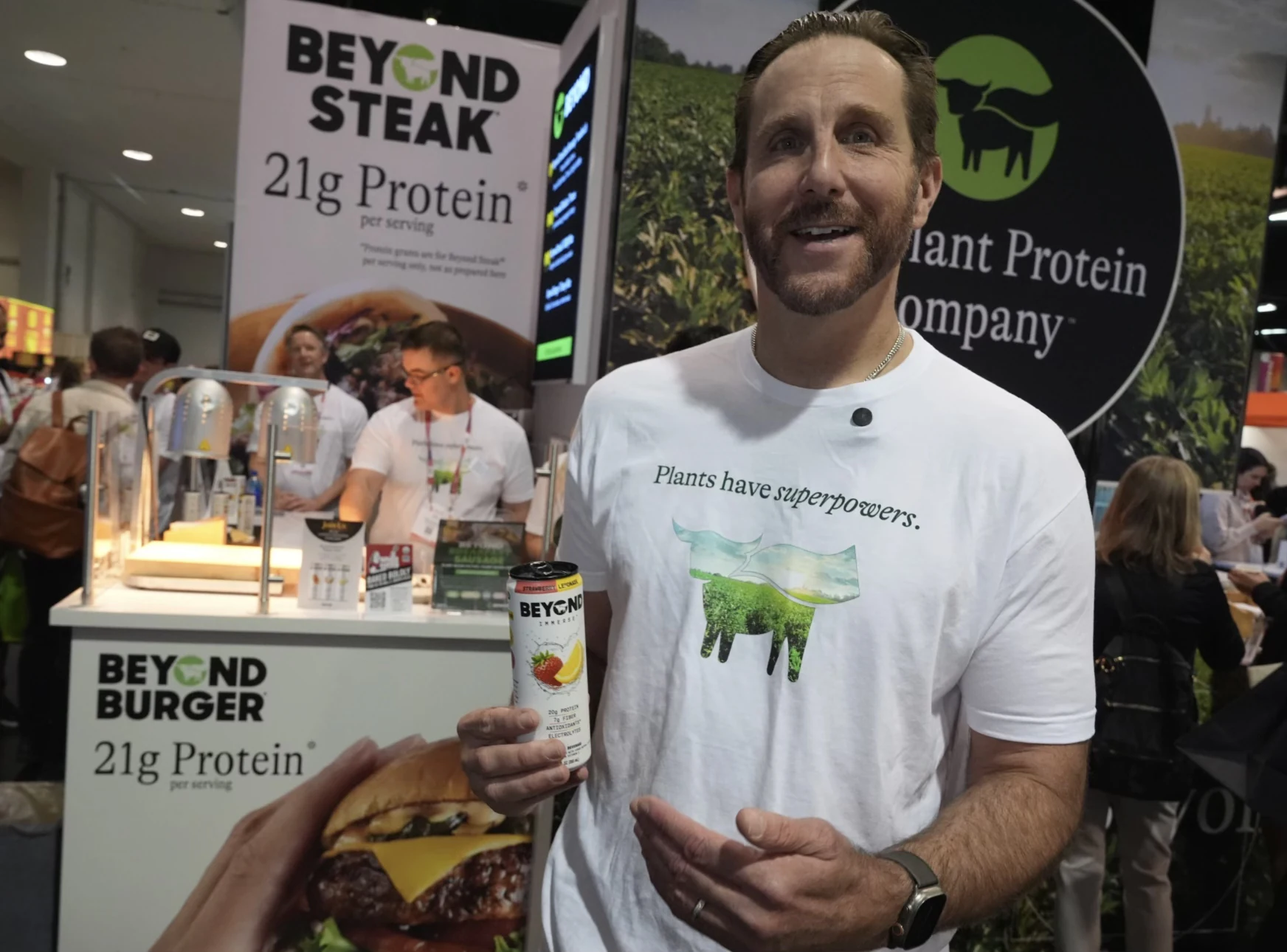
Update (03/06/2026): As public skepticism toward highly processed plant-based foods grows, the companies that pioneered the sector appear determined to push forward regardless of market signals. This week, the plant-based giant formerly known as Beyond Meat announced a dramatic pivot away from its struggling meat-replacement products and toward an expanded lineup of plant-derived protein products—including drinks and snack bars.
The company is now rebranding itself as “Beyond The Plant Protein Co.”, signaling a broader strategy that moves beyond imitation burgers and sausages into beverages and other protein-focused products. Its first entry into the new category is a sparkling protein drink called “Beyond Immerse,” launched in early 2026 as the company experiments with entirely new food formats.
The pivot comes during a difficult period for the plant-based meat sector. U.S. sales of meat alternatives have fallen roughly 26% over the past two years, and Beyond’s own revenue dropped 14% in the first nine months of 2025, while its share price has sunk below one dollar. Consumers have increasingly questioned ingredient lists filled with gums, oils, and additives—concerns that analysts say have contributed to declining demand.
Yet even as the market falters and several jurisdictions debate restrictions or labeling rules for synthetic and lab-derived foods, some of the sector’s most powerful backers remain undeterred. Among the most prominent is Bill Gates, whose investment network has long championed alternative proteins and the transformation of the global food supply. Gates has repeatedly argued that technological innovation—including plant-based and laboratory-grown proteins—will be essential to reshape agriculture and reduce emissions tied to livestock production.
For critics, however, the persistence of these initiatives despite massive financial losses and consumer pushback raises deeper questions. If the market itself is signaling hesitation, why does the push continue with such intensity?
Supporters argue that the industry is simply undergoing the turbulence typical of any emerging technology. But skeptics counter that the project increasingly resembles a top-down transformation of the food system—driven not by ordinary demand, but by a convergence of venture capital, global policy initiatives, and billionaire-funded climate strategies.
America's Last Stand: The Extinctionists Versus The Expansionists
Whatever the explanation, the trajectory is clear: the plant-protein experiment is not retreating. It is evolving. Burgers that once tried to mimic beef are now giving way to engineered beverages, powders, and nutritional platforms designed to insert alternative proteins deeper into the everyday diet.
And even as losses mount and the public questions what exactly is in these products, the architects of the movement appear intent on pressing forward.
Citizens Rule Book: A Palladium of Liberty (Hardcopies) 🇺🇸
Keywords
First published September 6, 2025. Originally published in Liberty or Deathwire.