
The World That Would Not Obey
The Architecture of Control—and Its Unintended Consequences
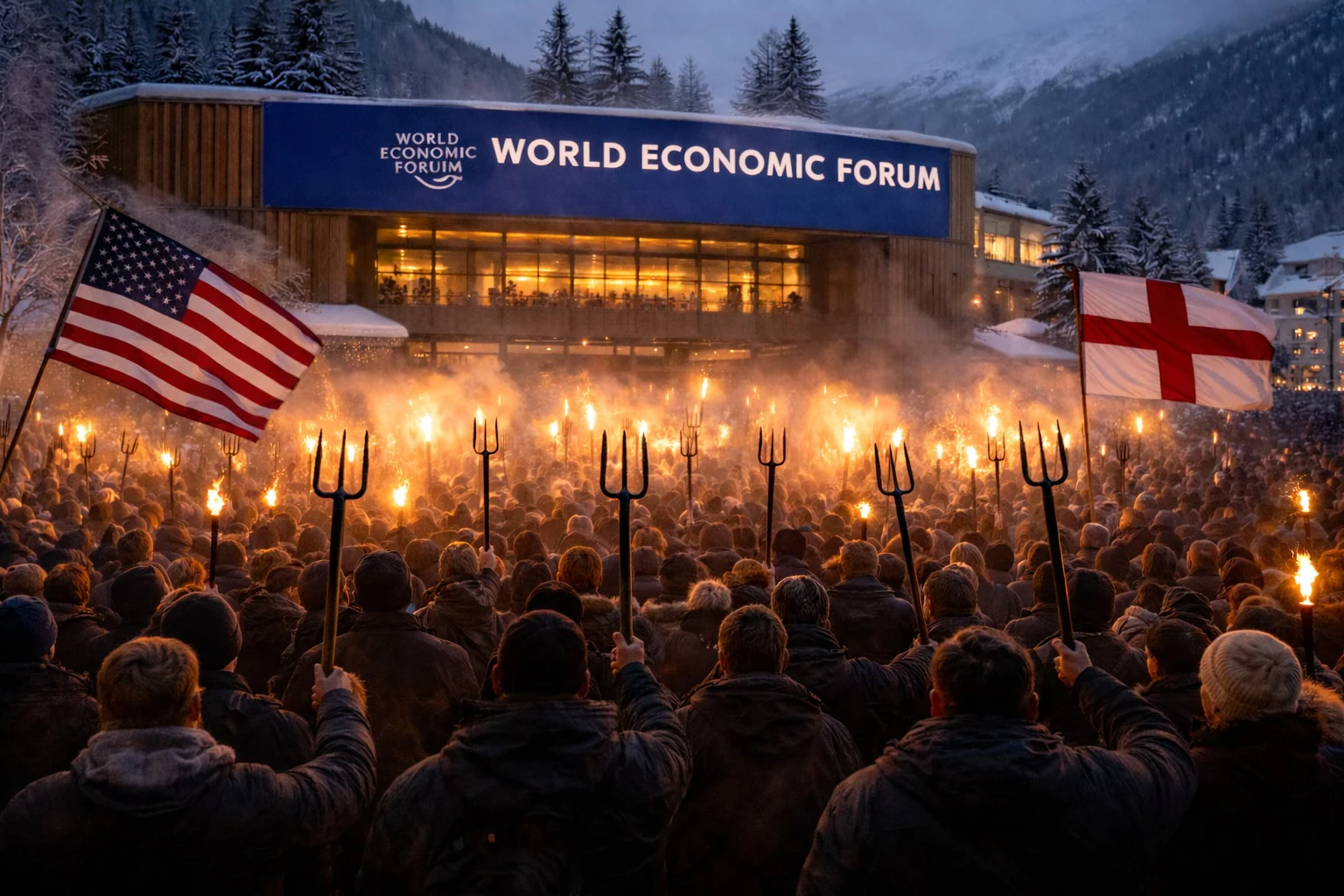
Author’s Note: What follows are not theories, nor speculation, nor the indulgences of hindsight. They are observations—events witnessed in real time over the last decade and recorded here deliberately to preserve the historical record while it is still contested, before it is diluted, reframed, or erased altogether. This account does not claim completeness; it claims honesty.
Much has been left unsaid—not because it is unknown, but because its inclusion would require volumes. I did not include the catastrophic overthrow of Gaddafi, which reduced a functioning state into a permanent engine of regional instability. I did not include the U.S. intelligence–backed funding and arming of so-called “moderate rebels” in Syria against the Assad government, a linguistic deception that masked one of the most reckless foreign policy disasters of the modern era. I did not include the financial everything bubble—engineered by central bankers, enabled by corrupt politicians, and rationalized by the Davos class—that now trembles under its own excess and threatens to break with historic consequence. These acts are not peripheral; they are foundational. Their omission here is an act of restraint, not denial.
This work is a snapshot of a world in transition—marked by hope, anticipation, and deep unease. Hope, because citizens across nations are beginning to recognize the contradictions imposed upon them. Anticipation, because systems built on deception rarely dissolve quietly. Unease, because history is unforgiving to declining orders that choose arrogance over humility.
I write this with no appetite for chaos and no romance for conflict. I pray—sincerely—that a peaceful resolution is found before the world is set ablaze by those who mistake control for destiny. But prayer does not excuse complacency. Each patriot bears a duty: to safeguard family, to stand with neighbor, and to prepare with clarity and moral seriousness. The only way to endure a moment this precarious in human history is to reject illusion, cultivate resilience, and draw nearer to God.
Empires collapse. Narratives fail. Markets implode. What remains are faith, responsibility, and the courage to tell the truth while it still matters.
In Defiance,
Andrew B. Raupp ✍️
Citizens Rule Book: A Palladium of Liberty (Download) #InfoWars 🇺🇸
Every durable system of rule survives not by force alone, but by persuading those beneath it that resistance is futile, irrational, or immoral. In the late twentieth century, this persuasion took the form of a doctrine quietly elevated to dogma: that global integration, technocratic governance, and the erosion of national sovereignty were not political choices but historical necessities. Elections would continue (not always), debates would be televised, protests would be permitted—but outcomes, it was implied, had already been decided elsewhere.
This doctrine did not call itself empire. It called itself progress.
For decades, the arrangement held. Capital crossed borders freely while labor was disciplined by debt. Regulatory authority migrated upward into transnational bodies insulated from voters. Political parties hardened into administrative guilds, competing over tone and symbolism while converging on policy. Citizens were told that markets knew best, experts knew better, and history itself had rendered dissent obsolete.
The deception lay not in coordination, but in permanence. The architects of this order assumed that once constructed, it could never be meaningfully challenged from within.
They were wrong.
The first unmistakable signal came not from the fringes, but from the heart of American party politics. When Bernie Sanders galvanized millions within the Democratic electorate—many of them young, economically insecure, and openly hostile to elite consensus—the response was procedural containment. Superdelegates and internal controls were deployed to ensure continuity rather than rupture. What mattered was not the ideology of the insurgent, but the message sent to voters: participation was encouraged; disruption was not.
That moment fractured a tacit covenant. Large numbers of citizens concluded that formal democracy had been reduced to managed choice. And when that realization took hold, it did not lead to apathy. It led to defection.
The election of Donald Trump was therefore not a contradiction of that revolt but its consequence. He was less a cause than a vehicle—an instrument by which voters signaled that if one gate was closed, they would batter another open. The shock registered not merely in Washington, but across financial centers, multilateral institutions, and diplomatic corps worldwide. The system had not anticipated insurgency arriving through its own mechanisms.
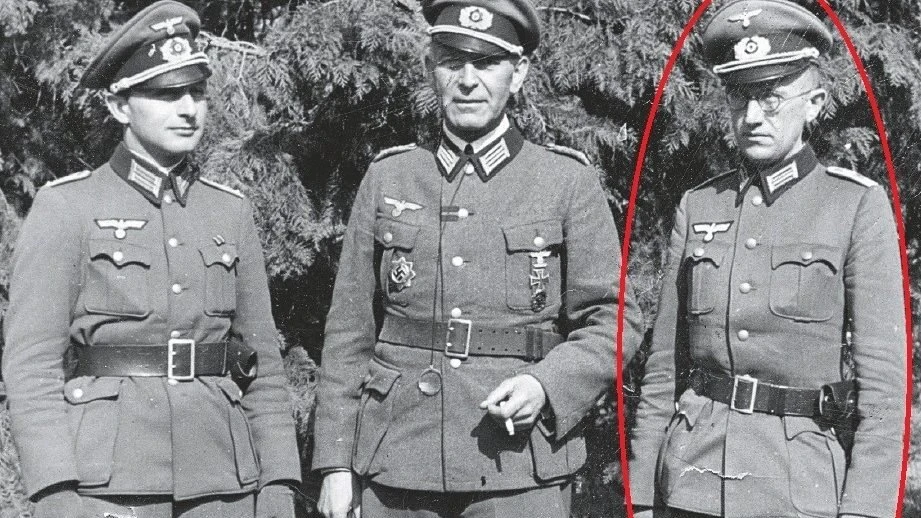
Almost simultaneously, another blow landed across the Atlantic. Brexit was dismissed by its critics as provincial nostalgia, yet its deeper meaning was structural. It repudiated the assumption that the European Union and the European Commission were immune from democratic reversal. For years, authority within Europe had been consolidated in institutions that governed without electoral accountability, justified by technocratic efficiency and historical guilt. Critics traced this model not only to postwar integration but to older continental traditions—centralized, managerial, and suspicious of popular sovereignty—structures designed to administer societies rather than represent them.
Two keystone democracies had now rejected the premise of inevitability within months of each other. The reaction was immediate.
In the United States, a sprawling narrative emerged to explain away the rebellion. Rather than treat dissent as endogenous—arising from economic dislocation, cultural displacement, and political exclusion—it was reframed as exogenous contamination. The Russiagate hoax consumed media, intelligence, and legislative attention for years. Its function, regardless of one’s view of its particulars, was clarifying: to delegitimize insurgent outcomes by divorcing them from voter intent. The message was unmistakable. Popular revolt was not merely wrong; it was foreign.
When that narrative failed to restore confidence or consensus, a far more powerful instrument appeared. The arrival of COVID-19 in early 2020 triggered a global suspension of normal life unprecedented in scope. Emergency powers proliferated. Borders closed. Movement was restricted. Dissent was pathologized. Once again, legitimate public-health concerns coexisted with political utility. Only months earlier, stress in global funding markets had exposed deep fragilities within the financial system. The pandemic response stabilized those pressures while simultaneously freezing political momentum.
Intergenerational Crimes Against Humanity? mRNA's Threat to Tomorrow
Yet control produced a paradox.
Lockdowns dispersed populations from dense urban centers into suburban and rural spaces. Remote work revealed that vast segments of the modern economy were not bound to geography. Citizens discovered that time, once regimented by commuting and surveillance, could be reclaimed. Families reorganized. Communities decentralized. Information spread laterally rather than hierarchically. The very measures intended to pacify society inadvertently loosened its dependence on centralized systems.
When restrictions lifted, the attempt to restore the old order exposed its true priorities. Office mandates were reimposed not for productivity, but to preserve commercial real estate valuations and legacy managerial authority. Workers resisted. Some complied minimally. Others resigned quietly. Many exited entirely, choosing self-employment, informal enterprise, or geographic arbitrage over submission. For the first time in decades, labor exercised leverage by withdrawal rather than negotiation.
Corporate response was not reconciliation but substitution. Immigration pipelines were expanded. Automation accelerated. Artificial intelligence was deployed not merely to assist workers but to replace them. What had been marketed as innovation revealed itself as discipline. Citizens noticed. Political pressure mounted against what many perceived as the systematic displacement of domestic labor under the banner of efficiency and diversity.
This, in turn, exposed another contradiction.
The race to deploy AI required immense physical infrastructure—data centers consuming extraordinary amounts of energy, land, and water. Suddenly, the same elites who had declared fossil fuels morally indefensible required uninterrupted baseload power. Coal plants were reconsidered. Gas returned to favor. Nuclear energy, long vilified, reemerged as indispensable. The climate narrative did not collapse; it bent—selectively. Even in Germany, the archetype of green orthodoxy, Friedrich Merz conceded that the dismantling of nuclear capacity and the resulting deindustrialization had been a grave miscalculation. The public learned an unspoken rule: austerity was permanent for citizens, optional for systems of control.
As these contradictions accumulated, the international order itself began to fracture. The post-Cold War unipolar moment dissolved into contested space. NATO, once treated as immutable, became transactional. Commitments were questioned. Costs were recalculated. Even territorial arrangements—such as access to Greenland—were openly renegotiated. The language of alliance shifted from moral obligation to material interest.
Elsewhere, internal fractures widened. In Canada, regional movements challenged fiscal extraction and ideological alignment under Prime Minister Mark Carney, entertaining referenda that would have been unthinkable a decade earlier. In Europe, leaders doubled down on confrontation with Russia, seeking resources and relevance for a faltering continental project, only to discover the limits of economic and military coercion in a multipolar world.
Across the Pacific, strategic lines hardened as the United States sought to constrain China within its immediate sphere, particularly around Taiwan. Meanwhile, younger generations—raised amid debt, algorithmic surveillance, and institutional mistrust—began to rebel in their own idiom. From ballots to barricades, including recent upheavals in Nepal, Gen Z demonstrated a growing willingness to reject establishment candidates, challenge centralized authority, and support decentralization and succession movements.
What unites these developments is not conspiracy but consequence. Systems designed to eliminate uncertainty attempted to suppress it instead. They confused stability with legitimacy, efficiency with justice, and narrative dominance with truth. Each intervention solved a short-term problem while deepening a long-term crisis of consent.
The anxiety now visible among global elites is not performative. It is structural. For the first time in generations, citizens are comparing promises to outcomes and finding the ledger wanting. They are not yet unified, nor always precise, but they are increasingly awake. History suggests that when the governed withdraw belief from the inevitability of their rulers, those rulers must either reform—or rule by naked compulsion.
The age of managed inevitability is ending. What replaces it remains uncertain. But the lie that it could never be challenged has already been exposed—and once exposed, it cannot be restored.
Citizens Rule Book: A Palladium of Liberty (Hardcopies) 🇺🇸
Keywords
First published January 18, 2026. Originally published in Liberty or Deathwire.