Why the Future of STEM Education in 2027 Is Abandoning the Cloud for the Soil, the Workshop, and the Local Server
As schools walk away from rented EdTech screens and supranational mandates, a new generation of polymaths is pairing open-source local AI with physical books, workshops, and agrarian survival skills.
In this essay
- The Great Unplugging: Why Schools Are Walking Away From Rented EdTech
- Sovereign Intelligence: Open-Source AI and the Rise of Local Compute
- The Ark of the Mind: Why Physical Media Is Making a Fierce Comeback
- The Soil Is the Ultimate Laboratory: Life Skills, Survival, and the New Agrarian STEM
- The Synthesis: One Hand in the Soil, One Hand on the Terminal
By Andrew B. Raupp
Walk into a showcase "future-ready" classroom circa 2022, and the scene was predictable: thirty children hunched over fleet-managed Chromebooks, dragging pastel blocks of code across a browser tab while a server farm in Northern Virginia logged every keystroke, attention lapse, and micro-assessment. For over a decade, modern education mistook digital consumption for scientific literacy. We confused buying software subscriptions with building minds.
As we cross the threshold into 2027, that mirage has evaporated.
Across machine shops in the industrial Midwest, independent micro-schools, community fabrication labs, and rural vocational programs, a quiet, ferocious counter-revolution is underway. Having spent the last quarter-century researching and chronicling the evolution of science, technology, engineering, and mathematics, I am witnessing the most radical structural pivot in the history of the movement.
The future of STEM education in 2027 and beyond is not about surrendering more childhood hours to rented cloud screens. It is a Great Re-Materialization—a philosophical and practical return to physical reality, paired with sovereign, local artificial intelligence. The emerging archetype of the 2027 learner is no longer a passive "prompt engineer" begging a corporate chatbot for homework answers. It is the Sovereign Technologist: a student who can fine-tune an open-weights language model on an air-gapped local workstation in the morning, diagnose a failing soil microbiome in the afternoon, and consult a hardbound reference library when the grid goes dark.
The Great Unplugging: Why Schools Are Walking Away From Rented EdTech
To understand recent STEM research and coverage as we approach 2027, we must also look at concrete policy changes, including Sweden’s shift toward more books and less screen time. For the first time since the dot-com boom, the most forward-thinking institutions are deliberately subtracting technology.
First on the chopping block is the surveillance-driven EdTech SaaS complex. Administrators and parents have woken up to the reality that "personalized learning platforms"—which trap students inside algorithmic loops of multiple-choice clicks—do not cultivate scientific reasoning; they cultivate compliance and cognitive atrophy.
Even supranational bureaucracies like UNESCO have belatedly sounded the alarm on the unregulated flood of classroom screens—though anyone who cares about authentic educational freedom should view UNESCO’s sudden conversion with a healthy dose of skepticism. After spending years championing top-down globalist "digital transformation" mandates that helped put those very tablets on every desk, transnational bodies now invoke student well-being mostly to lobby for centralized digital governance and standardized ideological guardrails. Frontline teachers and parents didn't need a massive report from Paris to tell them what their own eyes already proved: when a student’s entire educational experience is mediated by a locked-down tablet that loses 90 percent of its utility the moment the Wi-Fi drops, the student does not own a tool. The tool—and the bureaucracy behind it—owns the student.
We are also seeing a concrete retreat from mandatory digital learning tools in Sweden’s preschool curriculum, while the hollow "learn-to-code" syntax drills of the 2010s look increasingly dated. Memorizing boilerplate Python syntax to pass a standardized rubric is obsolete in an era where machine intelligence generates boilerplate code in milliseconds. What machines cannot do is wrestle with messy, unformatted physical reality: friction, load tolerances, thermal loss, biological decay, and engineering judgment.
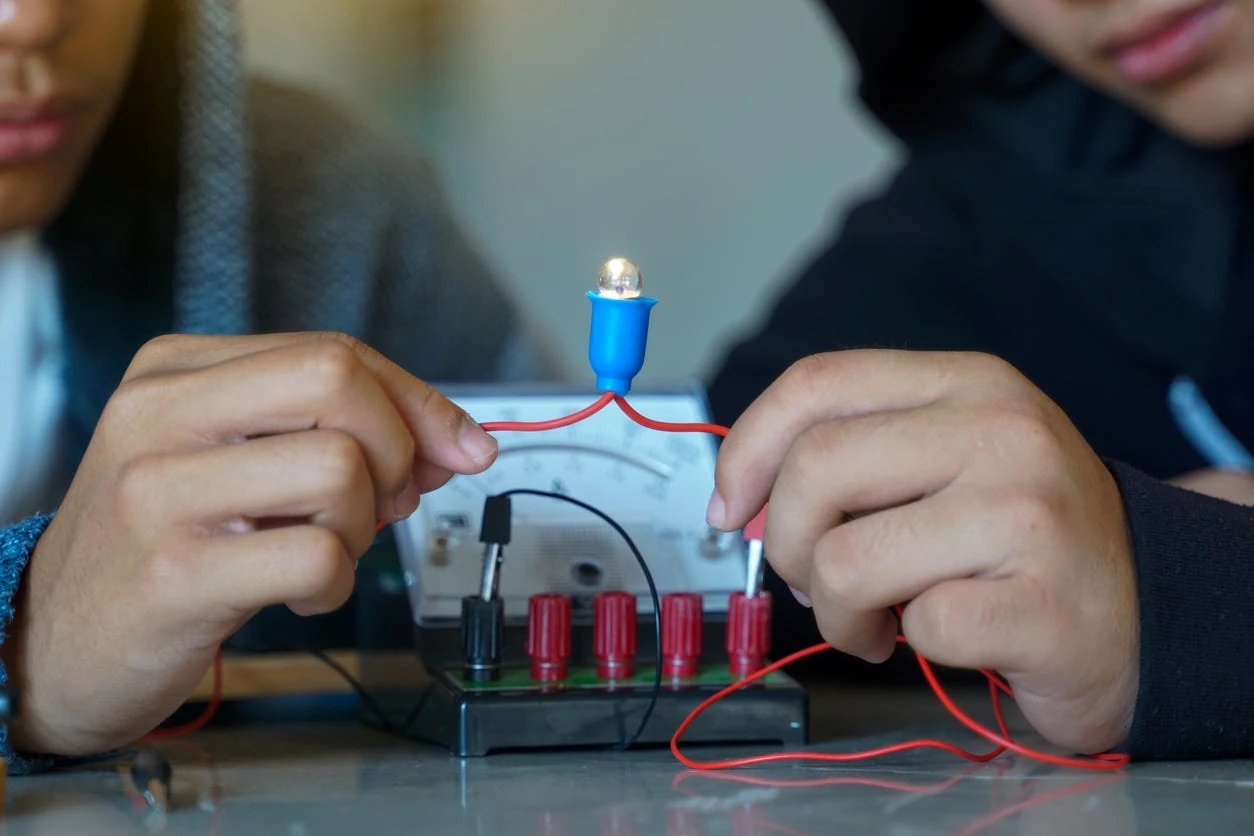
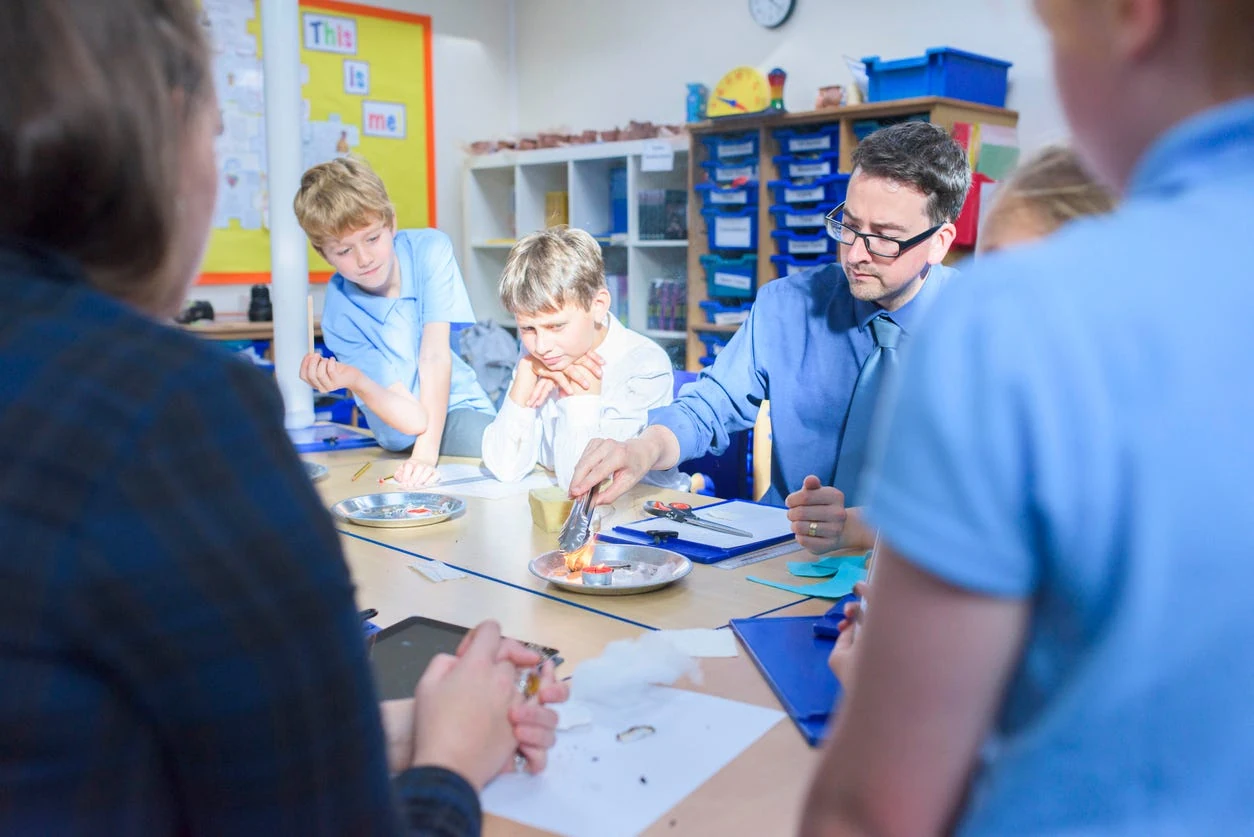
In 2027, the pendulum is swinging back toward the tactile. Vernier calipers, analog oscilloscopes, soldering irons, seed drills, and physical laboratory instruments are replacing gamified tablet apps. If a classroom technology hides its underlying mechanism behind chemically toughened glass and a monthly licensing fee, it is not an educational instrument—it is a vending machine.
Sovereign Intelligence: Open-Source AI and the Rise of Local Compute
Does stepping back from cloud dependency mean rejecting artificial intelligence? Quite the opposite. And here lies a critical warning for the romantic neo-Luddites of the education world: those who completely avoid AI—out of fear, nostalgia, or bureaucratic paralysis—will leave their students at a catastrophic disadvantage.
Banning AI from a high school or university in 2027 is the pedagogical equivalent of banning the graphing calculator in 1990 or the printing press in 1500. A student who never learns to interrogate, audit, stress-test, and collaborate with machine intelligence will enter a laboratory and a civic square where their peers operate with tenfold analytical leverage. However, the great divide of the late 2020s will not be between those who use AI and those who don't. It will be between those who rent closed, lobotomized corporate chatbots and those who command open-source AI on local compute.
When a school relies on a commercial, cloud-hosted AI wrapper, three things go wrong: student intellectual property is harvested to train someone else’s commercial product, the reasoning parameters are hidden behind a corporate black box, and the student learns cognitive dependency rather than systems engineering.
In 2027, authentic computer science and technology education is moving onto bare metal and local silicon. Instead of buying per-seat cloud tokens, forward-looking STEM programs are building small-form-factor local clusters and high-unified-memory workstations running open-weights models—through local execution engines like Ollama and llama.cpp—right inside the classroom, with model files downloaded in advance and cloud features disabled, completely disconnected from the public internet.
Everything changes pedagogically when a fifteen-year-old runs a quantized local model on a school lab node or a personal edge device:
- Inspection Over Blind Trust: Students don’t just type a prompt and copy the output; they inspect token probabilities, adjust temperature and system weights, build local Retrieval-Augmented Generation (RAG) pipelines over their own experimental datasets, and measure actual watt-hour power draw per inference.
- Algorithmic Skepticism: As emphasized in secondary empirical challenges that require evidence, a model's output is never treated as an oracle. Because the student built the local pipeline and sees where the model hallucinates when fed noisy sensor data, AI is demystified. It becomes a statistical instrument whose claims must be verified against physical proof.
- Intellectual Privacy: A student’s rough hypotheses, lab notes, and unpolished ideas never leave the room.
True STEM literacy in the age of AI means treating artificial intelligence the way a master mechanic treats an internal combustion engine: you don't worship it, and you don't fear it—you take the cylinder head off and learn how it works.
The Ark of the Mind: Why Physical Media Is Making a Fierce Comeback
Walk into the workspace of any serious technologist, engineer, or natural scientist in 2027, and you will notice something jarring to the cloud evangelists: shelves bowed under the weight of heavy, ink-on-paper books, optical archives, and offline solid-state storage.
Over the past five years, a generation of learners has absorbed a hard lesson about the fragility of the digital commons. They have watched digital textbooks vanish at the end of a semester when an institutional license expired. They have seen historical web pages disappear and citations rot into dead links—a phenomenon documented extensively by the Pew Research Center on digital decay—and synthetic AI-generated sludge pollute search engine results. Separately, indiscriminately training successive models on generated data can cause what researchers in Nature call "model collapse". When everything in the cloud is mutable, rented, and algorithmically rewritten, nothing in the cloud can be trusted as an uncorrupted baseline.
That realization is driving a renaissance in physical media collection across homes, independent schools, and community makerspaces:
- Uneditable Ground Truth: Pre-synthetic encyclopedias, printed editions of Machinery’s Handbook, mathematical and thermodynamic tables, botanical field guides, and wiring schematics serve as "cold-storage" verification baselines. A printed 1995 organic chemistry reference or a shop manual sitting on a workbench cannot be silently altered overnight by a vendor patch or a hallucinating web scraper.
- Cognitive Architecture and Spatial Memory: The Stavanger Declaration on the Future of Reading reports stronger comprehension of long informational texts on paper than on screens, particularly under time pressure; the cited meta-study found no difference for narrative texts. A printed reference also gives diagrams and formulas fixed locations that readers can revisit.
- Offline & Cryptographic Permanence: Even digital preservation is turning sovereign. Students and researchers are learning to maintain local Kiwix servers hosting offline snapshots of scientific literature, archive datasets on M-DISC optical media rated to last centuries, keep physical lab journals written in waterproof archival ink, and verify records using decentralized cryptographic timestamps that do not depend on a central vendor's server staying in business. If you cannot hold your knowledge base when the router is unplugged, you do not truly possess it.
The Soil Is the Ultimate Laboratory: Life Skills, Survival, and the New Agrarian STEM
Perhaps the most profound shift heading into 2027 is the collapse of the artificial wall between "high tech" and basic human survival.
For decades, post-industrial culture peddled an arrogant hierarchy: writing software in an air-conditioned glass tower was "real STEM," while growing food, purifying water, framing a timber structure, or rebuilding a diesel injector was dismissed as "vocational trade work." Today’s youth—watching supply-chain fragility, electrical grid strain from hyperscale data centers, and ecological volatility—see right through that illusion. They understand a foundational law of civilization: you cannot eat a software update.
In 2027, the most vital agricultural education programs are re-integrating life, resilience, and survival skills—with agriculture standing at the absolute center of the scientific enterprise.
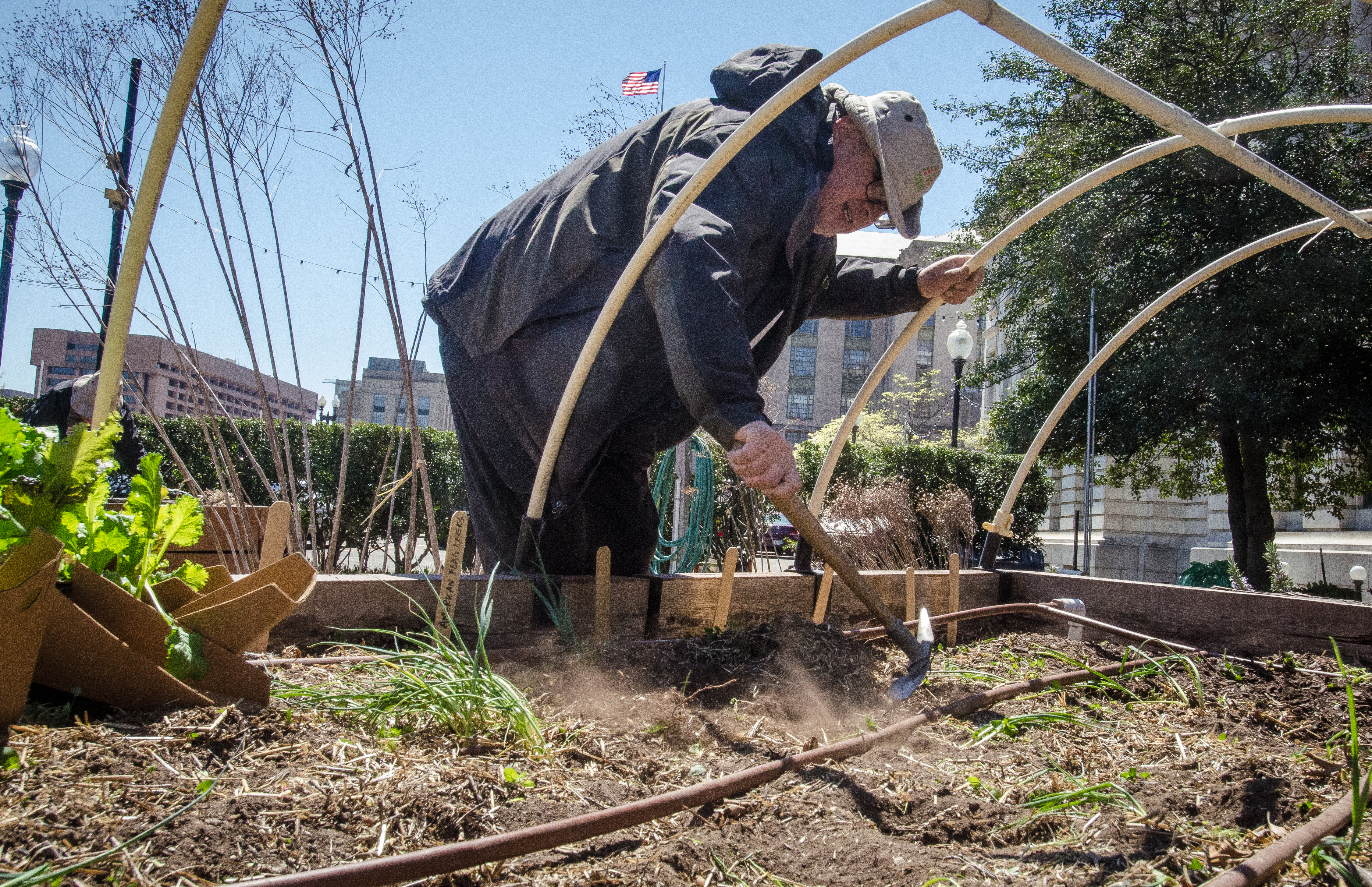
Consider what happens in a single cubic foot of living topsoil. It is a high-stakes intersection of stoichiometry (nitrogen-phosphorus-potassium balances and cation exchange capacity), microbiology (mycorrhizal fungal networks and nitrogen-fixing rhizobia), hydrology (transpiration rates and capillary action), thermodynamics, and mechanical engineering. Pair that with off-grid solar micro-generation, gravity-fed water filtration, fermentation and food preservation biochemistry, and LoRaWAN off-grid sensor telemetry, and agriculture reveals itself not as a relic of the nineteenth century, but as the single most integrated STEM discipline on Earth.
The Blue Corduroy Blueprint: How the Future Farmers of America (FFA) Quietly Built the Classroom of 2027
Look closely at the National FFA Organization—founded in 1928 as the Future Farmers of America—and you will see a pedagogical engine that puts billion-dollar Silicon Valley EdTech initiatives to shame. While coastal education panels spent the last decade debating how to make science "relevant," the FFA quietly surged to a record 1,053,847 student members across 9,591 chapters during the 2025–2026 school year, according to its August 2026 announcement, expanding aggressively not just in farming towns, but inside suburban and urban high schools.
Long before "project-based learning" or "competency-based education" became conference buzzwords, agricultural education codified its Three-Circle Model: rigorous classroom and laboratory instruction, leadership development, and an experiential pillar known as the Supervised Agricultural Experience (SAE). Under an SAE, a student doesn't just read a chapter about biology or economics—they manage a live enterprise, conduct original agriscience research, or build functional equipment over multiple years. Since 1928, the organization’s motto has read like the purest distillation of the scientific method ever written: "Learning to Do, Doing to Learn, Earning to Live, Living to Serve."
Walk through an FFA agriscience lab or chapter test plot in 2027, and you will not find disengaged teenagers staring blankly at test-prep screens. You will find seventeen-year-olds flying multispectral drones over acreage to map chlorophyll stress, running PCR diagnostics on livestock pathogens, calibrating automated hydroponic nutrient dosing systems, TIG-welding custom hydraulic implements, and defending water-rights policy from memory.
Why does the FFA model succeed where so much sterile classroom STEM fails? Because biology and physics do not accept excuses, and they cannot be bluffed with a chatbot. You can ask a language model to write a five-paragraph essay on plant pathology in four seconds, and a tired teacher might give it an A. But you cannot prompt-engineer a tomato plant into surviving a nitrogen deficiency, and you cannot sweet-talk a poorly penetrated weld into holding a two-ton load. Reality is the ultimate peer reviewer. By tethering high technology directly to land stewardship, mechanical self-reliance, and food security, the Future Farmers of America didn't just preserve agrarian heritage—they built the gold-standard prototype for week-long, community-rooted inquiry in 2027.
The Synthesis: One Hand in the Soil, One Hand on the Terminal
The narrative sold to schools and families for the last fifteen years was that human progress required leaving the physical world behind—migrating our books, our laboratories, our craftsmanship, and our judgment into a weightless, rented cloud.
That era is over. The most capable, resilient, and original minds of 2027 and beyond will belong to a new breed of grounded polymath. They will not be technophobes hiding from the future, because they understand that surrendering artificial intelligence to a handful of centralized corporations—or waiting on international committees to tell them how to think—is a recipe for intellectual serfdom. Instead, they will run open-source models on their own local silicon, cross-check every machine prediction against a shelf of physical books and a bench of accessible, real-world tools, and know how to coax calories out of the dirt and amperage out of the sun.
The future of STEM education isn't virtual. It has calluses on its hands, soil on its boots, a hardbound library behind its desk, and a local server humming quietly in the corner.
Andrew B. Raupp is the Founder and Executive Director of STEM.org Educational Research™, where he has spent 25 years researching scientific literacy, technological sovereignty, and applied learning.
“Resolutely preserving the rights and freedoms of the STEM education community through sound policy & practice…”
Explore by keyword
First published October 30, 2026. Originally published in The STEM Papers.