The Day Britain Buried the Magna Carta
UK Government Just Deleted Trial by Jury — You Should Be Alarmed
In this essay

Author’s Note: Since 9/11 — since the Patriot Act carved its first wound into the Bill of Rights — I have watched our civil liberties dissolve like sand running through open fingers. Each year, inch by inch, policy by policy, decree by decree, we have allowed our governments to normalize the abnormal, to turn emergency powers into permanent governance, to treat fear as justification for surveillance, censorship, and control.
Two decades ago, I thought those erosions were temporary. Necessary, they said. Protective, they insisted. But the State never loosens the grip it tightens. And now, in the shadow of judge-only trials, criminalized speech, and a Western world drifting toward digital serfdom, I can’t escape the sense that we are living through the early dawn of Dark Ages 2.0 — a time when the lights of liberty flicker, and the institutions meant to defend us instead accelerate our descent.
Every morning, I wake in disbelief at what our world has become.
Every night, I go to sleep worrying for my wife and my son.
I wonder — what future are they inheriting?
Are we standing on the threshold of a new chapter of freedom, or the opening act of a global authoritarian play?
Strangely, paradoxically, this era has brought me closer to God than I have ever been. I have stepped away from the compromised, globalist-entangled version of the Catholic Church I once knew, and immersed myself in the spiritual clarity of Orthodox Christian writings. Not through ceremony or attendance — but through the texts themselves, through the raw teachings, through the unfiltered spiritual tradition that speaks in a world gone mad.
I don’t believe in reincarnation — but I sometimes catch myself wondering whether I did something terrible in a past life to deserve witnessing this unraveling of civilization. And yet, God has blessed me with the greatest family any man could ask for. So why this age? Why this trial? Why this fire through which our society is walking?
Perhaps the answer lies with those directing this descent — those with no moral compass, no sacred text, no higher authority than their own ambition. For when a civilization loses its faith, its ethics, its humility before the divine, it becomes soil in which tyranny grows with ease.
Whatever the origin of this darkness, one thing is certain:
We must win this fight — not for ourselves, but for our children.
If we fail, they will inherit a world stripped of dignity, freedom, and truth.
A world where their very humanity is negotiated by technocrats and global elites.
A world where the abyss is not metaphor, but reality.
I refuse that future.
And I pray — with the full force of a father, a husband, and a man of faith — that enough of us still possess the courage to stand firm before the collapse and say:
Not in our lifetime. Not in theirs.
Citizens Rule Book: A Palladium of Liberty (Download) #InfoWars 🇺🇸
The Charter That Defined Liberty
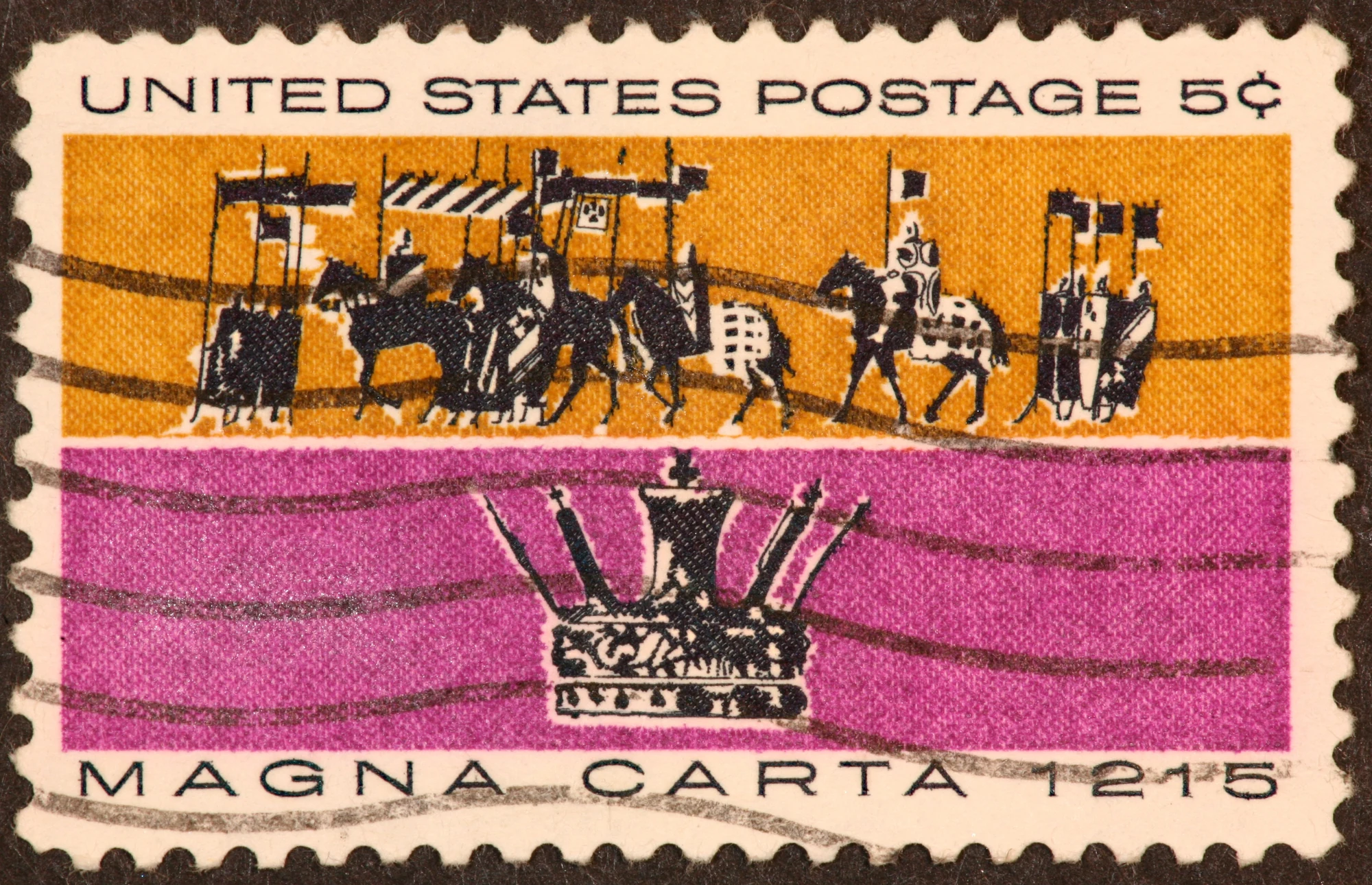
For more than eight centuries, the Magna Carta has served as the moral and constitutional wellspring of the English-speaking world. When rebellious barons forced King John to seal that parchment in 1215, they did more than negotiate a temporary peace; they carved into history the principle that the ruler himself is subject to law. Its most resonant protection declared that no free person may be imprisoned except by “the lawful judgment of his equals” — the seed from which trial by jury would grow. In that simple but monumental idea, the people themselves were placed between the individual and the state.
Blades Against the Machine: Britain’s Underground Resistance
Over centuries, this principle shaped English common law, inspired the Petition of Right and the Bill of Rights of 1689, and later guided the framers of constitutions across the Atlantic. The Great Charter became a symbol that liberty is not a favor bestowed by rulers but a restraint imposed upon them. To dismantle the mechanism through which it lives in modern practice — the jury — is not administrative modernization. It is a repudiation of the very notion that government must answer to the governed.
Britain’s Break With Its Own Foundations
This is why the United Kingdom’s decision to curtail jury trials for a wide class of criminal cases is so profound and so dangerous. According to reporting by Reuters, the government plans to expand judge-only courts for many “either-way” offenses and shift more cases to magistrates, while a detailed account in AP News notes that crimes carrying sentences of up to three years will increasingly be decided without a jury at all. The justification is a vast backlog of nearly 80,000 Crown Court cases and the specter of a “courts emergency.”
But liberty is not preserved by speed; it is preserved by structure. A jury is not an ornament of antiquity; it is the people’s seat in the courtroom, their direct power to weigh evidence, conscience, and law before the state may take a person’s liberty. Replacing that communal judgment with a single professional decider concentrates power precisely where Magna Carta sought to diffuse it.
It is also no coincidence that the backlog now invoked as an emergency was, as critics point out in the Financial Times, largely produced by years of underfunding, shuttered courtrooms, and chronic shortages of judges and staff. First the system is starved; then its failures are used to rationalize the removal of rights. It is an old pattern: create administrative chaos, then offer the price of “order” in the coin of liberty.
The Slide Toward Totalitarianism
The erosion of jury trials does not occur in a vacuum. It coincides with an increasingly aggressive policing of opinion and expression in Britain. Citizens have been investigated, arrested, or even imprisoned for social-media posts, jokes, and political comments. A detailed explainer on UK online-speech prosecutions from The Verge describes how “grossly offensive” tweets can lead to criminal sanctions, while a technical analysis at Redact notes that police continue to arrest people for posts deemed “threatening, harassing, or grossly offensive.”
More recently, high-profile cases like the arrest of TV writer Graham Linehan over online comments, reported by AP News, have prompted international concern. Alternative outlets such as Spiked and commentaries like this piece in Forbes have begun to speak plainly of a “free speech crisis” in the UK.
When speech becomes a matter for police investigation, and trials increasingly occur without juries, a familiar architecture begins to appear. The state accrues the power to define dissent as harm, harm as crime, and crime as that which embarrasses or challenges those in authority. The absence of a jury removes the community’s one remaining veto over political prosecutions.
The road to totalitarianism is not always paved with overt declarations of dictatorship. More often, it is built with small, plausible steps: a backlog here, a “hate speech” law there, a judge-only trial for efficiency, an arrest “just this once” for a tweet that offended prevailing orthodoxy. But the destination is recognizable to anyone who has studied the last century.
Why the Right to Arms Determines the Fate of All Other Rights
It is in this context that the role of a robust right to keep and bear arms — as enshrined in the Second Amendment in the United States — reveals its deeper constitutional logic. That provision was never about sport or hunting; it was a structural guarantee that the people themselves would not be rendered helpless before the state. The First Amendment protects speech. The Second Amendment protects the capacity of the people to defend the First — and everything else.
In nations where civilians are largely disarmed, the state’s monopoly on force gives it a freer hand to narrow other liberties. When a government knows its citizens have no ultimate recourse beyond petitions and protests, it can grow indifferent to public outrage. Observers in alternative media such as The Daily Sceptic have drawn a direct line from the UK’s disarmament policies to the rise of laws and policing practices that criminalise opinion.

The relationship is not coincidental. A society in which citizens retain arms, speak freely, and sit in judgment as jurors creates overlapping checks on power:
The press exposes abuses.
Speech allows criticism and organization.
Juries can refuse to convict under unjust laws.
An armed populace ensures that all of this cannot simply be swept aside by force.
No constitutional order can remain free indefinitely if any one of these pillars is absent. Remove the jury, and the people lose their institutional voice in the courtroom. Remove arms, and they lose their ultimate leverage. Muzzle speech, and they lose the ability to name what is happening to them. When all three are weakened, the state does not need to announce tyranny; it simply begins to act as though it already rules without consent.
Historic Parallels and Modern Echoes
History offers no shortage of warnings. The English Star Chamber, operating without juries and in secret, became a byword for political persecution. The French Revolutionary Tribunal, staffed by ideologues, turned justice into a conveyor belt to the guillotine. Soviet troikas and Nazi People’s Courts stripped defendants of any meaningful public hearing, condemning millions with bureaucratic efficiency.
What connects these episodes is not a shared ideology but a shared architecture: centralised control of prosecution, elimination of lay judgment, and a citizenry either disarmed or terrorised into submission. Once a government holds the power to define crime, prosecute it, and adjudicate it without public participation, the temptation to criminalise dissent becomes almost irresistible.
Modern Britain is not yet such a regime, but the structural changes now underway — judge-only trials, criminalisation of speech, and the absence of any serious right to armed self-defence — resemble the early stages of systems that ultimately became unrecognisable to those who once trusted them. The warnings are already visible in the culture: investigations into jokes, arrests for memes, people jailed over posts, as catalogued in sources ranging from The Verge to independent commentary like this analysis by James Ball on social-media policing.
A Nation at the Threshold
The United Kingdom now stands at a constitutional threshold. A country that once taught the world how to bind rulers with law is in the process of unbinding itself from its own inheritance. If the state may police your words, and you may be tried without a jury, and you lack any meaningful right to armed self-defence, then whatever remains is not the liberty that flowed from Runnymede. It is something qualitatively smaller: a set of conditional permissions, revocable whenever those in power deem it necessary.
Liberty that depends on the self-restraint of government is not liberty at all.
Liberty that depends on the active participation and strength of the people is.
By removing the jury, Britain removes the people from the courtroom. By criminalising speech, it removes them from the public square. By denying them arms, it removes them from the final calculus of power. What remains are subjects — still voting, perhaps, still speaking cautiously, still assured that “nothing has really changed” — until one day they discover that everything has.
The Duty of Free Peoples Everywhere
The lesson is universal and eternal: rights are not self-sustaining. They do not endure by habit or survive by inertia. They must be guarded, renewed, and, when necessary, defended with the full resolve of a free people. Every generation inherits institutions built by its predecessors, but it also inherits the solemn duty to maintain them. Liberties unguarded are liberties soon lost.
The Magna Carta declared that the governed may judge the government.
A robust right to keep and bear arms affirms that the governed may resist the government.
Freedom of speech affirms that the governed may criticise the government.
These three principles — judgment, resistance, criticism — form the living core of any society that wishes to remain free. They do not function in isolation. Each reinforces the others. Where they are strong, oppression struggles to take root. Where they weaken, power moves swiftly to fill the void.
If one pillar weakens, the structure wobbles.
If two weaken, the structure cracks.
If all three fall, tyranny does not creep in; it walks through the front door.
Britain is in the process of removing the first pillar by stripping its citizens of their ancient role in the courtroom. And where the people no longer judge the government, the government inevitably begins to judge the people — harshly, quietly, and without fear of reprisal. It is the first deliberate step away from self-government and toward a model of rule that does not truly depend on consent.
The rest of the free world should not shrug and move on. What is happening in the United Kingdom is not merely a domestic dispute about legal procedure. It is a warning flare for every nation that has forgotten how it became free: not by trusting the state, but by binding it; not by disarming the people, but by empowering them; not by silencing dissent, but by recognizing that the noise of a free people is preferable to the silence of obedient subjects.
Citizens Rule Book: A Palladium of Liberty (Hardcopies) Support my work. 🇺🇸
Keywords
First published December 5, 2025. Originally published in Liberty or Deathwire.