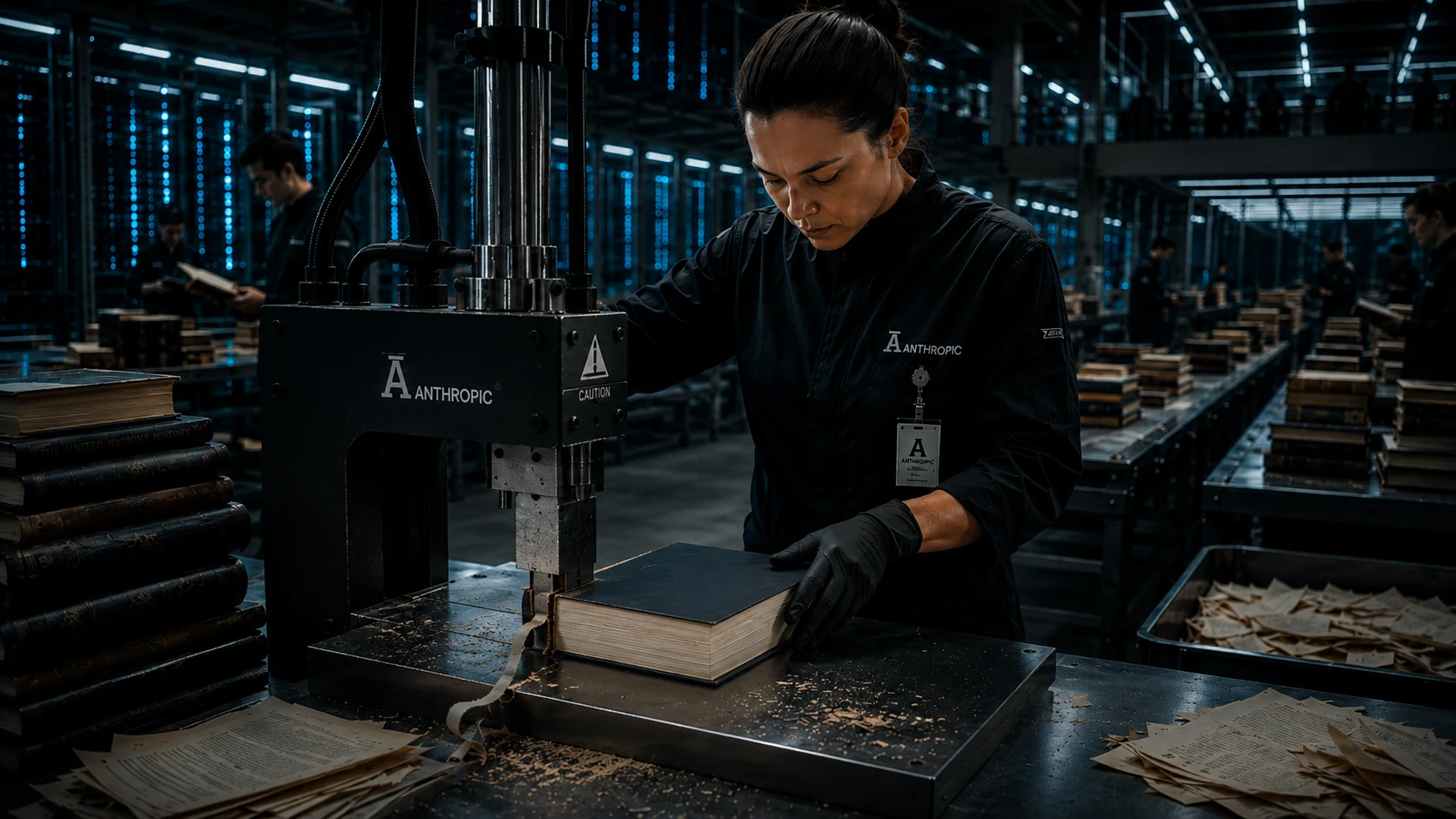
The Mortgage That Outlives the Man: Usury’s Final Invention
The 50-year bank loan and the age of the phantom house that never truly exists
In this essay
- The Death Pledge: A Covenant of Debt and Dominion
- The Birth of a New Bondage: The 50-Year Mortgage
- The Calculus of Modern Serfdom
- The Global Contrast: Other Nations Know Better
- The Constitutional Betrayal
- The Moral Reckoning
- The Restoration of Financial Liberty
- The Call to Rebellion
- A Republic of Owners, Not Debtors
- Epilogue: The Final Redemption
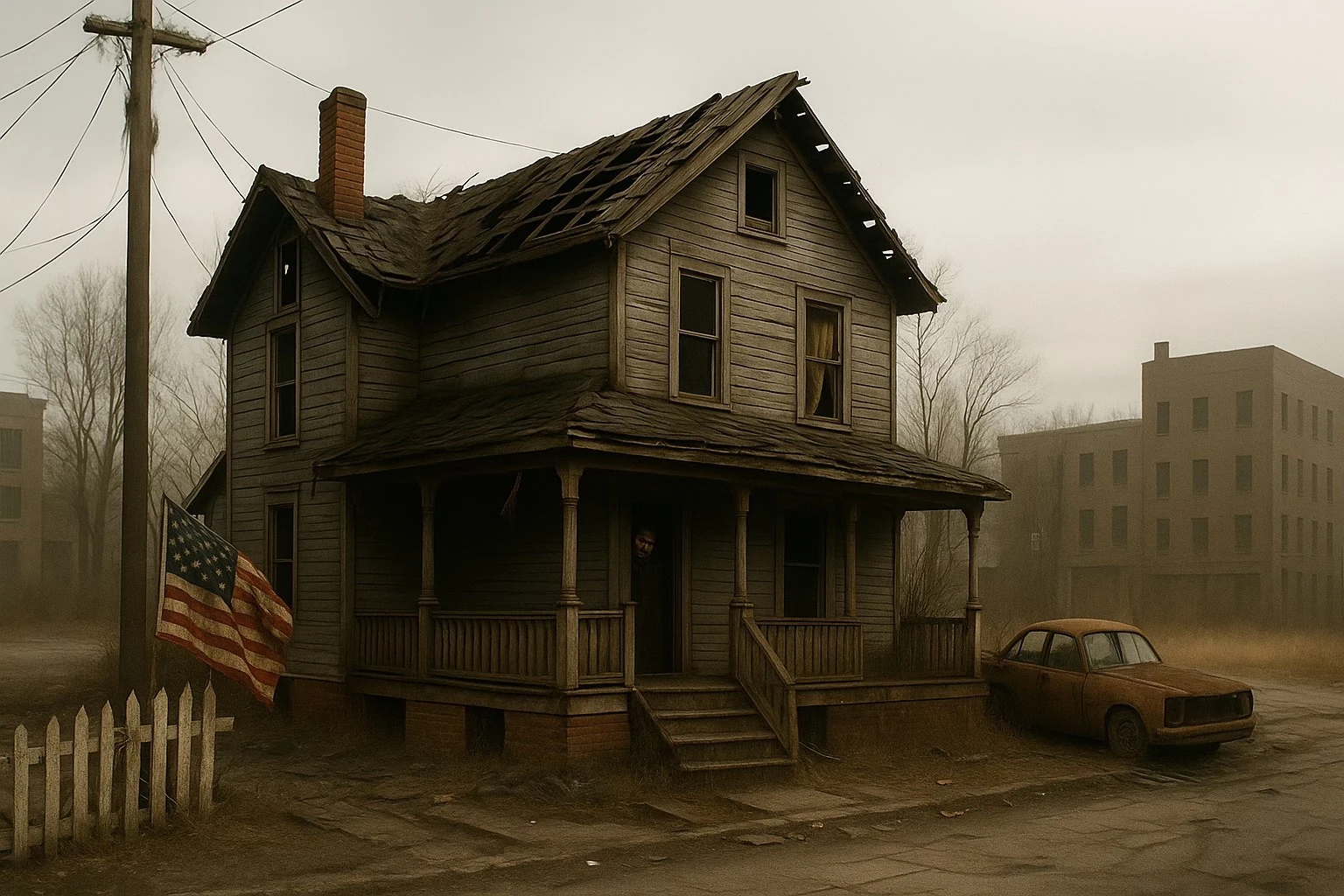
Author’s Note: What you are about to read is not a gentle appeal, nor a scholarly lament—it is a declaration against a predatory order that has wrapped itself around the throat of the American homeowner. The velvet masks are off. The financiers have shown their hand. And the terms they now promote—terms meant to bind families for half a lifetime—amount to nothing less than a new form of bondage in clerical dress.
Let us speak plainly.
Bill Pulte may conduct himself as a reasonable man. He may show generosity, he may offer charity, he may speak with civility. But civility does not sanctify a contract designed to shackle the common man, woman, and child to a lender for fifty years. These terms are not reasoned—they are ruthless. These terms are not benevolent—they are engineered to strip ownership from the people and deliver it to the unaccountable engines of finance.
The 50-year mortgage is not an innovation. It is an ambush.
It is the weapon of an elite class that has made a science of quiet conquest.
For generations, the American home was a testament to independence. A family built its life under a roof it could one day truly call its own. But the financial lords of our age—men who conjure credit from nothing and demand real labour in return—have twisted that sacred aspiration into a lifelong tribute.
Do not mistake the scale of this betrayal.
This is not merely a bad policy. It is a systemic confiscation of freedom, executed not by force of arms but by signatures and interest rates. The bankers have learned that you do not need chains when you have compounding interest. You do not need overseers when you own the note on a man’s home. And you do not need a king when you control the levers of credit.
They will plead affordability.
They will speak of opportunity.
They will drape their schemes in patriotic colors and cite their concern for the working class.
But there is no patriotism in a contract that outlives the borrower.
There is no opportunity in a debt designed to consume two generations.
There is no mercy in a system that demands half a century of tribute for the right to shelter your family.
This is usury in its most polished form—a bloodless, desk-bound tyranny that drains a nation not with swords, but with signatures.
If the terms laid before the public today had been proposed to the citizens of an earlier age, they would have been laughed out of town or ridden out on a rail. For Americans were once clear-eyed enough to recognize bondage when they saw it. They knew that any contract that steals a lifetime is an assault on liberty itself.
The time has come to recover that clarity.
What follows in this work is not written to soothe.
It is written to expose—expose the arithmetic trickery, the moral rot, the corporate indifference, and the government cowardice that have allowed a nation of freeholders to drift toward serfdom under the illusion of “homeownership.”
If these words sting, let them sting.
A numb Republic is a dying Republic.
May every reader feel the weight of what is at stake. For no free people can claim freedom while living under debt designed to break their backs and bury their hopes. And no nation can survive when its homes stand not as monuments to independence, but as altars where families sacrifice their futures to the endless appetite of lenders.
Let this note serve as a warning—and a summons. The hour is late, and the usurers grow bold. But the American spirit grows bolder still.
Citizens Rule Book: A Palladium of Liberty (Download) #InfoWars 🇺🇸
Liberating Our Wealth from the Claws of Economic Subservience
There was once a time in America when a man’s home was his fortress, a testament to diligence and self-reliance. He would labour through his strongest years, plant roots deep in the soil of freedom, and one day stand upon his porch, master of what his hands had earned. His home was not the bank’s, not the state’s, not the speculator’s—it was his, secured by the sweat of his brow and the prudence of his restraint.
Today, that sacred covenant lies under siege. The same financial priesthood that debased our currency and mortgaged our posterity now seeks to bind citizens in debt for half a century through the unholy contrivance known as the 50-year mortgage. This scheme, draped in the silken rhetoric of “affordability,” is a cunning form of usury—a contract by which men are promised shelter while being sold servitude. Beneath its polished arithmetic lies a moral corruption as deep as any in our history: the conversion of the home from the sanctuary of liberty into a vessel of lifelong bondage.
The Death Pledge: A Covenant of Debt and Dominion
Long before the financiers perfected their art of invisible conquest, the instrument itself carried its confession in its name. Mortgage—from the Old French mort gage—means death pledge. It was so called because the pledge endured until either the debt or the debtor was dead. That etymology is not poetry—it is prophecy. From its inception, the mortgage was a pact between labor and leverage, life and ledger, wherein a man promised his most productive years for the privilege of possessing what he could never truly own until his vitality had been spent.
In the early decades of the twentieth century, these pledges were shorter, often five or ten years, brokered in local banks or back rooms where the lender and borrower could still look each other in the eye. Yet even then, the exchange was lopsided—the few who owned capital feeding upon the many who needed shelter. The terms were personal, yes, but no less predatory; the only mercy lay in the limits of the contract’s duration.
Then came the Great Depression, and with it the perfect alibi for central intervention. As wages collapsed and foreclosures multiplied, the federal government presented itself as savior and seized the machinery of housing finance. The National Housing Act of 1934 birthed the Federal Housing Administration (FHA) to insure loans and “restore confidence.” Four years later came the Federal National Mortgage Association (Fannie Mae) to purchase them, inaugurating a secondary market where debt could be bundled, traded, and monetized like grain. The death pledge was no longer a local covenant—it became a national industry.
From that machinery emerged the 30-year fixed-rate mortgage, heralded as the great democratizer of homeownership. But it was no liberation—it was refinement. By extending the term, the architects of modern finance discovered a subtler bondage: a debt long enough to seem attainable, yet endless enough to control the debtor’s entire working life. The 30-year mortgage did not free the American family; it disciplined it. It transformed the home from a symbol of independence into a compliance mechanism—one that extracted loyalty, labor, and silence in exchange for the illusion of ownership.
They called it security. They called it stability. But what they delivered was sedation. A nation of workers lulled into thinking themselves owners while sending a third of every paycheck to service a pledge that would survive their youth and consume their future.
The so-called “fixed rate” was not a bulwark against greed; it was greed perfected—mathematically disguised, socially normalized, and generationally enforced. It trained citizens to live as tenants under the banner of ownership and to accept as natural that freedom should be amortized over decades.
Thus was born the golden age of debt—a time when the death pledge became patriotic, and bondage was marketed as the American Dream.
The Birth of a New Bondage: The 50-Year Mortgage
Almost a hundred years on, the so-called “American mortgage” has completed its descent from security to subjugation. The very architects who once preached stability now sell enslavement beneath the banner of “innovation.” The 50-year mortgage—first whispered into existence in the housing bubbles of early 21st-century California—has now returned under the banner of affordability. The calculation is simple: by stretching the term from thirty to fifty years, the borrower’s monthly payment on a $500,000 loan falls by perhaps $300.
Yet this meagre relief hides a monstrous truth. The borrower makes 600 payments, pays over $800,000 USD more in interest, and delays true ownership until the twilight of his life. As MarketWatch and Yahoo Finance have conceded, it is not designed to empower homeowners—it is designed to enrich lenders.
The man who signs such a contract mortgages not only his house but his very future. He consigns his prime years to the service of the bank, pledges his labour through middle age, and often leaves the debt to his heirs. The 50-year mortgage is not an instrument of homeownership but of financial colonization. It transforms the citizen into a tenant and the Republic into a plantation of paper bonds.
The Calculus of Modern Serfdom
The mathematics of the scheme are plain. At a 6.5% interest rate, a 30-year mortgage on a $500,000 home yields total payments of roughly $1.14 million. Extend that same loan to 50 years, and the total rises to $1.9 million. The borrower, in effect, buys two homes to own one. He pays tribute to a lender who, by sleight of hand, conjured his loan not from real savings but from credit created out of nothing under the Federal Reserve Act of 1913.
Thus the laborer toils for half a century to repay what never truly existed. The banker, with the stroke of a key, lends a phantom sum and collects a lifetime of real work in return. This is not capitalism—it is feudalism by abstraction. The whip has been replaced by the interest rate; the manor, by the mortgage statement.
The Global Contrast: Other Nations Know Better
In the United Arab Emirates, mortgages seldom exceed 25 years. Borrowers must provide a 20% down payment, and the system prizes solvency over speculation. Across Europe, terms longer than 35 years are exceedingly rare, and governments impose strict usury limits and age-based eligibility rules to prevent predatory lending to those who cannot hope to outlive their debt.
These nations, though not perfect, still grasp a truth America has forgotten: that debt, when stretched beyond a generation, ceases to be an instrument of prosperity and becomes a weapon of control. Only a decadent society would bind its citizens to contracts that outlast their working lives.
The Constitutional Betrayal
The disease is not confined to mortgages; it is the symptom of a deeper rot. The Founders, in their wisdom, vested Congress—not private bankers—with the power “to coin Money, [and] regulate the Value thereof” under Article I, Section 8 of the Constitution. Yet in 1913, under cover of night and deception, that power was handed to a private cartel—the Federal Reserve System—which issues our currency as a loan, not a right.
Since that fateful act, every dollar in circulation has been born in debt. Inflation is no accident—it is policy. Prosperity is no longer measured in production but in credit expansion. The more we borrow, the more they control. The Federal Reserve, though cloaked in patriotic imagery, is neither federal nor a reserve—it is a syndicate of private power that profits from the perpetual indebtedness of the Republic.
The 50-year mortgage is the logical offspring of that unholy marriage between government and finance. A citizen who pays interest for half a century is no different than a serf paying tithes to his lord—only now, the collection comes by email instead of by sword.
The Moral Reckoning
The evil of such a system lies not merely in its economics, but in its spirit. When men are raised to believe that debt is a virtue and ownership a fantasy, liberty withers. When the fruits of labour are perpetually deferred, the soul grows weary, and the people become docile.
The financial elites call this “access.” They say they are helping the working class achieve the dream of homeownership. But it is a cruel jest, for they offer not freedom, but a gilded cage. They inflate property values beyond the reach of ordinary families, then extend the leash long enough to make it seem attainable. In doing so, they convert aspiration into obligation and citizenship into servitude.
We must speak plainly: this is not progress. It is predation. It is the quiet conquest of a nation through the instruments of debt, the silent transfer of sovereignty from the people to the banks. A Republic cannot remain free when its citizens are chained to notes payable to private creditors.
The Restoration of Financial Liberty
If this Republic is to survive as a nation of freeholders and not leaseholders, we must reclaim our financial sovereignty. First, the power to create and regulate money must be restored to the people’s Congress. The Federal Reserve—unconstitutional in spirit and destructive in practice—must be audited, dismantled, and replaced by a transparent Treasury system bound by constitutional law.
Second, we must restore sound money, backed by tangible value—whether gold, silver, or productive output—to end the silent tax of inflation.
Third, we must reinstate strict usury laws, outlawing loan terms that extend beyond a borrower’s working life. A 50-year mortgage is not a financial instrument—it is a form of economic imprisonment.
Fourth, we must empower local banks and credit unions to lend to their own communities, restoring the moral bond between lender and borrower. Capital must once again serve the people, not enslave them.
Finally, we must re-educate the public in the arithmetic of freedom. Every schoolchild should learn what compound interest truly means, and every citizen should know that the lower payment of a longer loan is not a bargain—it is bait.
The Call to Rebellion
The architects of our freedom once rebelled against taxation without representation. The time has come to rebel against debt without deliverance. For what is the difference between a monarch who taxes and a banker who extracts interest for fifty years? In both cases, the labour of one generation feeds the leisure of another.
The 50-year mortgage represents not the future, but the final conquest of the old world over the new. It is the restoration of aristocracy—only now its estates are electronic, its serfs salaried, and its thrones upholstered in boardrooms.
But Americans are not yet broken. Beneath the haze of propaganda, they know that debt is bondage and ownership is freedom. They sense that the system is rigged, that the scales are tipped, that their birthright has been sold. And as in all ages of oppression, when truth dawns upon the multitude, power trembles.
Let this be the dawn.
A Republic of Owners, Not Debtors
A Republic cannot endure if its people are born into debt, live in debt, and die in debt. The home must again be the sanctuary of independence, not the altar of usury. We must reject the notion that progress is measured in the length of a loan or the volume of credit issued.
The American home once represented permanence, virtue, and self-sufficiency. It now risks becoming a symbol of decline, a monument to a nation that traded freedom for financing. To reverse this course, we must dismantle the machinery of endless debt and resurrect the moral economy our founders envisioned—a society where work, thrift, and ownership once again prevail over speculation and control.
Epilogue: The Final Redemption
There comes a moment in the life of every Republic when the polite fictions must fall away—when euphemisms can no longer conceal the cruelty beneath them, when men must either bow their necks to the yoke or rise to break it. We have reached that moment. For a nation that once hurled off an empire now finds itself shackled not by emperors, but by amortization tables; not by redcoats, but by lenders in tailored suits who wield interest like a blade and disguise servitude as “access.”
If a man must labour through the marrow of his youth, the strength of his middle age, and the twilight of his final years merely to purchase the illusion of a home—then the system is not broken, it is predatory by design. A Republic that forces its citizens to sign contracts longer than their working lives has ceased to be a Republic at all; it has become a ledger where human beings are entries, where families are revenue streams, where hope is collateralized and auctioned to the highest bidder.
The 50-year mortgage is not a financial product. It is a sentence.
A sentence without pardon, without reprieve, without the dignity that even old-world tyrants sometimes granted their subjects. It is a multigenerational chain wrapped in the polite language of “monthly affordability,” crafted to lull a weary public into accepting bondage as the cost of entry into the American dream.
And yet—beneath the propaganda, beneath the spreadsheets, beneath the televised assurances of philanthropic billionaires—there burns an ancient instinct that no civilization has ever fully extinguished: the instinct for freedom. It stirs now, faint but rising, in the hearts of men and women who sense that something sacred has been plundered from them. They feel it each time a payment leaves their account, each time a banker smiles through a camera lens, each time they see “homeownership” dangled like bait before a nation taught to swallow the hook.
Redemption begins not with policy, but with refusal.
Refusal to accept the lie that debt is destiny.
Refusal to accept that sovereignty belongs to lenders.
Refusal to accept that the right to shelter—a right older than nations—is contingent upon a lifetime of tribute to institutions that produce nothing but paper obligations.
A free people reclaim their dignity the moment they renounce the chains forged for them.
Let that renunciation begin here.
Let the homeowners of this nation lift their eyes from the fine print and see the truth that was always theirs to claim: that liberty does not flow from the generosity of banks, nor from the algorithms of financiers, but from the courage of citizens who remember who they are.
For if this Republic is to be saved, it will not be saved by economists or committees or press releases. It will be saved by ordinary Americans who resolve that their children will not inherit a mortgage where a birthright should be; that their families will not kneel before institutions that survived only by convincing a nation to forget its own power; that their homes will not stand as monuments to surrender, but as fortresses of regained independence.
The time for passive endurance is over.
The time for national amnesia is over.
The time for redemption—true redemption—has come.
Let this generation be remembered as the one that broke the chains, shattered the arithmetic of bondage, and restored the ancient covenant between a free man and the ground beneath his feet. Let posterity say that when the usurers tightened their grip, the people rose—not in violence, but in clarity; not in rage, but in righteous determination; not to beg, but to reclaim.
For liberty does not cower before the bankers’ pen.
Liberty does not fear the length of a contract.
Liberty does not bow to usury dressed in patriotic colors.
Liberty rises.
And when it rises, no lender, no syndicate, no private banking cartel—not even the full machinery of modern finance—can stand against a nation that remembers it was born free.
The final redemption is not the bank’s—it is the people’s.
And once the people awaken, the debt-masters will learn what every tyrant has learned across the annals of history:
A Republic of free men cannot be ruled by contracts designed to outlive them.
Citizens Rule Book: A Palladium of Liberty (Hardcopies) Support my work. 🇺🇸
Keywords
First published November 13, 2025. Originally published in Liberty or Deathwire.