
Data Centers Are the Future That Devours Its Children
When the American Dream Becomes Fuel for the Digital Regime
In this essay
- A Republic Stirred at Midnight
- The Machinery of Dispossession
- A People Silenced — The Psychological Toll of Powerlessness
- How Democratic Mechanisms Are Being Outrun by Technocracy
- Agenda 2030 and the Acceleration of a Managed Society
- The Great Displacement — How AI & Automation Compound the Crisis
- Peaceful Resistance — The Civic Duty of a Free People
- The Coming Breaking Point — When Technology Outpaces Liberty
- A Blueprint for Defending Liberty in the Age of Data Tyranny
- What This Era Means for the Next Generation
- A Declaration for the 24th-Century Enlightenment
- Epilogue: A Republic at the Edge of the Digital Abyss
- Midwest Is Being Targeted for a Data-Center Blitz
- Approved / conditionally approved (moving forward formally way)
- Proposed / in review / contested (not finally approved, or approvals being challenged)
- Not a specific “project,” but relevant Michigan actions tied to proposals
- Saline Just Got a $7 Billion Data Center. Here’s What That Actually Means
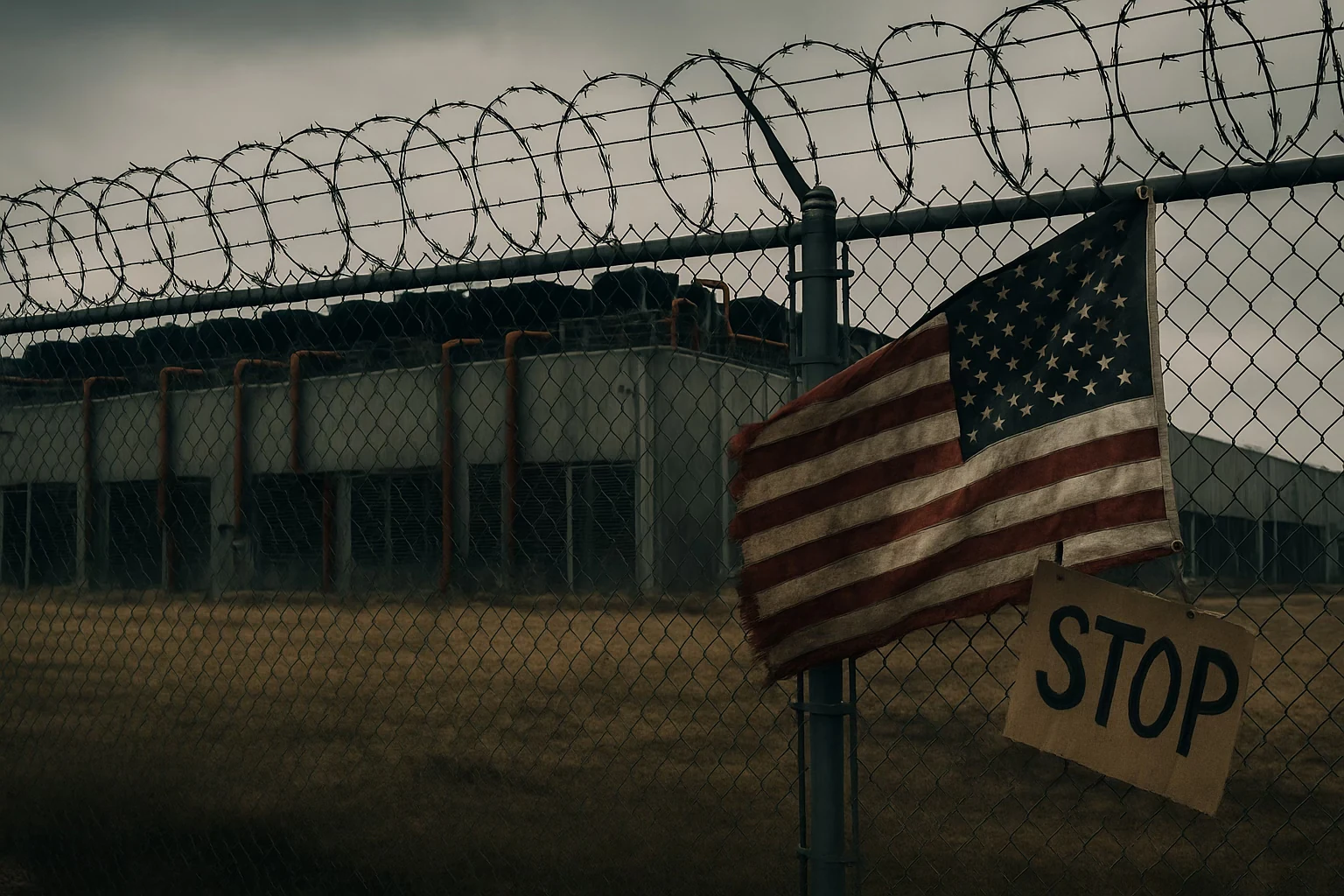
Author’s Note: This piece strikes painfully close to home. The proposed Saline, Michigan data center—just twenty minutes from where my family and I live—stands to raise our utility bills, increase our taxes, and place a measurable strain on the land and water we depend upon. Its shadow falls not only across infrastructure and budgets, but across the delicate balance between a free people and the powers that govern them.
There was a time in our nation’s earliest days when danger approached openly, when the threat rode on horseback and the warning could be carried from one lantern, one bell tower, one determined rider to the next. On the night of April 18, 1775, a single man could awaken an entire countryside to the march of an advancing force. Today, the danger advances without sound—no footfall on cobblestone, no oars cutting across the Charles, no columns of red marching in formation. What encircles us now is quieter, more calculated, and infinitely more insidious.
We sound the alarm, yet the message seems to vanish into the great machinery accelerating around us. We warn our neighbors, but the pace of these developments outruns even our most urgent appeals. It feels, at times, as though we are being routed by an adversary that does not sleep, and whose influence extends far beyond the reach of ordinary resistance. Yet the charge before us is not to yield, but to persist—to slow the march of technocracy through peaceful, principled action that buys the people precious time. Time to organize. Time to breathe. Time to understand what is happening before it becomes irreversible.
More Perfect Union
How Data Centers Are Driving Up Your Electricity Costs
By Brock Hrehor, More Perfect Union…
Below, I offer several solutions—modest in tools, but mighty in principle. They are the beginnings of a movement rooted in vigilance, transparency, and the unshakable belief that a free people, even when outpaced, are never truly outmatched. But I write these words with genuine concern. The stakes are immense, and the hour grows late.
Citizens Rule Book: A Palladium of Liberty (Download) #InfoWars 🇺🇸
A Republic Stirred at Midnight
There are moments in the life of a nation when the ground shifts beneath the feet of ordinary men, and the tremor—subtle at first—signals not the march of foreign armies, but the advance of something quieter, colder, and far more insidious. Ours is such a moment. Across this land, from the wheatfields of the Midwest to the river towns that hem the Great Lakes, vast structures rise with astonishing speed. They bear no windows, no welcoming doors; they offer no civic virtue, no public square, no promise of prosperity shared. Instead, they hum with an electric hunger, consuming what rightly belongs to the people—our water, our power, our peace—and returning nothing but surveillance, dependency, and a deepening sense of dispossession.
In the quiet township of Saline, Michigan, where families once trusted that the land’s fate would reflect their own democratic voice, there now stands the blueprint of a future no citizen voted for. A data center—immense in scale, unrestrained in appetite—advances under the banner of “progress,” yet it threatens to draw up to hundreds of thousands of gallons of water per day, as though the greatest freshwater reserve on Earth were but a private reservoir for technocrats. The people protested; they gathered; they spoke in numbers and conviction. And yet their words were brushed aside as though they were but dust upon the boots of a marching industry. Lawsuits followed, not to defend the rights of citizens, but to accuse them—impossibly—of discriminating against a corporation that now seeks to consume their very resources.
Such events are not isolated. They form a pattern across this Republic, a pattern woven not by the hands of laborers or farmers or craftsmen, but by distant architects of a digital empire—unaccountable, unelected, and indifferent to the local will. While the people deliberate in good faith, the technocrats act with the certainty of monarchs. While communities plead for transparency, these corporate leviathans purchase farmland, redraw zoning maps, and construct their engines of data extraction with a speed utterly unknown to our democratic processes. In this mismatch—between the deliberate pace of liberty and the ruthless acceleration of technocracy—we see the seeds of a new subjugation.
And make no mistake: these centers are not mere warehouses of information. They are the pillars of a system designed to observe, quantify, and—eventually—govern the lives of free men and their posterity. They exist to power systems of surveillance, to feed the algorithms that replace workers, and to raise the cost of living until the very independence of the average family hangs by a thread. What we confront is nothing less than a quiet conquest: the encirclement of the American citizen by forces that claim no mandate from the governed, yet exert enormous influence over their future.
This paper, therefore, is not an essay of idle speculation. It is a lantern raised high in the night—a warning to neighbors who sense the danger approaching but lack the words to define it. It is written for them, for their children, and for every man who still believes that the blessings of liberty are not relics to be archived but rights to be defended. If history teaches us anything, it is that freedom seldom falls in a single blow; it erodes when the people are lulled into believing that the loss of a small voice, a small resource, a small vote does not matter.
Yet it matters supremely.
This is our warning. This is our call.
And we will ride until every household from coast to coast hears it.
The Machinery of Dispossession
There is a cruelty in the modern age that arrives not with the violence of cannon fire, but with the sterile hum of machines. It is the cruelty of being ruled without ever being conquered—of watching one’s community transformed, one’s resources seized, and one’s future rewritten, all by entities that bear no allegiance to the people whose lives they reshape. These data centers, rising like fortresses across our homeland, are not simply buildings. They are instruments of dispossession—operations so vast in appetite that they drain not only water and electricity, but the very confidence of the people that they remain masters of their own destiny.
Consider the monstrous thirst of another proposed facility in Mount Pleasant, Michigan: over two million gallons of Great Lakes water per day—an amount so staggering it mocks the careful stewardship that citizens have been lectured upon for generations. Families are told to shorten their showers, to conserve, to monitor every drop. Yet these digital foundries, owned by some of the wealthiest corporations in human history, receive an open pipeline to the most precious freshwater reserve on Earth as though it were a private entitlement. No vote. No referendum. No consent.
And what of electricity? These centers devour power at a scale that defies logic—demanding entire substations, straining grids, and ensuring that the monthly bills of ordinary citizens creep ever upward. The people pay so that machines—not their neighbors, not their children, not their local industries—may continue their endless work of sorting, storing, and analyzing unimaginable oceans of data.
All this unfolds while public hearings—where citizens still cling to the hope that their voice may yet matter—are treated as hollow rituals. The people line up, they speak, they plead, and they warn. Yet the approvals are already inked, the land already purchased, the lawyers already poised to brand dissent as “discriminatory zoning.” It is governance in reverse: the people appear to participate, while the decisions are made elsewhere by those who answer to shareholders, not citizens.
For the machinery within these centers does not merely process files—it processes futures. It powers surveillance networks, algorithmic job displacement, predictive policing systems, and the automation protocols that render men economically obsolete. The same servers that siphon our water will be used to siphon our autonomy. The same facilities that drive up our cost of living will be used to calculate our “digital risk scores.” And the same corporations that ignore our protests will one day claim the authority to judge our behavior, our movements, and our choices.
The people sense this. They cannot always articulate it, but they feel it deep in their bones—the instinctual alarm that something vast and unaccountable is taking shape around them. And when citizens realize that they have no voice, no vote, no seat at the table while their land is parceled off and their rights diluted, a peculiar kind of psychological anguish takes hold. It is the despair of the self-governing man who is no longer permitted to govern anything. It is the frustration of watching the future of one’s children be dictated by distant hands. It is the humiliation of being told that this—this—is progress, and that any objection reveals ignorance rather than insight.
A Republic cannot endure under such a weight.
For when the people’s voice is disregarded, trust collapses; when trust collapses, resistance begins.
We stand now at the threshold of a new age—one in which unregulated technocracy threatens to eclipse every democratic mechanism painstakingly built over centuries. And unless the people rouse themselves as their forefathers once did—peacefully, resolutely, but unmistakably—the machinery of dispossession will continue unchecked, reshaping the nation in a manner wholly foreign to the spirit that founded it.
A People Silenced — The Psychological Toll of Powerlessness
There is a wound more grievous than any injury inflicted upon the land, the water, or the treasury of a nation. It is the wound dealt to the human spirit when a free people realize they are no longer consulted in the shaping of their own future. For all the ruin that unchecked technocracy may bring to our resources, the deeper devastation is felt in the hearts of citizens who sense that their voice—once the sovereign force of this Republic—has been reduced to little more than ceremonial noise.
Across the country, men and women attend public meetings with sincere belief that participation still matters. They stand. They speak. They plead for the preservation of their towns, their farms, their water, their way of life. But behind the scenes, they know—often before they utter the first word—that the decisions have already been made. That the land has already been purchased. That the zoning variances are already drafted. That the engineers are already surveying the soil. And that the “public comment period” is but a performance staged to maintain the illusion of consent.
This realization does not merely frustrate—it corrodes.
It erodes the trust that binds a people to their government.
It hollows out the meaning of citizenship itself.
A man who believes he cannot defend his home from decisions imposed upon him by distant hands experiences a quiet, crushing despair. He begins to doubt whether the institutions built by his forefathers still belong to him. He begins to feel like a tenant in a nation his ancestors once governed. And when he discovers that his objections can be met not with debate, but with lawsuits accusing him of obstructing progress, he realizes a truth too painful for any free citizen to accept:
He is being governed without his consent.
The psychological toll of this revelation is profound. Families speak in hushed tones about the future, uncertain whether their power bills, their taxes, or their livelihoods will be sacrificed for the benefit of corporations whose executives will never set foot in their communities. Parents look at their children and wonder whether those children will inherit a world where they are monitored by the machines they did not ask for, displaced by the algorithms they cannot see, and beholden to the same silent powers that now override the democratic process.
A great fatigue settles in. But beneath that fatigue lies something more dangerous: the sense of political abandonment. When technocrats replace citizens as the true decision-makers, the people begin to lose faith not only in their leadership, but in the very idea that leadership can be held accountable at all. And once that faith collapses, the social fabric frays. Cynicism replaces duty. Isolation replaces participation. Anxiety replaces hope.
This is not a partisan fear.
It is not the panic of the uninformed.
It is the natural consequence of watching the architecture of self-government falter under the weight of forces that recognize no boundaries, no elections, no constitutional restraints.
And this psychological toll is not some incidental side effect of the data-center boom—it is central to the design. A people who feel powerless become easier to manage. A people who feel watched become easier to control. A people who feel ignored become less likely to resist. And so the giants of the digital age proceed at breathtaking speed, knowing that democratic processes move slowly, and that a demoralized citizen is far less dangerous than an emboldened one.
But history teaches that such despair does not persist forever. When the spirit of a free people is suppressed, it does not wither—it hardens. It becomes a quiet ember waiting for the right wind. And when that wind comes, those who believed the public had been permanently silenced often find they were listening to a nation that had simply begun sharpening its resolve.
These words stand as a reminder:
The crisis we face is not merely technological.
It is human.
And if left unaddressed, it will fracture the very soul of the Republic.
How Democratic Mechanisms Are Being Outrun by Technocracy
The Constitution was not drafted for moments of comfort. It was drafted for moments of encroachment—moments when distant powers, unrestrained by duty or accountability, sought to bend the lives of ordinary men to purposes they did not choose. The founders foresaw that tyranny rarely announces itself with drums and banners; it often emerges instead through subtler instruments—economic pressure, administrative overreach, and the quiet consolidation of power in hands the people cannot reach.
What they could not foresee, however, was the speed.
Our constitutional framework—designed to deliberate, debate, and safeguard the rights of the governed—moves with the deliberation befitting a free people. Laws require hearings. Elections require time. Power is intentionally divided, restrained, and slowed, so that no sudden force can reshape the nation without the people’s consent.
But the technocratic machine moves at a pace unknown to the age of parchment and quill.
It advances in months what the Republic can only confront in years.
It acts decisively while the people sleep—often while they remain unaware that decisions are even being contemplated.
In this mismatch of velocity lies the betrayal.
Corporations negotiate land acquisition, tax incentives, utility contracts, and zoning variances before a single public meeting is announced. By the time citizens learn of a proposed data center, the machinery of approval is already mature. The hearings, the comment periods, the advisory votes—all the instruments meant to empower the governed—are rendered ceremonial. The Republic appears intact, but its levers no longer move the world around them.
This is governance without participation.
It is representation without influence.
It is democracy in name but oligarchy in practice.
What unfolds in Saline Township is a template: a lawsuit filed not to defend the people’s rights, but to accuse them of obstructing a project they never endorsed. Zoning laws—once the means by which communities defended their character, their safety, and their resources—are now weaponized against the very citizens who depend upon them.
And make no mistake: this inversion is not accidental.
It is structural.
Technocrats have discovered that if they move quickly enough—if they build before the people can organize, if they sue before the people can object, if they negotiate in private before the public becomes aware—then the slow mechanisms of democracy cannot stop them. The result is a form of governance that no longer arises from elections, but from corporate velocity.
Thus the Constitution stands, as noble as ever, but increasingly bypassed by a class of actors who claim no mandate from the people, yet wield the power once reserved for elected officials.
The data centers are merely the physical embodiment of this imbalance. They represent more than servers and cooling towers; they represent the growing chasm between the pace of technology and the pace of democratic oversight. The founders entrusted the people with the guardianship of liberty—but they assumed the threats would emerge from governments, not corporations capable of moving with the speed of lightning and the appetite of empires.
Here lies the danger: when decisions that affect millions are made before the people can even react, the consent of the governed becomes a myth recited out of habit but severed from reality. And when citizens can no longer meaningfully consent, the Republic ceases to be a Republic, no matter how many flags still fly above its buildings.
If we are to preserve the constitutional order, we must confront the truth:
Technocracy is outrunning democracy.
Corporate speed is overwhelming constitutional checks.
And unless the pace of public authority is restored to primacy over private power, the rights of the people will continue to contract until they are but decorative phrases in an aging document.
This betrayal is quiet, but profound.
And its remedy will require not resignation, but resolve.
Agenda 2030 and the Acceleration of a Managed Society
There are moments when patterns become too precise to dismiss as coincidence. When the actions of institutions, governments, and global consortia begin to move in parallel—each step harmonizing with the next, each initiative reinforcing the others—the attentive citizen must ask whether he still inhabits a world guided by democratic choice, or one shaped by a design conceived far from public view. The rapid proliferation of data centers across the Republic bears the unmistakable imprint of such a design: a coordinated architecture of control, consumption, and consolidation that aligns with the ambitions of Agenda 2030 more perfectly than any ballot ever cast by the people.
For years, Agenda 2030 was dismissed by polite society as a distant set of aspirational goals—lofty language about sustainability, equity, and global stewardship. Yet buried beneath its rhetoric lies a vision of centralized management: of tracked consumption, monitored behavior, digital identity systems, and the precise measurement of every movement, purchase, and emission made by the citizen. And what infrastructure could better serve such an undertaking than the endless rows of humming servers now rising across the American landscape?
These data centers are the beating heart of the future envisioned by that global framework.
They are the reservoirs where behavioral data will be stored.
They are the engines that will process compliance.
They are the vessels that will refine the digital profiles of every man, woman, and child.
The irony is cruel: we are told that Agenda 2030 seeks to “empower” the world’s citizens, even as its machinery strips them of the very autonomy that empowerment requires. We are told that it seeks to “sustain” the planet, even as these centers consume more water and electricity than entire towns. And we are told that it seeks to “leave no one behind,” even as the very technologies it champions threaten to displace millions from their livelihoods.
The founders understood that power naturally gravitates toward centralization unless held in check by local authority. Yet today, we witness a form of centralization unprecedented in human history—not merely of government, but of information itself. When knowledge becomes concentrated, control follows. And when control converges into the hands of those who operate beyond the reach of democratic accountability, the people become subjects, not citizens.
The data center is not a neutral structure—it is a node in a global lattice.
Its function is not merely computational—it is managerial.
Its allegiance is not to the community whose land it occupies—but to the system it serves.
And so, the rapid rise of these centers marks more than a technological shift—it signals the acceleration of a managed society, one in which choices are nudged, behaviors are monitored, and livelihoods depend not on merit or independence but on compliance with frameworks conceived oceans away from the towns that must bear their burden.
If the Republic is to resist this trajectory, its people must recognize that Agenda 2030 is no distant prophecy. It is here. It is building. And it is building upon our land.
The Great Displacement — How AI & Automation Compound the Crisis
Yet the threat does not end with surveillance or resource extraction. There is a quieter, more insidious transformation underway—one that strikes at the dignity of labor itself. For as these data centers rise, so too does the machinery they power: the vast engines of artificial intelligence that promise efficiency while eroding the economic foundations of the working man.
Throughout American history, work has been more than a means of survival; it has been the bedrock of independence. A man who earns his living through honest effort possesses not only wages, but pride, agency, and the ability to stand tall in the company of his peers. But the ascent of AI threatens to sever this sacred bond between labor and livelihood. Algorithms now perform tasks once entrusted to skilled workers. Machines now render obsolete those who spent decades honing their craft. Entire professions tremble as automation looms above them like a silent overseer.
This is not the natural progress of industry. It is displacement by design—made possible only because these colossal data centers supply the computational power necessary to train, deploy, and refine the systems that will eventually replace the very people who pay for the electricity and water these centers consume.
Thus behold the cruel arithmetic of the new age:
The citizens finance their own obsolescence.
They fund, through rising utility bills, the machines that will take their jobs.
They sacrifice their resources to the very corporations that will deem them economically unnecessary.
And what becomes of a society where millions are displaced from meaningful work, yet still subjected to rising costs of living imposed by these same technological engines? History provides an answer: unrest, despair, and the erosion of social cohesion. For without stable work, a man’s confidence falters, his ambitions dim, and his sense of belonging frays. The Republic depends not merely on its laws, but on the strength and stability of the households that sustain it. A nation cannot endure when its people are reduced to dependents in an economy built to exclude them.
The danger is magnified when displacement intersects with surveillance. A jobless population is more vulnerable to coercion; a monitored population is easier to control. When both conditions are present, the balance of power shifts irrevocably from the people to the managers of the digital order.
Thus the crisis of AI is not merely technological—it is constitutional, philosophical and civilizational. If work becomes optional only for corporations—and compulsory only for citizens—the Republic as we know it cannot stand.
But this chapter also serves as a pivot point. For every form of displacement reveals the path to resistance. When systems grow too large, too intrusive, too extractive, the people begin to rediscover the simple truth that has toppled tyrannies since antiquity:
A system that depends on the people can be weakened by the people.
A system that abuses the people can be resisted by the people.
A system that ignores the people can be confronted by the people.
And so, the coming insights will turn from diagnosis to direction.
Peaceful Resistance — The Civic Duty of a Free People
There comes a time in the life of every free nation when the ordinary instruments of petition—letters, hearings, appeals, and public comment—cease to function as intended. When the people speak and no one listens, when their warnings are dismissed as inconveniences, when their lawful objections are answered with lawsuits and intimidation, the Republic itself signals that a higher form of civic duty must awaken. Not violence, not destruction—those are the tools of tyrants—but the timeless weapon of free men:
peaceful, immovable resistance.
Throughout history, unjust systems have relied upon one fragile assumption: that the people, though aggrieved, will continue to behave as obedient participants in their own diminishment. Yet when citizens rediscover their inherent power—the power to withdraw cooperation from institutions that ignore them—the foundations of oppressive systems begin to tremble.
Peaceful resistance takes many forms, each rooted in moral clarity:
The refusal to be silent.
When hearings are staged merely for appearances, citizens must speak louder, write more, organize deeper, and bring public scrutiny upon the officials who betray their trust.
The refusal to participate in corrupted processes.
When zoning boards are coerced or bought, when environmental studies are manipulated, when legal maneuvers are used to silence dissent, citizens must expose these frauds at every turn—publicly, relentlessly, and without apology.
The refusal to supply the system with complacency.
There may come a day when communities gather—not in rage, but in solemn unity—to physically stand where machines are meant to rise. To occupy the ground not as rioters, but as guardians. To send a message that land bought in secret still belongs to the people who must live with its consequences.
And should the need arise, citizens may exercise the most powerful form of peaceful disruption known to man:
the strategic withdrawal of cooperation.
When free people park their vehicles, close their wallets, or stand shoulder to shoulder in coordinated non-compliance, entire systems grind to a halt. Even the mightiest corporate or governmental machine depends on the quiet obedience of the populace it exploits.
This is not rebellion. It is restoration—restoration of the balance between the governed and the governors. And it is a civic duty older than any statute, rooted in the principle that no man is obligated to serve a system that seeks to erase his rights.
Yet peaceful resistance must be disciplined, orderly, and unified. It must carry the moral force that comes only from just cause and righteous restraint. The Republic will not be saved by chaos, but by the quiet determination of citizens who refuse to surrender the land, the water, the sovereignty, and the future that rightfully belong to them and their children.
The Coming Breaking Point — When Technology Outpaces Liberty
Even the strongest republics face moments when the speed of change threatens to shatter the structures designed to contain it. Today, we stand before such a moment. The engines of technology—data centers, AI systems, global digital frameworks—accelerate with a force that the founders could never have imagined. Yet the safeguards of liberty remain bound to a centuries-old rhythm: slow, deliberate, procedural, contemplative. This mismatch, widening by the year, now threatens to snap the very spine of democratic self-governance.
In the span of a single decade, corporations have acquired more power over American life than entire federal departments once held. They decide which voices are amplified and which are silenced. They gather more personal information than any government in history. They manipulate markets, rewrite social norms, influence elections, and shape public opinion—not through laws, but through algorithms.
This technological velocity creates three irreversible pressures upon the Republic:
1. The Economic Pressure — A Workforce Strained to Breaking
AI is rewriting the labor contract of civilization. Jobs vanish faster than new roles emerge. The middle class—the engine of the American experiment—is caught between rising costs and shrinking opportunities. No society can endure when dignity becomes unattainable through honest work.
2. The Psychological Pressure — Citizens Struggling to Adapt
When the ground shifts beneath a population faster than it can adjust, a form of existential anxiety settles in. People feel outpaced, outmaneuvered, and outnumbered—not by enemies abroad, but by changes gathering above them like a storm they cannot outrun.
3. The Civic Pressure — Institutions Overwhelmed
Democracy requires time. Debate. Reflection. Elections. Technology requires none of these. It moves without restraint or pause, and increasingly—without permission. When corporations act at the speed of light and governments act at the speed of law, liberty becomes the casualty caught between them.
At some point—soon, perhaps sooner than we imagine—the people will awaken to a stark truth:
A system that moves faster than citizens can react is indistinguishable from tyranny.
This breaking point is not merely possible; it is inevitable. For no free people will tolerate forever a world in which their votes are symbolic, their voices ignored, and their autonomy eroded by machines and policies conceived in distant boardrooms.
Yet the breaking point also marks the beginning of renewal.
When the people recognize the threat, they will rediscover the tools their ancestors employed against forces far mightier than themselves. They will remember that liberty does not depend on speed, but on resolve. Not on algorithms, but on courage. Not on compliance, but on unity.
And when that moment comes, the technocratic empire—however vast—will face the same power that toppled kings, repelled empires, and forged a nation from nothing but determination and divine providence:
a free people who have remembered who they are.
A Blueprint for Defending Liberty in the Age of Data Tyranny
A Republic under pressure cannot survive on indignation alone. It must possess a plan—clear, principled, and grounded in the same spirit that once carried farmers and tradesmen into the cause of independence. We are not the first generation to confront a system bent on consolidation. But we may be the first to face one built of steel, fiber optic cable, and humming servers that store more human detail than any tyrant in history could dream.
To defend liberty in this new age, our solutions must match the magnitude of the moment.
1. Reinstate Local Control Over Land and Resources
Zoning boards, township councils, and county commissioners must reassert their rightful authority. They must impose moratoriums on data center construction until meaningful environmental impact studies—performed by independent bodies, not corporate consultants—are completed. And they must draft ordinances that limit water and energy draw, compel transparency, and prioritize community welfare above corporate expedience.
2. Demand Binding Referendums for Megaprojects
If a project will consume millions of gallons of water, reshape the electrical grid, raise local costs, or alter land use for generations, it must not proceed without a direct vote of the people. The founders believed that sovereignty rests with the governed, not the lobbyists who haunt state capitals.
3. Enact Digital Rights Legislation at the State Level
States must build firewalls of their own—laws protecting privacy, restricting surveillance, and preventing corporations from creating behavioral dossiers without explicit, revocable consent. No algorithm should hold more power over a citizen’s life than the citizen has over the algorithm.
4. Build Community-Based Coalitions
Town by town, county by county, citizens must form groups capable of legal challenge, public mobilization, and regional coordination. A single township may be ignored; a dozen united cannot be.
5. Mobilize Independent Media and Local Messengers
Liberty dies when the narrative is monopolized. Communities must cultivate their own outlets—local newspapers, podcasts, Substack publications, and citizen journalism—to expose corruption, record meetings, and illuminate what mainstream silence seeks to obscure.
6. Economic Non-Cooperation
If corporations exploit a community’s land, water, or sovereignty, the people may exercise their lawful right to engage in strategic non-participation: boycotts, opt-outs, organized withdrawals of service, legally coordinated shutdowns, and mass demonstrations of economic independence.
These solutions do not call for lawlessness.
They call for lawful courage—the same courage that once birthed a nation and can now preserve it. For if we do not forge our own solutions, others will forge chains for us.
What This Era Means for the Next Generation
To understand the true weight of this struggle, one must look not to the present citizen, but to the child who will inherit whatever world we permit to rise around him. The danger of the data empire is not confined to power bills, zoning disputes, or water draw. It lies in the slow reshaping of childhood, identity, autonomy, and opportunity.
Our children will live in the shadow of the decisions made today—and if we yield to technocracy now, they will never know the freedoms we took for granted.
1. A Childhood Under Surveillance
When data centers become the central nervous system of society, every movement, expression, and preference of a child becomes raw material—captured, stored, analyzed. Their digital footprint will precede them, shadow them, define them. Opportunities may be granted or denied based on predictive scores crafted before they are old enough to speak for themselves.
A child monitored is a child molded.
2. A Future Without Economic Dignity
Automation threatens to strip an entire generation of meaningful work. Where past children dreamed of professions—builder, machinist, pilot, engineer—future children may be funneled into roles that support the algorithmic system rather than their own aspirations. When machines do the work and data centers make the decisions, human ambition becomes an afterthought.
3. The Rise of “Managed Citizenship”
The blending of AI, surveillance, and centralized data creates the risk of a society where compliance is rewarded and dissent is penalized—not through force, but through digital levers invisible to the naked eye. A generation raised in such a system may never realize that freedom was once their birthright.
4. The Psychological Toll of Inherited Powerlessness
A child who watches his parents’ voices ignored will internalize that silence.
A child who sees his community overridden by corporate will learns that resistance is futile.
A child who grows up feeling managed will become a managed man.This is the gravest danger: not the loss of rights, but the loss of the memory of what rights once were.
5. The Duty of This Generation
We are not writing for ourselves.
We are writing for the young eyes that look to us for guidance.
We are responsible for the world they step into.
If we fail, our children will not live as citizens—they will live as subjects in a digital order that claims to be benevolent while quietly determining the bounds of their lives.
If we succeed, they will inherit a Republic renewed, one that used the threat of technocratic overreach as the spark for a new Enlightenment—an era where liberty is guarded not out of nostalgia but necessity.
The task before us is immense, but so were the tasks faced by the generation that stood against empire, marched barefoot in winter, and lit the fires of a new nation. Their children inherited freedom because their parents chose courage.
Now it is our turn.
A Declaration for the 24th-Century Enlightenment
There comes a point in the life of a nation when words must cease to merely warn and begin to summon. When the people, long patient, must stand not as spectators of their fate but as authors of it. Today, as the digital empire rises across our fields and towns, we approach that point. Not with fear, not with rage, but with the calm and resolute certainty that free men do not exist to serve systems — systems exist to serve free men.
A new Enlightenment must begin, not in the halls of universities nor in the boardrooms of global companies, but in the hearts of ordinary citizens who refuse to surrender the birthright earned at such terrible cost.
This Enlightenment demands three principles:
that truth must be spoken,
that liberty must be guarded,
and that posterity must be defended.
These are not abstractions. They are commands.
1. Speak the Truth Without Fear
In an age where official narratives are curated by the very corporations that profit from silence, truth becomes an act of defiance. The people must reclaim the right to name what they see — corruption, coercion, deception, overreach — and do so without apology. A Republic cannot endure unless its citizens speak with the courage that built it.
2. Guard Liberty With Relentless Watchfulness
Liberty evaporates when the people trust others to defend it. Every township meeting, every zoning appeal, every environmental review, every legislative session — these are the new battlegrounds of freedom. Not fields of war, but fields of vigilance. The citizen must become his own sentinel, and the sentinel of his neighbor, for technocracy advances precisely where the people are inattentive.
3. Defend Posterity With Unbreakable Resolve
Our children cannot raise a standard they never saw us lift.
If we kneel, they will crawl.
If we falter, they will inherit chains disguised as conveniences.
If we stand, they will stand taller.
This is the law of generational struggle — the fire of freedom either grows or dims with each passing era.
4. Build the Counter-System
The new Enlightenment demands more than resistance; it demands creation.
Communities must build their own media, their own networks of trust, their own parallel institutions immune to corporate capture. The Republic was not built by waiting for permission; it was built by men who understood that self-governance is not requested — it is exercised.
5. Restore the Doctrine of Informed Consent
The central lie of the digital age is that consent is implied by silence.
The people must reclaim the sacred doctrine that consent must be requested, debated, earned, and revocable.
No data center, no AI system, no corporate titan has the right to commandeer the resources, rights, or future of the people without their freely given assent.
6. Rekindle the Spirit of Local Sovereignty
The future will not be saved on national stages, but on local soil. Townships, counties, water districts, school boards, citizens’ committees — these are the living arteries of the Republic. If they fail, the nation weakens. If they revive, the nation rises. Liberty flourishes where neighbors become allies and small communities rediscover their authority.
7. Stand Firm in Peaceful Defiance
If laws are abused, challenge them.
If officials are compromised, replace them.
If corporations overreach, expose them.
If institutions forget their duty, remind them through community and collective action.
A tyrant—be he king or corporation—fears not the rioter but the resolute citizen who refuses to comply with injustice.
8. Declare an Awakening
This is not a rebellion.
It is a remembrance — a remembering of who we are, and who we refuse to become.
A Republic built by farmers, artisans, and tradesmen did not arise so that future generations could be reduced to monitored subjects living under the shadow of data fortresses they never approved. The 24th-Century Enlightenment must reject this destiny. It must insist upon a world where technology serves mankind, not manages it; where tools amplify capability, not obedience; where the future remains in the hands of the living, not in the vaults of machines.
And so, we issue this declaration:
We will not be governed by algorithms.
We will not be managed by distant powers.
We will not be silent while our land is sold and our resources drained.
We will not permit our children to inherit a world stripped of dignity and liberty.
We stand for a new dawn — one rooted in the eternal principle that self-government is not granted, but asserted. And when the people assert it, no empire of data, no tower of servers, no regime of technocrats can withstand the weight of a population awakened.
This is the call.
This is the duty.
This is the beginning.
Epilogue: A Republic at the Edge of the Digital Abyss
There are moments in history when a nation stands so close to the precipice that even the quietest whisper can determine whether it steps back to safety or plunges into the darkness below. Today, we stand at such an edge—not before the armies of a foreign tyrant, but before a vast digital empire rising within our own borders, built not by conquest but by complacency, speed, and the hollowing of democratic oversight.
If this Republic falls, it will not be with the roar of cannon fire.
It will fall with the hum of servers.
The flicker of screens. The silent consent of a people overwhelmed by a system that moved faster than their institutions could respond.
We have been warned not by generals, but by the quiet encroachments of technology that now seeks to remake the world in its own image. We face a future where corporations command more power than governments, where algorithms shadow every step, where the concept of privacy dissolves, and where the citizen—once the sovereign of this nation—becomes an entry in a database, his worth defined by the precision of his compliance.
This is the final warning:
A Republic cannot survive when its people cease to be the authors of their own fate.
And yet—there is hope, greater than the threat.
For in every age, the power of tyranny has depended not on its own strength, but on the resignation of the people. Empires crumble the moment their subjects remember they were never meant to be subjects at all. And the American people—though exhausted, though disillusioned, though discouraged—remain at their core the inheritors of a spirit that did not bow to kings, did not yield to empires, and did not kneel before the mighty when justice demanded resistance.
Our forebears did not confront their challenges in comfort. Neither shall we.
But what they proved—and what we must remember—is that freedom is not preserved by ease. It is preserved by alertness, unity, and the unyielding conviction that no matter how powerful the system becomes, it remains powerless against a citizenry determined to be free.
The data centers rising across our land are monuments of a future designed without our consent. But they are not inevitable. They exist because the people have not yet stood with one voice and declared, “No more.” They exist because decisions have been made in the shadows. They exist because the enemies of liberty learned to operate in silence.
But silence is ending.
The lantern has been lit once more.
The warning has been given.
And from this moment forward, let the record show that the people were not asleep.
We see what is coming.
We refuse to accept it.
And we will not hand our children a world governed by machines and managed by those who mistake profit for wisdom and control for progress.
Thus we close not with despair, but with resolve:
The future will not be written by those who build data empires.
The future will be written by those who stand against them.
The Republic is not dead.
It is awakening.
And once awakened, it does not fall.
Citizens Rule Book: A Palladium of Liberty (Hardcopies) Support my work. 🇺🇸
Midwest Is Being Targeted for a Data-Center Blitz
Update (12/17/2025): Michigan has become the Midwest epicenter in an accelerating data-center blitz. What are commonly presented as isolated, town-by-town development proposals increasingly resemble a coordinated push to site more than twenty large-scale data center projects across the state. Each project is typically framed as a discrete economic opportunity, yet viewed collectively they reveal a strategic pattern: power-intensive infrastructure advancing rapidly through zoning changes, utility commitments, and incentive structures, often without a comprehensive, statewide assessment of cumulative impact.
Taken together, these proposals concentrate unprecedented energy demand, land-use transformation, and long-term infrastructure obligations across multiple counties and utility corridors. Local governments are frequently asked to evaluate projects one at a time, even as their combined footprint raises questions about grid capacity, water use, tax policy, health impact and community consent.
The list below compiles the currently proposed and approved data center projects in Michigan, offering a clearer view of the scale, geographic reach, and accelerating pace of this expansion.
Approved / conditionally approved (moving forward formally way)
Southfield (Oakland County) — Metrobloks (100 MW) — site plan approved by City Council (Dec. 15, 2025)
Sources: Planet Detroit (approval coverage) | C&G News / Southfield Sun (approval coverage) | FOX 2 Detroit (public input preview)
Lyon Township (Oakland County) — “Project Flex” (Verrus) — site plan conditionally approved by Planning Commission (Sept. 2025; public attention surged Dec. 2025)
Sources: Lyon Township official press release page (Project Flex) | WXYZ (resident backlash + approval context) | Crain’s Detroit (project/business details)
Lansing (Ingham County) — Deep Green (UK) — $120M “heat-reuse” data center proposal (planning actions split; City Council decision pending)
Sources: WKAR (planning commission action summary) | DataCenterDynamics (planning status detail) | BWL/City utility press release (project announcement)
Proposed / in review / contested (not finally approved, or approvals being challenged)
Saline Township (Washtenaw County) — OpenAI/Oracle “Stargate” campus w/ Related Digital — ~1 GW hyperscale campus (state utility approvals & heavy public controversy; funding/financing news ongoing)
Sources: Reuters (project announcement) | ClickOnDetroit (local lawsuit coverage) | FOX 2 Detroit (resident anger/local meetings) | Reuters (Dec. 17, 2025 financing setback update)
Van Buren Township (Wayne County) — Panattoni — proposed ~1 GW data center on ~282 acres near I-94 & Haggerty (community opposition; zoning described as “by right” in reporting)
Washington Township (Macomb County) — proposed “technical campus + data center” (312 acres; decision delayed after packed hearings)
Sources: Planet Detroit (hearing + postponement) | WXYZ (zoning meeting coverage)
Augusta Township (Washtenaw County area) — Thor Equities (reported) — data center rezoning/land-use under dispute (ballot/rezoning fight; township-level documentation exists)
Sources: Planet Detroit (petition/ballot fight) | GovTech (context + mentions Thor Equities proposal) | Augusta Township “Data Center Review” PDF (official analysis document)
Gaines Charter Township (Kent County / Grand Rapids area) — Microsoft — rezoning requested for data center development (public hearing reported for Dec. 18, 2025; project confirmation reported)
Sources: DataCenterDynamics (Microsoft confirmation + location details) | Planet Detroit roundup (mentions rezoning + hearing date) | WOOD Radio/iHeart (local coverage)
Benton Charter Township (Berrien County; near Benton Harbor) — unnamed developer — proposed ~$3B “AI data center” on ~280 acres (older proposal; status unclear in public reporting)
Sources: DataCenterDynamics (initial reporting + cited local outlets)
Not a specific “project,” but relevant Michigan actions tied to proposals
(Useful context links you can embed after your list items)
Green Charter Township (near Big Rapids) — enacted a 1-year moratorium on data centers (Dec. 9, 2025)
Statewide policy fight: lawmakers moving to roll back/adjust Michigan data center tax breaks (Dec. 2025)
Sources: Bridge Michigan (policy overview) | Planet Detroit (policy + protests)
Recent local votes underscore a growing tension between community self-determination and large-scale, externally driven development. What unfolds next across Michigan’s towns and townships will help define not only the state’s path forward, but also who ultimately holds the authority to shape how technological progress is planned, governed, and integrated into everyday life.
outlawed’s Substack
Amazon Data Center Linked to Cancer and the Evidence Shows They are Lying to You About Their Involvement
ICYMI, it’s been reported recently that in Oregon, cancer is on the rise due to Amazon’s data centers…
If current trends continue, Michigan may become the state that proves something profound: the people still have the final say and the Spirit of 1776 Worldwide lives on!
Saline Just Got a $7 Billion Data Center. Here’s What That Actually Means
Update (01/10/2026): Saline, Michigan just landed a multibillion-dollar data center deal — and the headline number doesn’t tell the whole story.
Behind the buzz is a much bigger question: what does a project of this scale actually mean for Saline, the surrounding communities, and the local real estate market?
In this breakdown, we separate signal from noise — walking through what happened, who’s involved, where the surprises are hiding, and how this could reshape housing, land values, and long-term development across the region.
If you live nearby, invest locally, or are considering a move, this is worth your time.
Thinking about relocating or investing? Let’s talk.
Chapters
00:00 — Saline’s Multibillion-Dollar Data Center: What the Headlines Miss
00:55 — What Actually Happened
01:57 — The Players Involved
04:59 — The Plot Twist No One Expected
08:23 — The Real Estate Implications
10:25 — Final Takeaways
Keywords
First published November 15, 2025. Originally published in Liberty or Deathwire.